
What Issues Should I Consider When Reviewing My Health and Life Insurance Policies?
Checklist for reviewing and evaluating existing health and life insurance coverage.
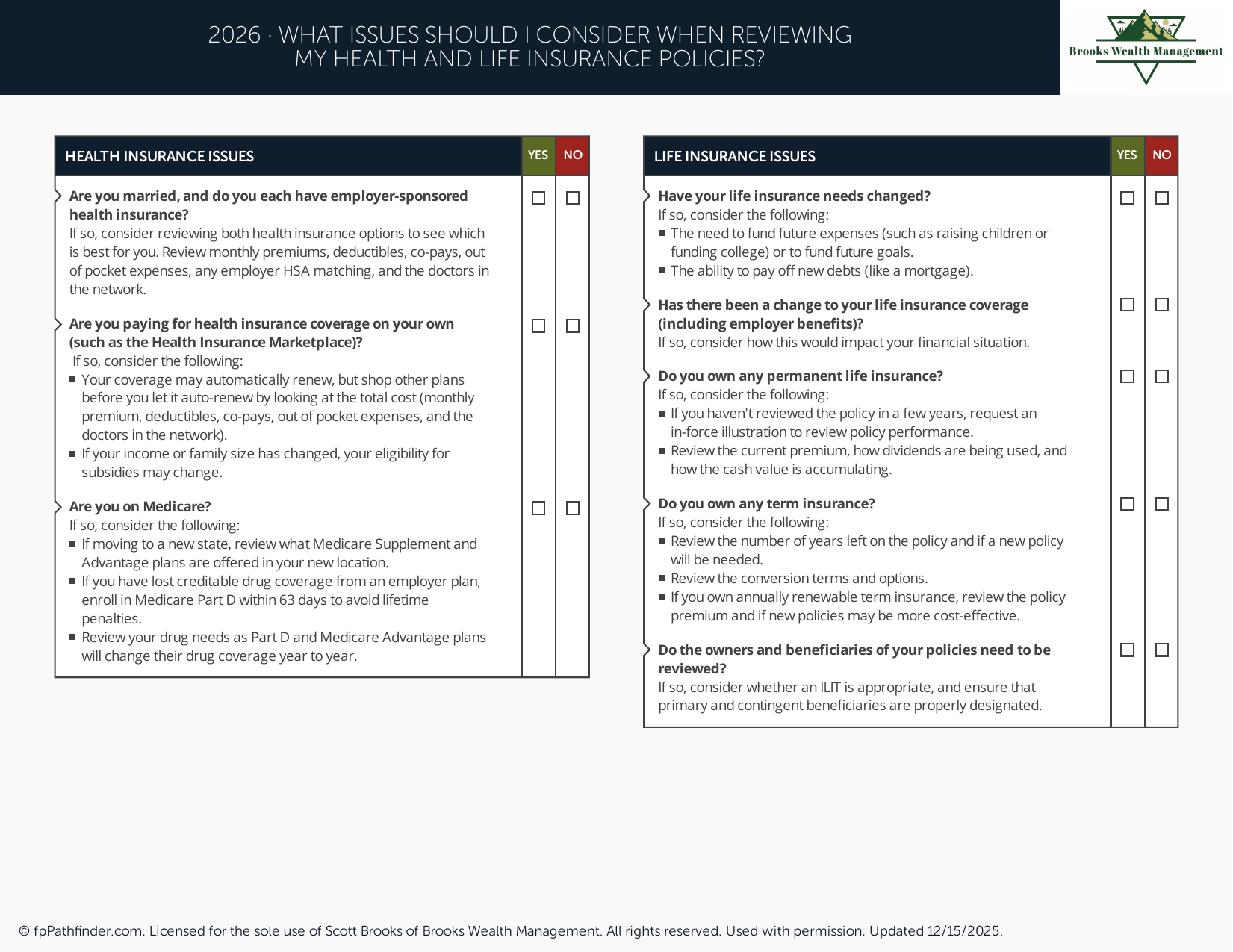
What Issues Should I Consider When Reviewing My Health and Life Insurance Coverage?
Health and life insurance are important components of a broader financial plan. While many individuals enroll in coverage and allow policies to renew automatically, personal circumstances often change over time. Income levels, family responsibilities, career transitions, health considerations, and financial goals can all influence whether existing coverage remains aligned with current needs.
This checklist is designed to provide a structured framework for reviewing health insurance and life insurance coverage. The goal is not to recommend any particular policy, carrier, or coverage amount, but rather to help identify common planning considerations that may warrant periodic review.
Review Why Periodic Insurance Reviews Matter
Insurance planning is not a one-time decision. Life events such as marriage, divorce, the birth of a child, home purchases, business ownership, retirement planning, and career changes may affect insurance considerations. A policy that appeared appropriate several years ago may deserve renewed attention as circumstances evolve.
Regular reviews may help individuals better understand their existing coverage, identify potential gaps, confirm beneficiary information, and evaluate whether policy features continue to reflect current priorities.
Insurance reviews can also be valuable when integrated into broader financial planning discussions involving retirement readiness, estate planning, cash flow management, and risk management.
Review Health Insurance Coverage
Health insurance coverage often changes through employers, private plans, Medicare eligibility, marketplace coverage, or other healthcare arrangements. Understanding how existing coverage works can help individuals make more informed decisions when evaluating future healthcare needs.
Topics that may be reviewed include:
- Current plan structure and available coverage options.
- Provider networks and access to preferred physicians or specialists.
- Deductibles, copayments, coinsurance, and other cost-sharing provisions.
- Prescription drug coverage and formulary considerations.
- Annual out-of-pocket exposure.
- Changes in household healthcare needs.
- Coordination of coverage between spouses or family members.
Individuals enrolled in high-deductible health plans may also wish to review Can I Make a Deductible Contribution to My HSA?. Those approaching retirement may find it useful to review Am I Eligible for Medicare Part A and Part B?, If I Retire Early, Should I Buy Health Insurance Through the Health Insurance Marketplace?, and What Issues Should I Consider Before I Retire?.
Review Life Insurance Coverage
Life insurance is often intended to provide financial protection for beneficiaries in the event of an insured person's death. The role life insurance plays can vary significantly depending on family circumstances, financial obligations, estate planning goals, and other factors.
When reviewing life insurance coverage, individuals may consider questions such as:
- Has my family situation changed since the policy was purchased?
- Have my financial obligations increased or decreased?
- Are there dependents who rely on my income?
- Have estate planning goals changed?
- Do beneficiary designations remain current?
- Have business ownership interests created additional planning considerations?
- Do existing policies continue to serve their original purpose?
For related insurance planning resources, review Common Life Insurance Policies, What Issues Should I Consider When Purchasing a Life Insurance Policy?, and What Issues Should I Consider When Reviewing My Existing Life Insurance Policy?.
Review Beneficiary Designations and Policy Details
Beneficiary designations are often among the most important policy details to review. Significant life events may create a need to revisit beneficiary elections and confirm that policy records remain accurate.
Individuals may also wish to review:
- Primary and contingent beneficiaries.
- Ownership designations.
- Policy contact information.
- Premium payment arrangements.
- Policy riders and optional features.
- Estate planning implications.
Because beneficiary designations can interact with broader estate planning objectives, some individuals review insurance policies alongside wills, trusts, powers of attorney, and other estate planning documents. For a related checklist, review What Issues Should I Consider When Reviewing My Beneficiaries?.
Review Insurance Planning Within Your Broader Financial Plan
Health and life insurance policies do not exist in isolation. Insurance planning often intersects with retirement planning, tax planning, asset protection, estate planning, business planning, and cash flow management.
For example, healthcare costs may influence retirement spending assumptions, while life insurance considerations may affect estate planning decisions or business succession discussions. Reviewing insurance coverage within the context of a broader financial plan can help provide a more complete understanding of potential risks and planning considerations.
Employees may also wish to review What Issues Should I Consider with My Employer-Provided Benefits?, while business owners may find additional planning topics in the Brooks Wealth Management Resource Library.
How to Use This Checklist
This checklist is intended to function as an educational resource that helps organize common health and life insurance planning considerations. It may be used during annual reviews, following major life events, or whenever insurance coverage is being evaluated.
The checklist does not provide recommendations regarding policy selection, coverage amounts, carriers, or insurance strategies. Instead, it is designed to help individuals identify questions and planning topics that may deserve additional review.
Some individuals use resources like this independently, while others use them to prepare for conversations with insurance professionals, attorneys, tax professionals, or financial professionals.
About This Resource
This checklist was created as an educational resource to help individuals better understand common considerations when reviewing health insurance and life insurance coverage. The objective is to provide a structured framework for evaluating policies and identifying areas that may warrant additional review as circumstances change.
Because insurance needs vary based on individual facts and circumstances, this resource should be used for educational purposes only and should not be interpreted as a recommendation regarding any insurance product, coverage election, or planning strategy.
If you have questions about how insurance planning fits into your broader financial picture, you can schedule an introductory conversation.