What Issues Should I Consider Before I Retire?
Comprehensive checklist of financial, healthcare, and lifestyle decisions to address before retiring.
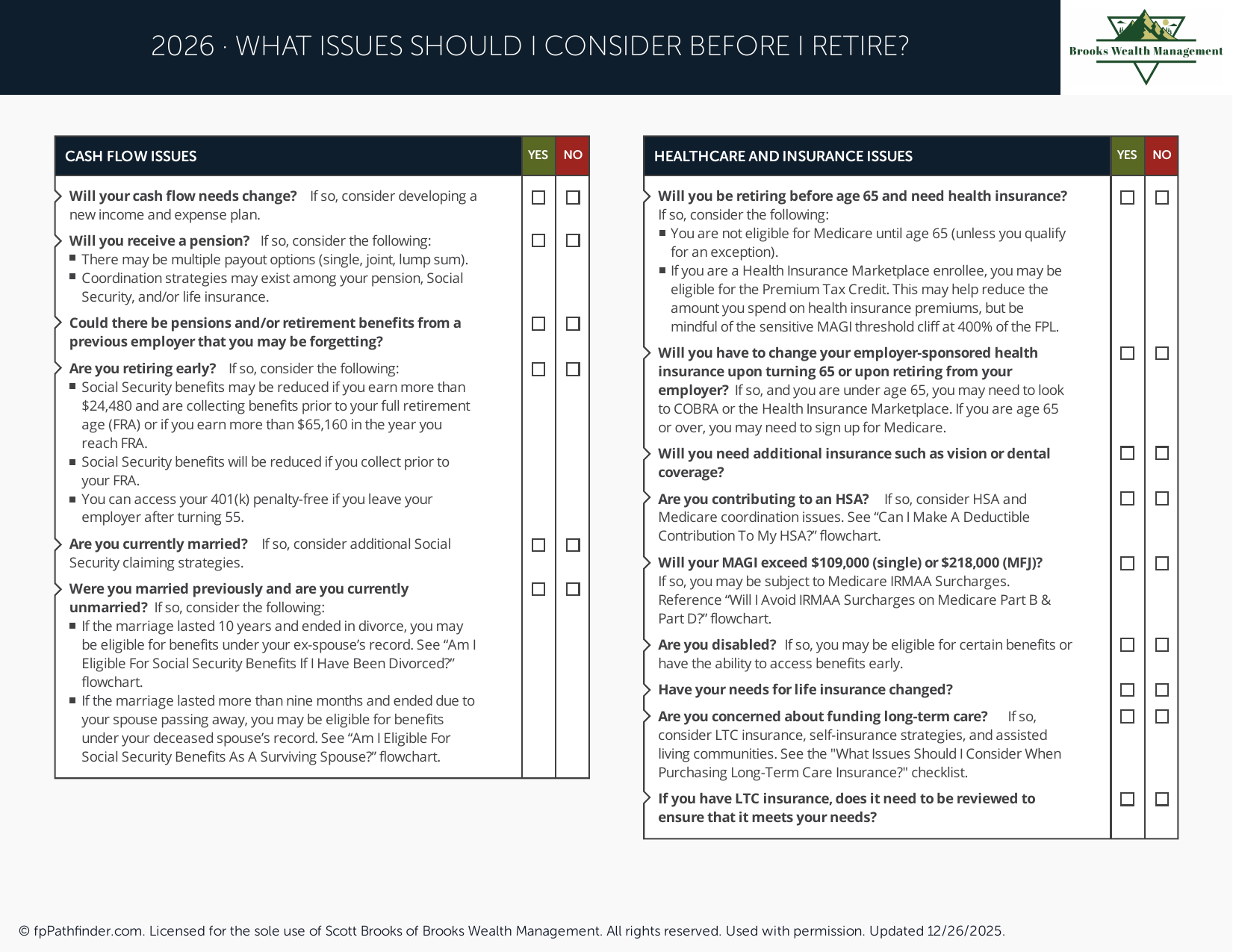
What Issues Should I Consider Before I Retire?
The years leading up to retirement often involve important financial, tax, healthcare, and lifestyle decisions. Reviewing these issues before leaving the workforce can help individuals better understand how retirement may affect their overall financial situation.
While every retirement is different, many individuals find it helpful to review a consistent set of planning topics before transitioning away from full-time employment. This checklist highlights several common areas people review as they approach retirement.
Review Retirement Income Sources
Many retirement decisions begin with understanding future income sources. These may include:
- Social Security benefits
- Pension income
- Retirement account withdrawals
- Annuity income
- Investment income
- Part-time employment income
- Rental property income
- Deferred compensation benefits
Evaluating how these sources work together can help provide a clearer picture of future cash flow needs and retirement spending objectives. Many retirees also review whether their anticipated income sources are guaranteed, market-based, or dependent on future employment.
Review Social Security Claiming Options
Social Security claiming decisions can affect retirement income for both individuals and married couples. Factors often considered include age, health, life expectancy, marital status, and other available income sources.
Because benefits vary based on claiming age and individual circumstances, many retirees review multiple scenarios before making a decision. Married couples may also evaluate spousal and survivor benefit considerations when reviewing their claiming strategy.
For additional information, visit our resource on Social Security retirement benefits.
Review Healthcare and Medicare Planning
Healthcare may represent a significant expense during retirement for many individuals.
Individuals retiring before Medicare eligibility may review available health insurance options, including employer coverage, COBRA continuation coverage, marketplace plans, or a spouse's employer-sponsored plan.
Individuals approaching age 65 often review Medicare enrollment deadlines, coverage options, prescription drug coverage, and potential premium costs. Some retirees also evaluate long-term care considerations and how future healthcare expenses may affect retirement spending.
For more information, see our resource on healthcare in retirement.
Review Retirement Accounts and Withdrawal Strategies
Retirement often marks the transition from saving and investing to drawing income from accumulated assets.
Common considerations include:
- Withdrawal sequencing
- Tax treatment of distributions
- Required Minimum Distributions (RMDs)
- Roth and traditional account balances
- Investment allocation
- Cash reserve needs
- Sequence of returns risk
- Future tax bracket considerations
Understanding how different account types are taxed can help individuals evaluate potential withdrawal strategies and future retirement income needs.
For additional guidance, review our resource on retirement withdrawal strategies.
Review Estate Planning Documents
Many individuals use the years leading up to retirement as an opportunity to review estate planning documents and beneficiary designations.
This may include reviewing:
- Wills
- Trusts
- Powers of attorney
- Healthcare directives
- Retirement account beneficiaries
- Life insurance beneficiaries
Changes in family circumstances, asset levels, or state laws may create a need to update existing estate planning documents.
For more information, visit our resource on estate planning reviews.
Review Tax Considerations
Retirement can change how income is taxed. Individuals often review topics such as retirement account distributions, Social Security taxation, Medicare premium surcharges, capital gains, charitable giving strategies, Roth conversions, and future Required Minimum Distributions.
Reviewing these issues may help individuals better understand how different retirement income sources interact over time and how future tax obligations may affect retirement cash flow.
Additional educational resources are available in our free resource library, including resources covering retirement withdrawals, healthcare planning, estate planning, and Required Minimum Distributions.
Retirement Readiness Checklist
As retirement approaches, many individuals review the following questions:
- Do I understand my expected retirement spending?
- Have I evaluated my retirement income sources?
- Have I reviewed Social Security claiming options?
- Do I understand my healthcare and Medicare choices?
- Have I reviewed my withdrawal strategy?
- Are my beneficiary designations current?
- Have I reviewed estate planning documents?
- Do I understand future tax considerations?
- Have I reviewed Required Minimum Distribution rules?
- Does my investment allocation still align with my goals?
About This Resource
This resource provides general educational information regarding retirement planning considerations. It is not intended as investment, tax, legal, or financial advice. Individual circumstances vary and financial decisions should be evaluated based on personal goals and applicable laws.
If you would like to discuss your situation, we invite you to schedule an introductory conversation.