
What Issues Should I Consider with My Social Security Retirement Benefits?
Checklist of claiming strategies, timing decisions, and tax considerations for Social Security retirement benefits.
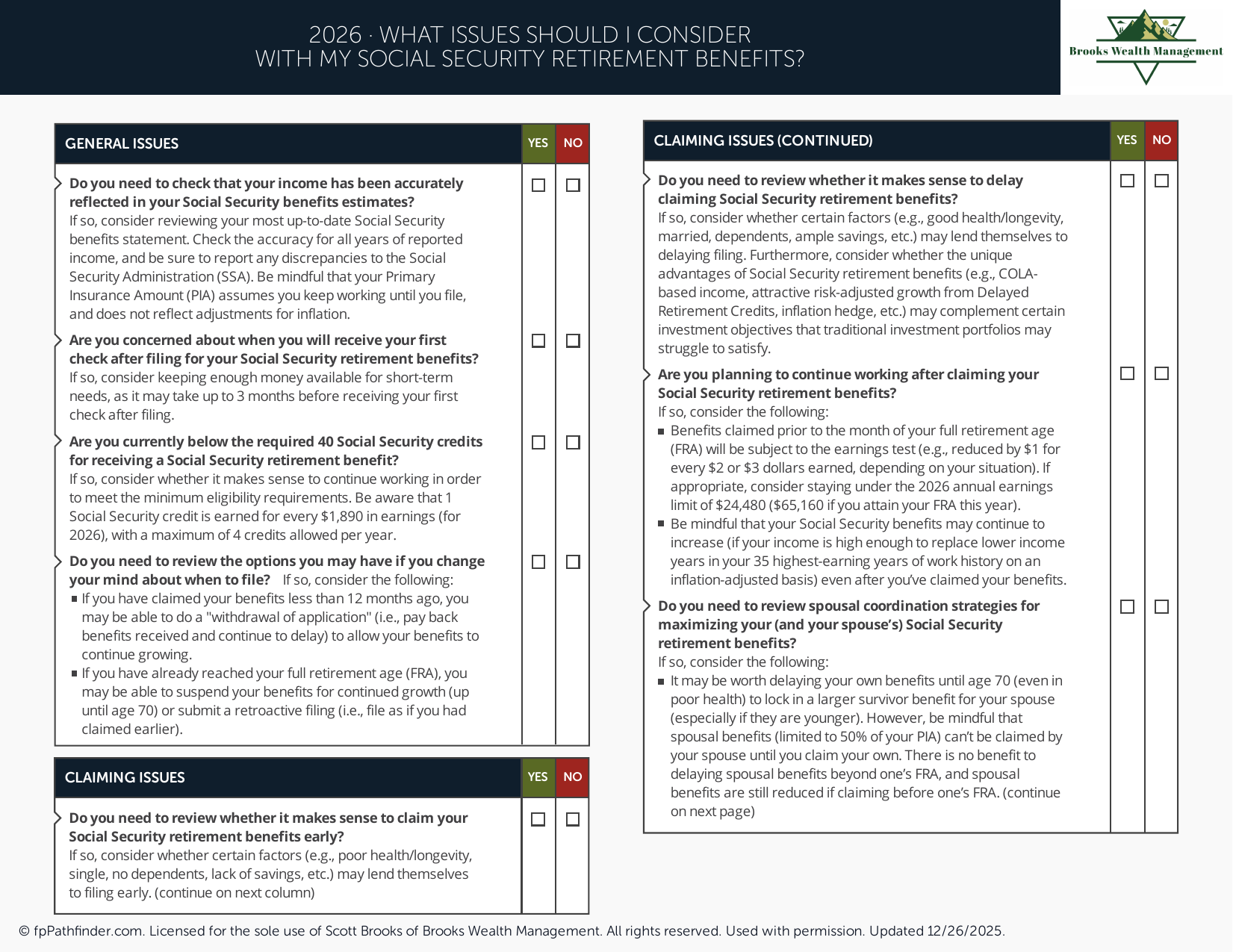
What Issues Should I Consider With My Social Security Retirement Benefits?
Social Security is an important source of retirement income for many individuals and couples. Understanding how benefits are calculated, when benefits can begin, and how claiming decisions affect retirement income may help individuals make more informed retirement planning decisions.
This checklist highlights several common issues people review when evaluating Social Security retirement benefits.
Review Your Earnings Record
Social Security retirement benefits are generally based on your highest 35 years of earnings that were subject to Social Security payroll taxes.
Individuals often review their earnings history through their Social Security account to verify reported earnings are accurate. Missing or incorrect earnings records may affect future benefit calculations.
For individuals who have fewer than 35 years of covered earnings, additional working years may replace lower-earning or zero-income years used in the calculation.
Review Claiming Age Options
Individuals may generally begin claiming retirement benefits as early as age 62.
Benefits claimed before Full Retirement Age are typically reduced, while delaying benefits beyond Full Retirement Age may increase future monthly benefits through delayed retirement credits until age 70.
Many retirees review multiple claiming scenarios based on:
- Age
- Health status
- Life expectancy
- Retirement income needs
- Marital status
- Other retirement assets
Because claiming decisions are generally permanent, individuals often evaluate several scenarios before filing.
Review Spousal and Survivor Benefits
Married individuals frequently review how Social Security benefits may affect both spouses.
Common considerations include:
- Spousal benefits
- Survivor benefits
- Differences in earnings history
- Age differences between spouses
- Coordinated claiming strategies
For some households, survivor benefits may become an important source of income later in retirement.
Review Tax Considerations
A portion of Social Security benefits may be subject to federal income taxation depending on overall household income.
Individuals often review how Social Security interacts with:
- Retirement account withdrawals
- Pension income
- Investment income
- Required Minimum Distributions (RMDs)
- Roth conversion strategies
Understanding how different income sources interact may help provide a clearer picture of retirement cash flow and taxation.
For additional information, review our resource on Roth conversions.
Review Employment Income and Social Security
Some individuals continue working while receiving retirement benefits.
Individuals claiming benefits before Full Retirement Age often review current Social Security earnings limits and how employment income may affect benefit payments.
Once Full Retirement Age is reached, different rules generally apply.
Review Social Security Within Your Overall Retirement Plan
Social Security is only one component of a retirement income strategy.
Many retirees review how benefits fit alongside:
- Pension income
- Retirement account withdrawals
- Investment income
- Annuity income
- Cash reserves
- Healthcare expenses
Evaluating all retirement income sources together may help individuals better understand their long-term retirement income picture.
For additional retirement planning guidance, visit our resource on issues to consider before retirement.
About This Resource
This resource provides general educational information regarding Social Security retirement benefits. It is not intended as investment, tax, legal, or financial advice. Individual circumstances vary and financial decisions should be evaluated based on personal goals and applicable laws.
If you would like to discuss your situation, we invite you to schedule an introductory conversation.