
Am I Eligible for Medicare Part A and Part B?
Flowchart to determine eligibility for Medicare Part A and Part B coverage.
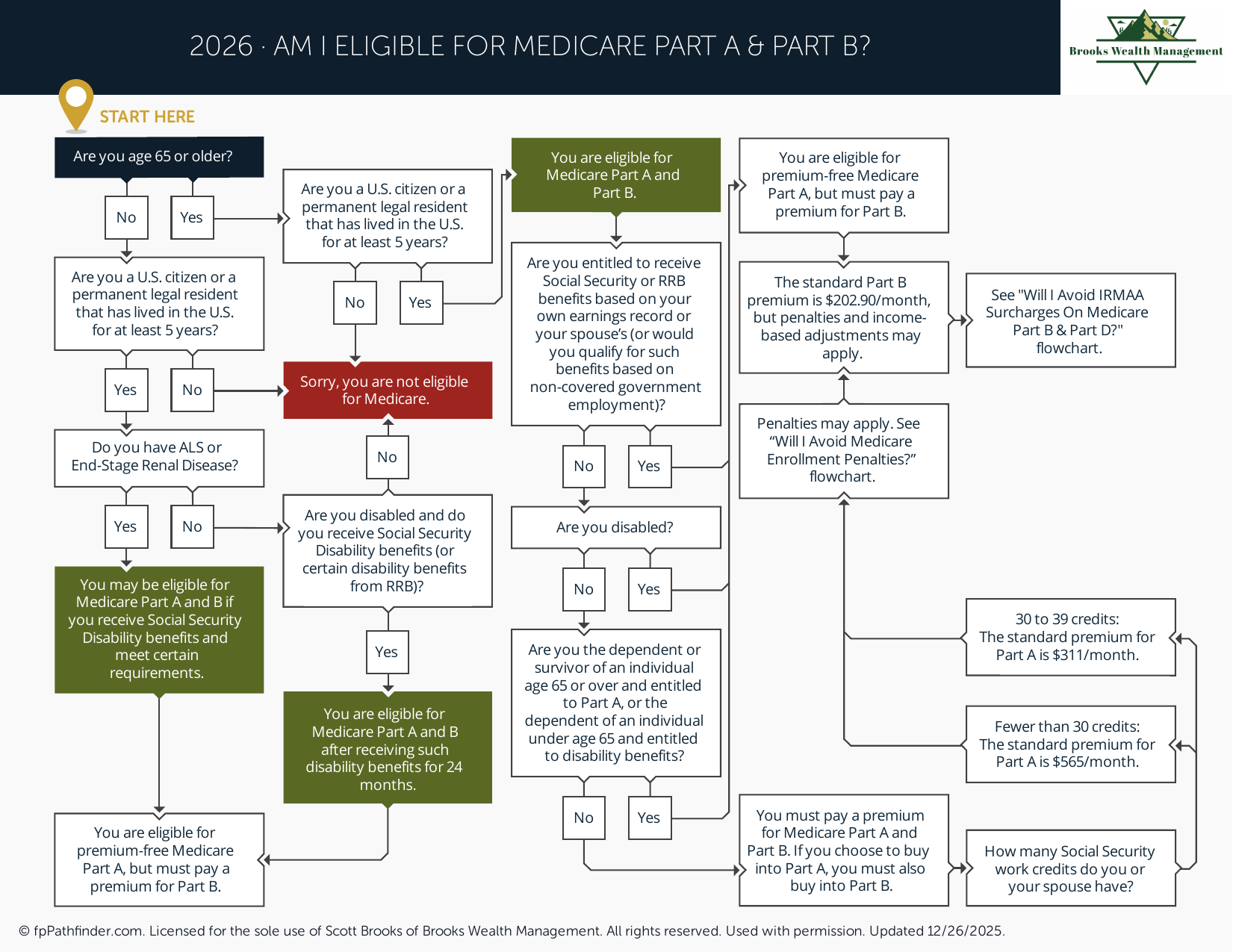
Am I Eligible for Medicare Part A and Part B?
Medicare eligibility is an important consideration for many individuals approaching retirement. Eligibility for Medicare Part A and Part B depends on several factors, including age, work history, disability status, citizenship requirements, and current health insurance coverage.
Individuals reviewing Medicare eligibility often consider several key issues before enrolling.
Review Basic Medicare Eligibility Requirements
Medicare is a federal health insurance program available to many individuals age 65 and older, as well as certain individuals who qualify through disability or specific medical conditions.
Common eligibility considerations include:
- Current age
- Citizenship or residency status
- Work history
- Eligibility through a spouse's work record
- Disability status
- Certain qualifying medical conditions
Because Medicare eligibility can vary based on individual circumstances, many individuals review their eligibility requirements before approaching age 65.
Review Medicare Part A Eligibility
Medicare Part A generally provides hospital insurance coverage and is often one of the first components of Medicare individuals review.
Common considerations include:
- Personal work history
- A spouse's work history
- Years of Medicare-covered employment
- Disability eligibility
- Special medical condition eligibility
Many individuals review whether they qualify for premium-free Medicare Part A and how Part A coverage fits into their broader retirement healthcare planning strategy.
Review Medicare Part B Eligibility
Medicare Part B generally provides medical insurance coverage for physician services, outpatient care, preventive services, and other qualifying healthcare expenses.
Individuals commonly review:
- Enrollment requirements
- Monthly premium obligations
- Enrollment timing
- Coverage needs
- Potential late enrollment penalties
Understanding Medicare Part B enrollment rules is often important because enrollment timing can affect future healthcare costs and coverage availability.
Review Initial Enrollment Period Requirements
Many individuals become eligible for Medicare around age 65 and review their Initial Enrollment Period before becoming eligible.
Common issues reviewed include:
- Enrollment deadlines
- Coverage start dates
- Potential late enrollment penalties
- Coordination with existing health insurance
- Special enrollment opportunities
Because enrollment deadlines may affect future Medicare premiums and coverage options, many individuals review these timelines well before retirement.
Review Employer Coverage and Medicare Coordination
Individuals who continue working beyond age 65 often review how Medicare coordinates with employer-sponsored health insurance coverage.
Common considerations include:
- Employer size
- Current group health coverage
- Special Enrollment Period eligibility
- Retiree health benefits
- COBRA considerations
- Coverage transition planning
Understanding how employer-sponsored health insurance interacts with Medicare may help individuals evaluate future healthcare decisions and avoid potential coverage gaps.
Review Medicare Costs and Retirement Planning Considerations
Medicare enrollment is often one component of a broader retirement planning review.
Additional issues individuals frequently consider include:
- Healthcare costs in retirement
- Medicare premium expenses
- Income-related Medicare surcharges
- Retirement income planning
- Tax planning considerations
- Long-term healthcare needs
For additional information, review our resources on healthcare in retirement, Medicare IRMAA surcharges, and retirement planning considerations.
About This Resource
This resource provides general educational information regarding Medicare Part A and Part B eligibility. Eligibility requirements and enrollment rules are determined by Medicare regulations and individual circumstances may vary.
If you would like to discuss how Medicare planning fits into your broader retirement plan, we invite you to schedule an introductory conversation.