
What Issues Should I Consider When Reviewing My Beneficiaries?
Checklist for reviewing and updating beneficiary designations on retirement accounts, insurance, and other assets.
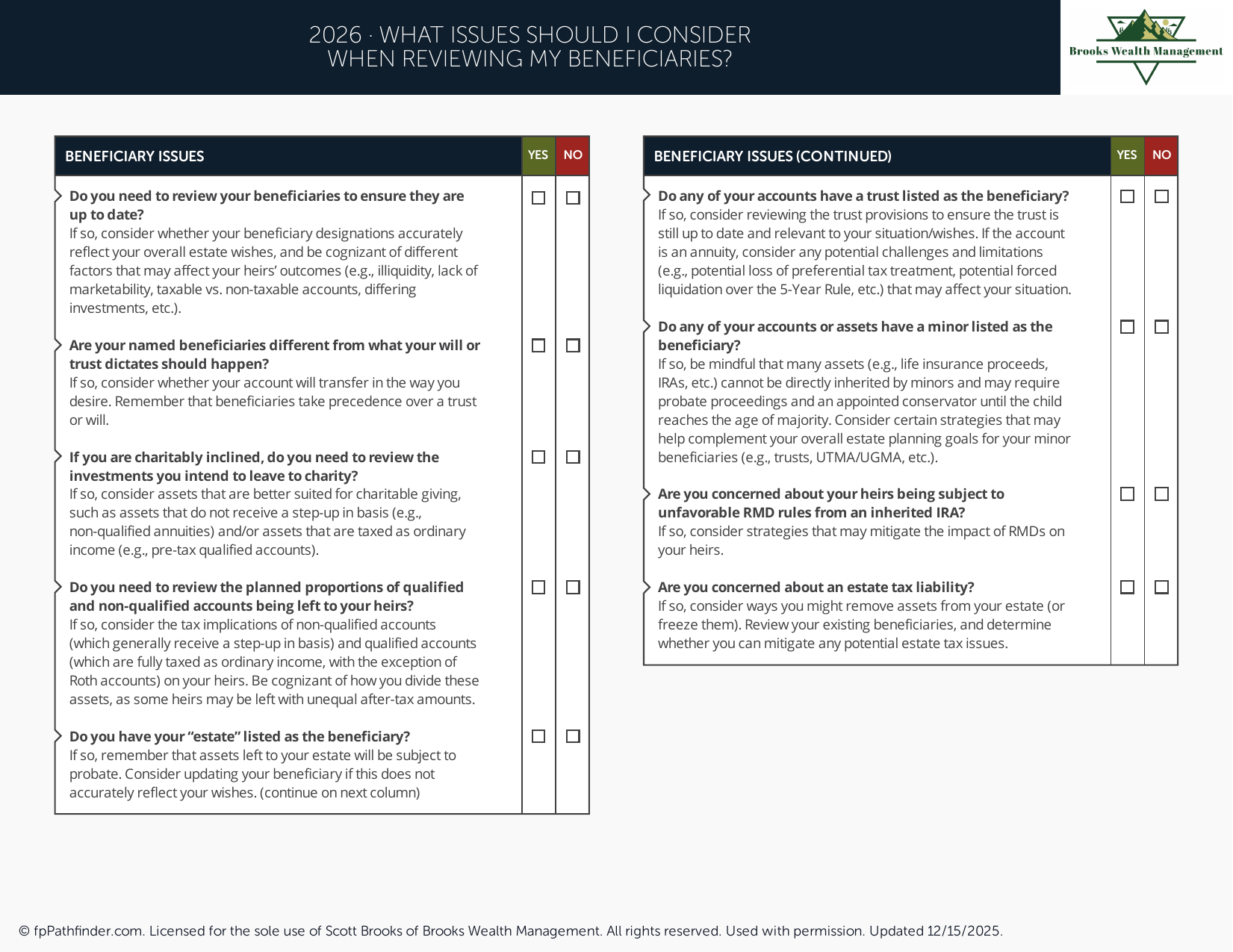
What Issues Should I Consider When Reviewing My Beneficiaries?
Beneficiary designations are among the most important—and often overlooked—components of a financial plan. While many individuals spend significant time updating wills, trusts, and other estate planning documents, beneficiary designations on retirement accounts, insurance policies, annuities, and certain financial accounts frequently remain unchanged for years.
Because beneficiary designations often override instructions contained in a will or trust, reviewing them periodically can be an important part of maintaining an organized estate plan. This checklist is designed to provide a framework for evaluating common beneficiary-related considerations and identifying situations where updates may deserve attention.
Understand Which Assets Have Beneficiary Designations
Many financial assets transfer directly to a named beneficiary upon death and do not necessarily follow the instructions contained in a will. Understanding which accounts include beneficiary designations is often the first step in a review.
Assets that commonly include beneficiary elections may include:
- Employer retirement plans.
- Traditional IRAs.
- Roth IRAs.
- Life insurance policies.
- Annuities.
- Transfer-on-death accounts.
- Payable-on-death accounts.
- Certain brokerage accounts.
Maintaining a current inventory of accounts may help simplify future reviews and reduce the likelihood of overlooking an important asset.
Review Life Events That May Trigger Updates
Major life events are among the most common reasons beneficiary designations become outdated. A designation that was appropriate several years ago may no longer reflect current wishes.
Questions that may deserve review include:
- Have you married or divorced?
- Have children or grandchildren been born?
- Has a beneficiary passed away?
- Have family relationships changed significantly?
- Have financial circumstances evolved?
Many individuals find it helpful to review beneficiary elections whenever a significant family or financial event occurs.
Review Primary and Contingent Beneficiaries
Beneficiary forms often allow both primary and contingent beneficiaries to be named. While primary beneficiaries typically receive the assets first, contingent beneficiaries may receive assets if a primary beneficiary is unable to inherit.
Questions that may deserve consideration include:
- Are primary beneficiaries still appropriate?
- Have contingent beneficiaries been named?
- Are beneficiary percentages correct?
- Do beneficiary designations align with current wishes?
- Has beneficiary information been verified recently?
Reviewing both primary and contingent designations may help ensure assets transfer according to intended instructions.
Review Beneficiary Designations After Marriage or Divorce
Marriage and divorce are among the most common reasons beneficiary reviews become necessary. In some situations, individuals may assume that updating a will automatically changes beneficiary designations, which may not be the case.
Questions that may deserve review include:
- Have all account beneficiary elections been reviewed?
- Do retirement accounts reflect current wishes?
- Have life insurance beneficiaries been updated?
- Are contingent beneficiaries still appropriate?
- Do beneficiary elections align with estate planning documents?
Individuals experiencing major family transitions may also find it helpful to review:
- What Issues Should I Consider When Getting Married?
- What Issues Should I Consider If I Am Going Through a Divorce?
Review Beneficiary Designations for Minor Children
When children are involved, beneficiary planning may require additional consideration. Naming a minor child directly as a beneficiary can create administrative and legal complexities depending on the circumstances.
Questions that may deserve review include:
- Are minor children named as beneficiaries?
- Are trusts involved in the estate plan?
- Have guardians been identified?
- Do beneficiary arrangements align with broader family goals?
- Have estate planning documents been reviewed recently?
Parents may also find it helpful to review What Issues Should I Consider When Having or Adopting a Child?.
Review Beneficiaries as Wealth Grows
As financial resources increase, beneficiary decisions may become more complex. Changes in net worth, business ownership, retirement assets, or family circumstances may create a need to revisit existing arrangements.
Questions that may deserve consideration include:
- Has your net worth changed significantly?
- Have you acquired new accounts or assets?
- Have charitable goals evolved?
- Do beneficiary elections align with current estate planning objectives?
- Have distribution preferences changed over time?
Periodic reviews may help ensure beneficiary arrangements remain consistent with broader financial goals.
Review Trusts and Estate Planning Documents
Beneficiary designations should generally be reviewed alongside wills, trusts, and other estate planning documents to help ensure consistency.
Questions that may deserve review include:
- Do beneficiary elections align with your will?
- Do beneficiary elections align with existing trusts?
- Have estate planning documents been updated recently?
- Have fiduciaries been reviewed?
- Are legacy goals reflected consistently across all documents?
Related resources that may be helpful include:
Review Retirement Account Beneficiaries
Retirement accounts often represent a significant portion of a family's wealth. As a result, beneficiary designations on retirement accounts may deserve special attention.
Questions that may deserve review include:
- Have all retirement accounts been reviewed?
- Do beneficiary elections remain appropriate?
- Are contingent beneficiaries listed?
- Have account ownership changes occurred?
- Do retirement account elections align with broader estate planning objectives?
Retirement assets often carry unique administrative and tax considerations that may warrant additional review with qualified professionals.
Review Life Insurance Beneficiaries
Life insurance proceeds frequently transfer according to beneficiary designations rather than instructions contained in a will.
Questions that may deserve review include:
- Are policy beneficiaries current?
- Do beneficiary percentages reflect current wishes?
- Are contingent beneficiaries listed?
- Have family circumstances changed?
- Does the coverage still support intended planning goals?
A related resource that may be helpful is What Issues Should I Consider When Reviewing My Existing Life Insurance Policy?.
Review Charitable and Legacy Planning Goals
Beneficiary reviews may also provide an opportunity to revisit broader family and legacy objectives.
Questions that may deserve consideration include:
- Have charitable goals changed?
- Are family wealth transfer goals still the same?
- Do beneficiary elections align with personal values?
- Have future generations been considered?
- Does the overall plan reflect current wishes?
Beneficiary planning is often most effective when viewed within the context of broader estate and legacy planning goals.
Questions Worth Reviewing When Evaluating Beneficiaries
Many individuals find it helpful to review the following questions:
- Have there been major life changes since beneficiary elections were completed?
- Are primary beneficiaries still appropriate?
- Have contingent beneficiaries been named?
- Do beneficiary elections align with estate planning documents?
- Have retirement accounts been reviewed?
- Have life insurance policies been reviewed?
- Do beneficiary arrangements reflect current wishes?
- Have legacy goals changed?
A structured review process may help identify outdated designations and improve consistency across an overall estate plan.
How to Use This Checklist
This checklist is intended to serve as an educational resource that helps organize common beneficiary-related considerations associated with retirement accounts, insurance policies, estate planning documents, and other financial assets. It may be useful following major life events, during periodic estate plan reviews, or whenever significant financial changes occur.
The checklist does not provide legal, tax, estate planning, investment, or financial advice. Instead, it is designed to help identify planning topics and questions that may warrant additional review.
About This Resource
This checklist was created as an educational resource to help individuals better understand common considerations associated with reviewing and updating beneficiary designations. The objective is to provide a framework for evaluating retirement accounts, life insurance policies, estate planning documents, family circumstances, and broader legacy planning goals.
Because beneficiary rules, estate planning laws, tax regulations, and family situations vary significantly, this resource should be used for educational purposes only and should not be interpreted as legal, tax, estate planning, investment, or financial advice.
For additional planning resources, visit the Brooks Wealth Management Resource Library. If you have questions about how beneficiary decisions may affect your broader financial picture, you can schedule an introductory conversation.