
What Issues Should I Consider When Having or Adopting a Child?
Checklist of financial, insurance, and estate planning steps when welcoming a new child.
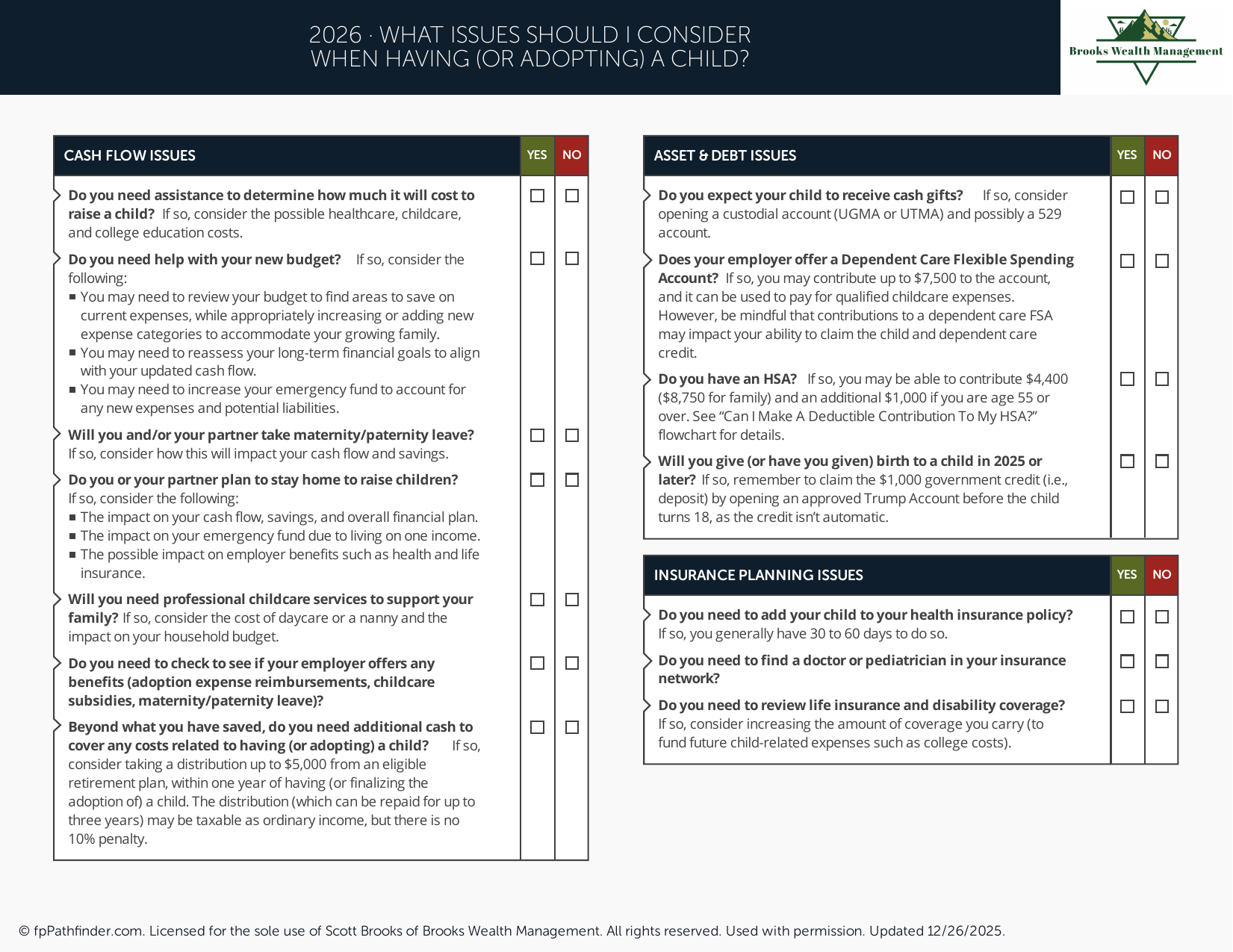
What Issues Should I Consider When Having or Adopting a Child?
Welcoming a child into a family is often accompanied by significant personal, financial, and planning decisions. Whether through birth, adoption, or another path to parenthood, many individuals find that a growing family creates new priorities and responsibilities that affect multiple areas of a financial plan.
This checklist is designed to provide a framework for reviewing common financial, insurance, estate planning, and administrative considerations that may arise when having or adopting a child. The objective is not to recommend any particular course of action, but rather to help organize important planning topics that may deserve review during this life transition.
Review How a New Child May Affect Your Financial Plan
A growing family often influences financial goals, spending priorities, savings strategies, and long-term planning decisions. While every family's circumstances are different, many individuals find it helpful to review their financial plan following the arrival of a child.
Questions that may be worth reviewing include:
- Have household expenses changed?
- Will future savings goals need to be adjusted?
- Has the household emergency fund been reviewed?
- Will childcare expenses affect cash flow?
- Have long-term financial priorities changed?
Reviewing these topics may help create a clearer understanding of how a growing family affects broader financial objectives.
Review Healthcare and Insurance Coverage
Healthcare and insurance decisions often become increasingly important when a child joins the family. Reviewing available coverage may help ensure that existing policies continue to align with household needs.
Topics that may deserve review include:
- Health insurance coverage for the child.
- Dependent eligibility requirements.
- Life insurance coverage.
- Disability insurance coverage.
- Employer-provided benefits.
- Healthcare spending accounts or Health Savings Accounts.
Individuals reviewing insurance-related topics may also find it helpful to review What Issues Should I Consider When Reviewing My Health and Life Insurance Coverage?, provided that resource exists within your planning library.
Review Emergency Savings and Cash Flow
Changes in household size often create new financial responsibilities. Some families choose to revisit emergency savings goals and cash flow planning as part of the transition.
Questions that may warrant review include:
- Are emergency reserves sufficient for current circumstances?
- How may childcare expenses affect monthly cash flow?
- Will one parent take time away from work?
- Have recurring household expenses changed?
- Do savings goals remain realistic and achievable?
Reviewing cash flow can help provide a clearer understanding of how new expenses fit into an overall financial plan.
Review Estate Planning Documents
The arrival of a child often prompts many individuals to review estate planning documents. While legal requirements vary by state, some families choose to evaluate whether existing documents continue to reflect their wishes.
Items that may deserve review include:
- Wills.
- Trusts.
- Powers of attorney.
- Healthcare directives.
- Guardianship provisions.
- Beneficiary designations.
Individuals reviewing beneficiary information may also find it useful to review What Issues Should I Consider When Reviewing My Beneficiaries?.
Review Education and Future Savings Goals
Many families begin considering future education funding and other long-term savings goals after welcoming a child. While priorities vary significantly from household to household, some individuals choose to review how future expenses may fit within broader financial objectives.
Questions that may be worth reviewing include:
- What long-term savings goals are important to the family?
- How might future education expenses affect planning decisions?
- Should existing savings priorities be revisited?
- How does retirement planning fit alongside future family goals?
Related resources may include What Accounts Should I Consider If I Want to Save More? and other educational resources available in the Brooks Wealth Management Resource Library.
Review Employment and Workplace Benefits
Having or adopting a child may create a need to review employer-provided benefits and workplace policies.
Topics that individuals often review include:
- Parental leave benefits.
- Flexible spending arrangements.
- Dependent care benefits.
- Healthcare coverage options.
- Retirement plan contributions.
- Workplace insurance benefits.
A related resource that may be helpful is What Issues Should I Consider With My Employer-Provided Benefits?.
Review Tax and Administrative Considerations
The addition of a child may create tax and administrative items that deserve attention. While individual circumstances vary, some families choose to review:
- Tax withholding elections.
- Dependent-related tax considerations.
- Healthcare enrollment deadlines.
- Employer benefit updates.
- Beneficiary updates.
- Financial account records.
Because tax situations vary significantly, individuals often consult qualified tax professionals regarding specific tax-related questions.
Review Long-Term Family Planning Goals
Welcoming a child often creates an opportunity to revisit broader family goals. Housing decisions, career plans, retirement objectives, and family priorities may all evolve over time.
Questions that may deserve review include:
- Will housing needs change?
- Have family financial priorities shifted?
- How does the child affect long-term planning goals?
- Are retirement goals still aligned with current circumstances?
- Should the financial plan be updated to reflect new priorities?
Reviewing long-term goals may help ensure that financial decisions remain aligned with evolving family needs.
Questions Worth Reviewing When Having or Adopting a Child
Many individuals find it helpful to review the following questions:
- Have healthcare and insurance needs been reviewed?
- Are emergency savings appropriate for current circumstances?
- Have estate planning documents been updated?
- Are beneficiary designations current?
- Should future savings goals be revisited?
- Have employer benefits been reviewed?
- What tax and administrative updates may be required?
- How does a growing family affect broader financial goals?
A structured review process can help ensure important planning topics are considered during this significant life transition.
How to Use This Checklist
This checklist is intended to serve as an educational resource that helps organize common financial and planning considerations associated with having or adopting a child. It may be useful during pregnancy, throughout the adoption process, or after a child joins the family.
The checklist does not provide legal, tax, insurance, investment, or financial advice. Instead, it is designed to help identify planning topics and questions that may warrant additional review.
About This Resource
This checklist was created as an educational resource to help individuals better understand common financial, insurance, estate planning, and administrative considerations associated with having or adopting a child. The objective is to provide a framework for reviewing important planning topics and evaluating how a growing family may affect broader financial goals.
Because family circumstances, financial resources, and planning objectives vary significantly, this resource should be used for educational purposes only and should not be interpreted as legal, tax, insurance, investment, or financial advice.
For additional planning resources, visit the Brooks Wealth Management Resource Library. If you have questions about how a growing family may affect your broader financial picture, you can schedule an introductory conversation.