
What Issues Should I Consider Before I Update My Estate Plan?
Checklist of key questions and considerations before updating or creating an estate plan.
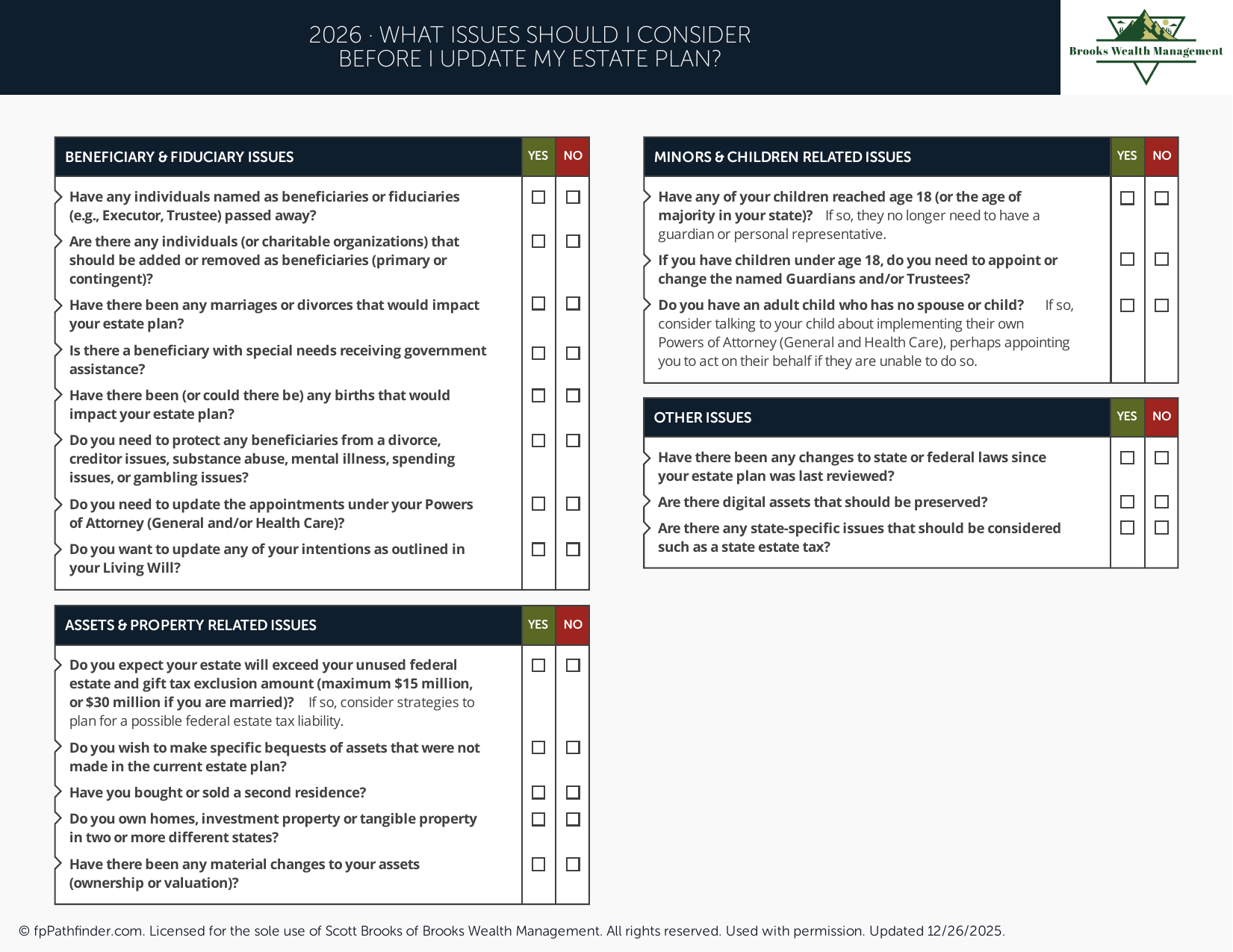
What Issues Should I Consider Before Updating My Estate Plan?
An estate plan is rarely something that should be created once and never revisited. Family circumstances, financial resources, personal goals, and legal considerations often change over time. As those changes occur, existing estate planning documents may no longer reflect your current wishes or circumstances.
Whether your estate plan was created recently or many years ago, periodic reviews can help identify areas that may deserve attention. This checklist is designed to provide a framework for evaluating common issues that may arise before updating an estate plan.
Review Major Life Changes
Life events are among the most common reasons individuals revisit their estate planning documents. A plan that was appropriate several years ago may no longer align with current family circumstances.
Questions that may deserve consideration include:
- Have you married or divorced?
- Have children or grandchildren been born?
- Has a family member passed away?
- Have relationships changed significantly?
- Have your priorities or family goals evolved?
Major life transitions often create opportunities to review beneficiary designations, fiduciary appointments, guardianship provisions, and asset distribution instructions.
Review Changes in Financial Circumstances
Changes in wealth, asset ownership, business interests, or investment accounts may affect how an estate plan functions.
Questions that may deserve review include:
- Has your net worth changed significantly?
- Have you purchased or sold real estate?
- Have you started, acquired, or sold a business?
- Have retirement accounts grown substantially?
- Have you received an inheritance or other significant assets?
As financial circumstances evolve, estate planning documents may deserve review to ensure they continue to align with current objectives.
A related resource that may be helpful is What Issues Should I Consider If I Come Into a Large Sum of Money?.
Review Beneficiary Designations
Many financial assets transfer according to beneficiary designations rather than instructions contained in a will or trust.
Assets that often include beneficiary elections include:
- Retirement accounts.
- Life insurance policies.
- Annuities.
- Transfer-on-death accounts.
- Payable-on-death accounts.
Questions that may deserve review include:
- Are beneficiary designations current?
- Have contingent beneficiaries been named?
- Do beneficiary elections align with estate planning documents?
- Have family circumstances changed since the forms were completed?
A related resource that may be helpful is What Issues Should I Consider When Reviewing My Beneficiaries?.
Review Trustees, Executors, and Other Fiduciaries
Estate planning documents frequently rely on trusted individuals to carry out important responsibilities. Over time, those individuals may no longer be the most appropriate choice.
Questions that may deserve consideration include:
- Is your executor still willing and able to serve?
- Are trustees still appropriate?
- Have successor trustees been identified?
- Are powers of attorney current?
- Do appointed individuals understand their responsibilities?
Periodic review may help ensure key decision-makers remain aligned with your wishes and family circumstances.
Review Guardianship Provisions
For parents of minor children, guardianship provisions often represent one of the most important aspects of an estate plan.
Questions that may deserve review include:
- Are guardians still appropriate?
- Would they still be willing to serve?
- Have family circumstances changed?
- Have alternate guardians been identified?
- Do your current wishes match the existing documents?
Parents may also find it helpful to review What Issues Should I Consider When Having or Adopting a Child?.
Review Trust Provisions
If trusts are part of your estate plan, periodic reviews may help determine whether trust provisions continue to support your goals.
Questions that may deserve consideration include:
- Do trust provisions still reflect your wishes?
- Have beneficiary circumstances changed?
- Are distribution instructions still appropriate?
- Do successor trustee arrangements remain suitable?
- Have long-term family goals evolved?
A related resource that may be helpful is Should I Consider a Trust?.
Review Business Ownership and Succession Planning
Business owners often have estate planning considerations that extend beyond personal assets.
Questions that may deserve review include:
- Does your estate plan address business succession?
- Have ownership interests changed?
- Are buy-sell agreements current?
- Have key employees or partners changed?
- Have future transition plans evolved?
Changes in business ownership or operations may warrant a review of both estate planning and succession planning strategies.
Review Healthcare Directives and Powers of Attorney
Estate planning often includes documents that address decision-making during periods of incapacity.
Questions that may deserve consideration include:
- Are healthcare directives current?
- Do healthcare agents remain appropriate?
- Are financial powers of attorney up to date?
- Have your preferences regarding healthcare decisions changed?
- Do family members understand your wishes?
These documents may deserve periodic review even when no major financial changes have occurred.
Review Asset Ownership and Account Titling
Changes in ownership arrangements may affect how assets transfer and how efficiently an estate plan functions.
Questions that may deserve review include:
- How are investment accounts titled?
- How are bank accounts titled?
- How is real estate owned?
- Have ownership arrangements changed?
- Do current ownership structures align with estate planning objectives?
Asset ownership and beneficiary designations often work together to determine how assets ultimately transfer.
Review Charitable and Legacy Planning Goals
Estate planning often provides an opportunity to revisit broader family and legacy objectives.
Questions that may deserve consideration include:
- Have charitable priorities changed?
- Do you want to leave a philanthropic legacy?
- Have family wealth transfer goals evolved?
- Do current documents reflect your values?
- Have long-term objectives changed over time?
A related resource that may be helpful is What Issues Should I Consider When Creating a Charitable Giving Strategy?.
Review Potential Tax Considerations
Tax laws and regulations can change over time. While estate planning is not solely about taxes, certain changes in tax law may affect existing planning strategies.
Questions that may deserve review include:
- Have tax laws changed since your documents were drafted?
- Has your financial situation changed significantly?
- Have gifting strategies been evaluated?
- Do current strategies align with your long-term objectives?
- Have tax implications been reviewed with qualified professionals?
Because tax laws change periodically and individual circumstances vary significantly, tax-related matters are often reviewed with qualified tax and legal professionals.
Questions Worth Reviewing Before Updating an Estate Plan
Many individuals find it helpful to review the following questions:
- Have there been major family changes?
- Has my financial situation changed substantially?
- Are beneficiary designations current?
- Are trustees and executors still appropriate?
- Do healthcare directives reflect my wishes?
- Have charitable goals changed?
- Have business interests evolved?
- Does the current plan still reflect my objectives?
A structured review process may help identify areas where estate planning documents deserve additional attention.
How to Use This Checklist
This checklist is intended to serve as an educational resource that helps organize common family, financial, legal, and planning considerations that may arise when reviewing or updating an estate plan. It may be useful following major life events, financial changes, business transitions, or periodic estate planning reviews.
The checklist does not provide legal, tax, estate planning, investment, or financial advice. Instead, it is designed to help identify planning topics and questions that may warrant additional review.
About This Resource
This checklist was created as an educational resource to help individuals better understand common considerations associated with updating an estate plan. The objective is to provide a framework for evaluating family circumstances, beneficiary designations, fiduciary appointments, trust provisions, business interests, healthcare directives, and broader legacy planning goals.
Because estate planning laws, tax regulations, family situations, and financial circumstances vary significantly, this resource should be used for educational purposes only and should not be interpreted as legal, tax, estate planning, investment, or financial advice.
For additional planning resources, visit the Brooks Wealth Management Resource Library. If you have questions about how estate planning considerations may affect your broader financial picture, you can schedule an introductory conversation.