
Should I Consider a Trust?
Decision flowchart to determine whether a trust is appropriate for your estate planning needs.
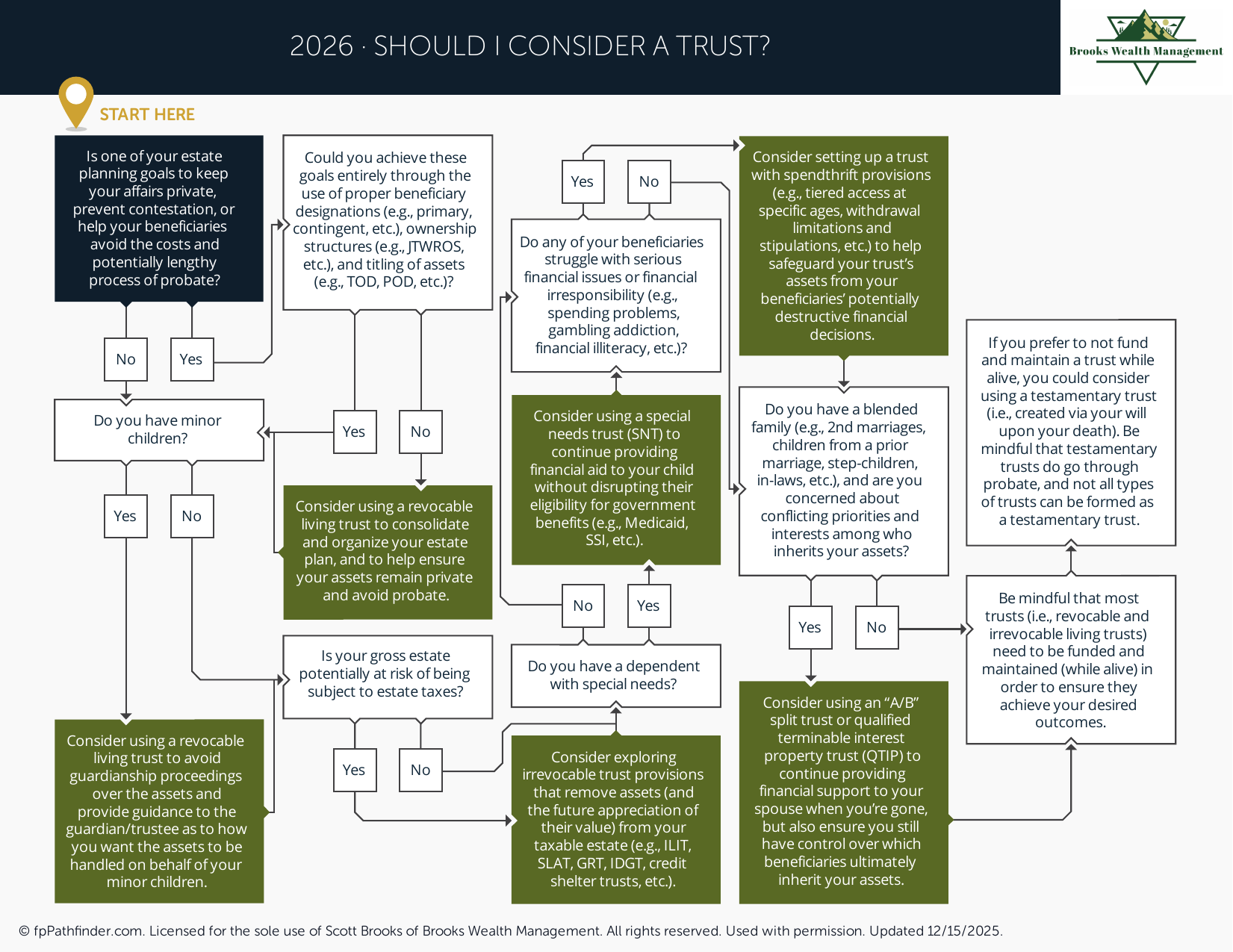
Should I Consider Using a Trust as Part of My Estate Plan?
Estate planning often involves more than deciding who will receive your assets. For many individuals and families, estate planning is also about protecting loved ones, organizing financial affairs, preparing for incapacity, and creating a framework for how wealth will be managed and distributed over time.
One estate planning tool that frequently arises during these discussions is a trust. While trusts can provide flexibility and control in certain situations, they are not necessary for every individual or family. Understanding how trusts work, the different types available, and the issues worth considering before establishing one can help you determine whether a trust may deserve further evaluation.
What Is a Trust?
A trust is a legal arrangement that allows assets to be managed by one party for the benefit of another. The individual creating the trust is often referred to as the grantor, settlor, or trust creator. The person or institution responsible for managing trust assets is generally known as the trustee, while those who benefit from the trust are referred to as beneficiaries.
A trust document typically outlines:
- Who will manage the assets.
- Who will benefit from the assets.
- When distributions may occur.
- How assets should be administered.
- What instructions should be followed over time.
Trusts can be used during life, after death, or both, depending on the type of trust and the objectives involved.
Why Do People Consider Trusts?
Individuals and families establish trusts for many different reasons. The appropriate solution depends on personal circumstances, family dynamics, financial goals, and estate planning objectives.
Common reasons people explore trusts include:
- Coordinating asset management during incapacity.
- Providing instructions for future asset distributions.
- Supporting minor children or grandchildren.
- Creating structure around inherited wealth.
- Providing for family members with special circumstances.
- Supporting charitable goals.
- Addressing business succession concerns.
- Facilitating estate administration.
Not every estate planning goal requires a trust, but trusts can serve as useful tools in certain situations.
Revocable Trusts
One of the most common trust structures is a revocable living trust.
A revocable trust generally allows the creator to retain control over trust assets during their lifetime. The trust may often be amended, modified, or revoked while the creator remains living and competent.
Questions that may deserve consideration include:
- Would centralized management of assets be helpful?
- Would incapacity planning be a priority?
- Are there multiple properties or complex assets involved?
- Would a trust simplify administration for family members?
Because every state has different probate procedures, individuals should discuss potential advantages and disadvantages with qualified legal counsel.
Irrevocable Trusts
Unlike revocable trusts, irrevocable trusts generally cannot be easily changed once established.
Irrevocable trusts are often used when specific planning objectives exist, such as:
- Asset protection planning.
- Special needs planning.
- Life insurance planning.
- Business succession planning.
- Charitable planning.
- Multi-generational wealth planning.
Because irrevocable trusts involve permanent legal decisions, they often require careful coordination among legal, tax, and financial professionals.
Questions to Consider Before Creating a Trust
Before establishing a trust, it may be helpful to evaluate several questions:
- What are your primary estate planning goals?
- Who will be responsible for administering the trust?
- Who are the intended beneficiaries?
- Do beneficiaries have unique financial circumstances?
- Will future generations be involved?
- How much flexibility do you want to retain?
- How will trust assets be managed?
The answers to these questions often help determine whether a trust may be appropriate and, if so, what type of trust may deserve consideration.
Trusts and Minor Children
Families with young children often evaluate trusts as part of a broader estate planning strategy.
Questions worth reviewing include:
- How would inherited assets be managed if a parent died unexpectedly?
- Who would oversee financial decisions?
- Should distributions occur at specific ages?
- Should funds be available for education, healthcare, or support expenses?
- Would additional oversight be beneficial?
Families reviewing these issues may also find value in exploring What Issues Should I Consider When Having or Adopting a Child?.
Trusts and Special Needs Planning
Families caring for loved ones with disabilities often face unique planning challenges.
Questions that may deserve consideration include:
- How will financial support be provided in the future?
- Should assets be managed by another person?
- How might inherited assets affect government benefit eligibility?
- What long-term support structure should be established?
A related resource that may be helpful is What Issues Should I Consider for My Child with Special Needs?.
Trusts and Charitable Planning
For individuals with philanthropic goals, trusts may sometimes be incorporated into broader charitable planning discussions.
Questions worth reviewing include:
- Should charitable giving continue beyond your lifetime?
- Do you want future generations involved in charitable decisions?
- Would charitable planning benefit from additional structure?
- How does philanthropy fit within your overall estate plan?
Individuals interested in charitable planning may also wish to review Should I Use a Donor-Advised Fund (DAF) When Giving to Public Charities? and What Issues Should I Consider When Developing a Charitable Giving Strategy?.
Trusts and Estate Administration
One of the most common reasons individuals explore trusts is to create an organized framework for managing assets after death.
Questions that may deserve consideration include:
- How complex is your estate?
- Are there multiple beneficiaries?
- Do you own real estate in multiple states?
- Will business interests need ongoing management?
- Would additional administration instructions benefit your family?
Individuals reviewing these issues may also find value in What Issues Should I Consider Before Closing the Estate?.
Trusts and Beneficiary Planning
A trust is only one component of an estate plan. Beneficiary designations, account ownership, and estate planning documents should generally be reviewed together.
Questions worth reviewing include:
- Do beneficiary designations align with trust provisions?
- Are retirement account beneficiaries current?
- Have life insurance beneficiaries been reviewed?
- Do account ownership arrangements support your goals?
A related resource that may be helpful is What Issues Should I Consider When Reviewing My Beneficiaries?.
Questions Worth Reviewing Before Moving Forward
Before creating a trust, many individuals find it helpful to consider the following:
- What objectives are you trying to accomplish?
- Would a trust solve a specific planning challenge?
- How much control do you want to retain?
- Who would serve as trustee?
- How should future distributions be handled?
- How does a trust fit within your overall estate plan?
These questions can help provide clarity before engaging in detailed legal planning.
About This Resource
This resource was created to provide general educational information regarding trusts and estate planning considerations. Trusts can serve many purposes, but the appropriateness of any trust structure depends on an individual's legal, financial, family, tax, and estate planning circumstances.
Because trust law, tax rules, and estate planning considerations vary significantly, this resource should be used for educational purposes only and should not be interpreted as legal, tax, investment, or financial advice.
For additional planning resources, visit the Brooks Wealth Management Resource Library. If you have questions about how trusts may fit into your broader financial picture, you can schedule an introductory conversation.