
What Issues Should I Consider Before Closing the Estate?
Checklist of final steps and considerations before formally closing a deceased person's estate.
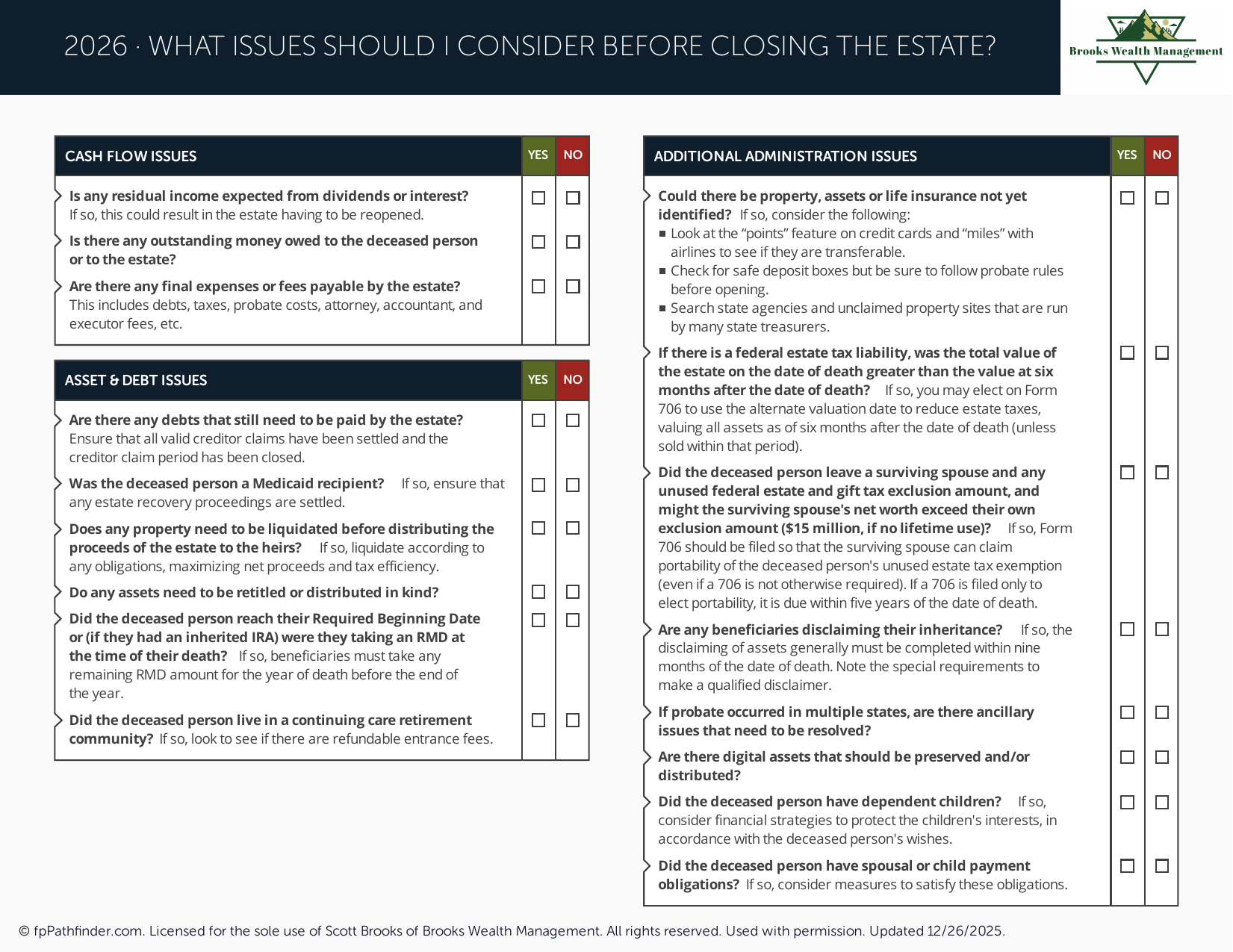
What Issues Should I Consider Before Closing an Estate?
Serving as an executor, trustee, or family member involved in estate administration often involves dozens of financial, legal, tax, and administrative responsibilities. While much attention is typically given to gathering assets and settling affairs, the final stage of the process—closing an estate—can be equally important.
Before an estate is formally closed, it may be worthwhile to review whether all assets have been collected, liabilities addressed, taxes filed, beneficiary distributions completed, and required documentation finalized. This checklist is designed to help identify common issues that may deserve attention before an estate administration process is completed.
Review Whether All Assets Have Been Located
Before closing an estate, one of the first questions to consider is whether all known assets have been identified and accounted for.
Examples may include:
- Bank accounts.
- Investment accounts.
- Retirement accounts.
- Life insurance proceeds.
- Real estate.
- Business interests.
- Personal property.
- Digital assets.
Questions that may deserve review include:
- Have all accounts been identified?
- Have account statements been obtained?
- Have assets been properly valued?
- Have any forgotten or dormant assets been located?
- Have beneficiary-designated assets been addressed?
Review Outstanding Debts and Liabilities
Estate administration often involves resolving debts and liabilities before assets are distributed.
Questions that may deserve consideration include:
- Have creditor claims been addressed?
- Have final medical bills been paid?
- Have outstanding loans been resolved?
- Have mortgage obligations been addressed?
- Have credit card balances been settled?
- Have utility accounts been closed?
Ensuring obligations are properly handled may help reduce future complications for beneficiaries and fiduciaries.
Review Income Tax Filing Requirements
Income tax matters are frequently among the final issues addressed before an estate is closed.
Questions that may deserve review include:
- Has the decedent's final income tax return been filed?
- Have any prior-year returns been addressed?
- Has the estate filed required fiduciary income tax returns?
- Have all taxes due been paid?
- Have refunds been received?
Because tax filing requirements vary by situation, many executors coordinate with qualified tax professionals during this stage of the process.
Review Estate Tax Considerations
Depending on the size and composition of the estate, estate tax considerations may deserve attention before closing the estate.
Questions that may deserve review include:
- Was an estate tax return required?
- Have federal filing obligations been satisfied?
- Do state estate tax rules apply?
- Have portability elections been considered?
- Have all tax-related deadlines been met?
Tax obligations are often among the final items reviewed before distributions are completed.
Review Beneficiary Distributions
Before closing an estate, it may be helpful to confirm that all distributions have been completed according to the governing documents and applicable laws.
Questions that may deserve consideration include:
- Have specific bequests been distributed?
- Have trust distributions been completed?
- Have cash distributions been made?
- Have beneficiaries received required documentation?
- Have receipts or acknowledgements been obtained when appropriate?
A related resource that may be helpful is What Issues Should I Consider When Reviewing My Beneficiaries?.
Review Real Estate Matters
If the estate owns real property, additional steps may be required before closing the estate.
Questions that may deserve review include:
- Has real estate been transferred or sold?
- Have property taxes been paid?
- Have homeowner insurance policies been updated?
- Have utilities been transferred or discontinued?
- Have maintenance issues been addressed?
Real estate transactions often require additional documentation before administration can be finalized.
Review Business Interests
If the deceased owned a business, business-related matters may deserve special attention before closing the estate.
Questions that may deserve consideration include:
- Has ownership been transferred?
- Have succession plans been implemented?
- Have business liabilities been addressed?
- Have partnership agreements been reviewed?
- Have key stakeholders been notified?
Business interests frequently require coordination among legal, tax, and financial professionals.
Review Trust Administration Requirements
Where trusts are involved, additional administrative requirements may need to be completed.
Questions that may deserve review include:
- Have trustee responsibilities been fulfilled?
- Have trust assets been transferred properly?
- Have required notices been provided?
- Have trust accounting requirements been completed?
- Have successor trustees assumed responsibility where appropriate?
A related resource that may be helpful is Should I Consider a Trust?.
Review Estate Accounting and Recordkeeping
Comprehensive recordkeeping is often an important part of estate administration.
Questions that may deserve consideration include:
- Have all receipts and expenses been documented?
- Has a final accounting been prepared?
- Have beneficiaries received required information?
- Have supporting records been retained?
- Can transactions be clearly explained if questions arise later?
Accurate records may help reduce misunderstandings and provide clarity regarding estate administration decisions.
Review Court and Probate Requirements
For estates that pass through probate, court-related requirements often must be completed before the estate can be formally closed.
Questions that may deserve review include:
- Have required filings been submitted?
- Have court approvals been obtained?
- Have notices to interested parties been completed?
- Have waiting periods expired?
- Has a final discharge been requested where applicable?
Probate procedures vary by jurisdiction, making local legal guidance particularly important.
Review Remaining Administrative Tasks
Before closing an estate, it may be helpful to verify that routine administrative matters have been addressed.
Examples may include:
- Closing financial accounts.
- Cancelling subscriptions.
- Updating property ownership records.
- Closing credit accounts.
- Handling digital assets and online accounts.
- Retaining estate records for future reference.
While these items may seem minor individually, collectively they can help complete the estate administration process.
Questions Worth Reviewing Before Closing an Estate
Many executors and family members find it helpful to review the following questions:
- Have all assets been identified and accounted for?
- Have debts and liabilities been addressed?
- Have required tax returns been filed?
- Have beneficiaries received their distributions?
- Have probate requirements been completed?
- Have trusts been administered properly?
- Have business interests been addressed?
- Has a final accounting been prepared?
A systematic review may help identify unresolved matters before the estate is formally closed.
How to Use This Checklist
This checklist is intended to serve as an educational framework for individuals involved in estate administration. It may be useful for executors, trustees, surviving spouses, adult children, and beneficiaries who want to better understand common financial, legal, tax, and administrative considerations before an estate is closed.
The checklist is not intended to provide legal, tax, accounting, or financial advice. Instead, it is designed to help organize questions and planning topics that may deserve additional review.
About This Resource
This checklist was created to help individuals better understand common issues that may arise before closing an estate. Estate administration often involves coordination among legal, tax, financial, and family considerations, and each situation is unique.
Because estate laws, probate procedures, tax rules, and beneficiary circumstances vary significantly, this resource should be used for educational purposes only and should not be interpreted as legal, tax, accounting, estate planning, investment, or financial advice.
For additional planning resources, visit the Brooks Wealth Management Resource Library. If you have questions about how estate administration may affect your broader financial picture, you can schedule an introductory conversation.