
Should I Use a Donor-Advised Fund (DAF) When Giving to Public Charities?
Decision flowchart to determine whether a donor-advised fund is the right vehicle for your charitable giving.
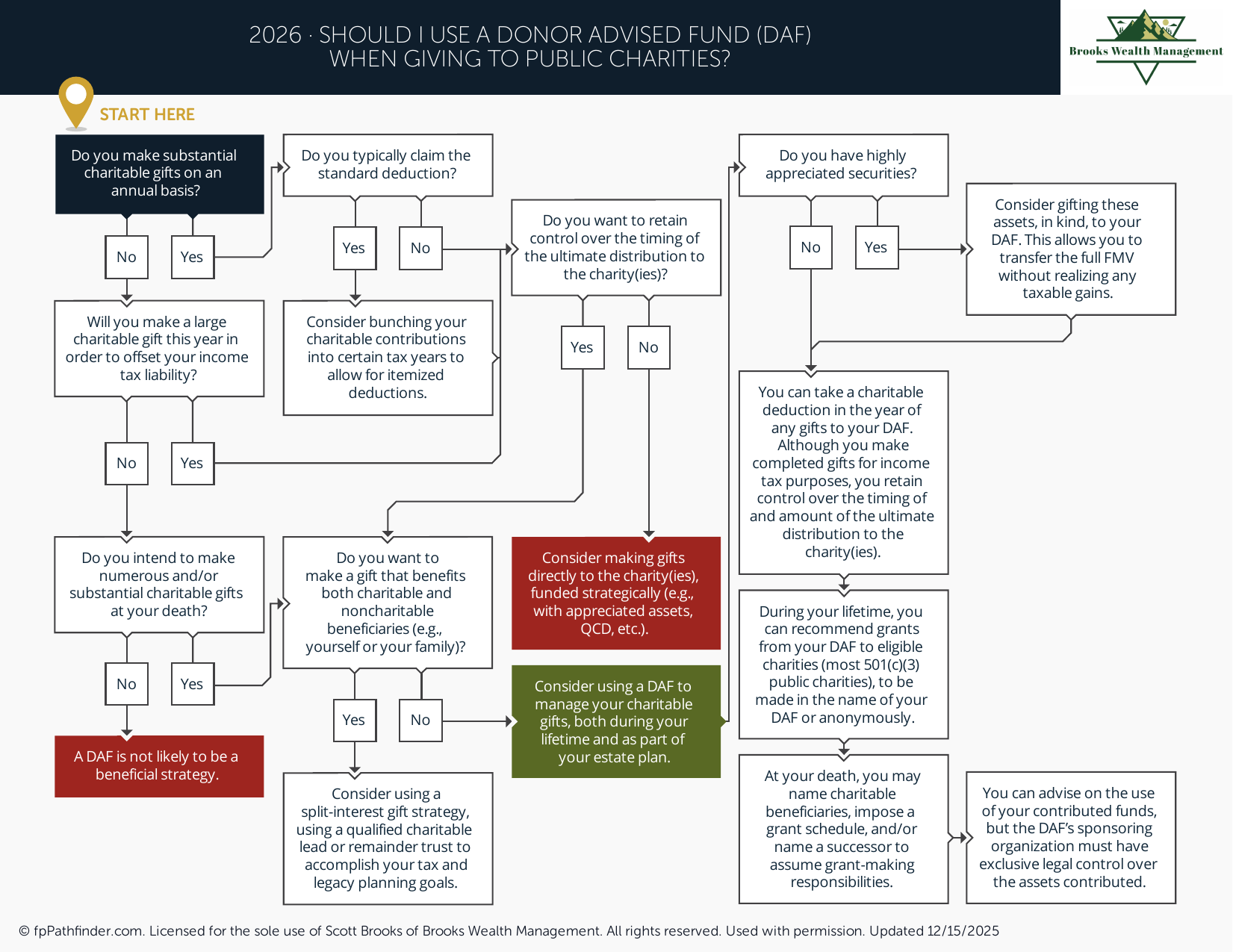
Should I Consider Using a Donor-Advised Fund for Charitable Giving?
Charitable giving is often an important part of a comprehensive financial plan. Whether your goal is supporting organizations you care about, creating a family giving strategy, or incorporating philanthropy into your broader estate planning objectives, there are several ways to structure charitable gifts.
One option that frequently receives attention is a donor-advised fund (DAF). While donor-advised funds can offer flexibility for some individuals and families, they are not the only charitable giving solution available. Understanding how a donor-advised fund works and the issues worth considering before establishing one can help you evaluate whether it fits your overall financial and philanthropic goals.
What Is a Donor-Advised Fund?
A donor-advised fund is a charitable giving account maintained by a sponsoring charitable organization. Contributions made to the account generally become irrevocable charitable gifts. Once assets are contributed, the account owner can typically recommend grants to qualified charitable organizations over time, subject to the sponsoring organization's policies and procedures.
A donor-advised fund may allow charitable giving decisions to be separated into two stages:
- Making a charitable contribution to the donor-advised fund.
- Recommending grants to charitable organizations in future years.
This structure can provide flexibility for individuals who wish to create a more organized approach to charitable giving.
Questions to Consider Before Establishing a Donor-Advised Fund
Before opening a donor-advised fund, it may be helpful to consider several questions:
- What are your long-term charitable goals?
- Do you prefer making gifts directly to charities or through a dedicated charitable account?
- Do you anticipate making charitable gifts over many years?
- Would you like family members to participate in future charitable decisions?
- Are you looking for a centralized way to track charitable activity?
The answers to these questions may help determine whether a donor-advised fund aligns with your personal giving objectives.
Types of Assets That May Be Contributed
Depending on the sponsoring organization, donor-advised funds may accept a variety of asset types. These can include:
- Cash contributions.
- Publicly traded securities.
- Mutual funds.
- Certain business interests.
- Certain real estate interests.
- Other approved charitable assets.
Contribution rules vary among sponsoring organizations, and not all asset types are accepted by every provider. Individuals considering non-cash contributions may wish to consult with qualified tax, legal, and financial professionals before proceeding.
How a Donor-Advised Fund May Fit Within a Charitable Giving Plan
Many charitable individuals and families seek consistency in their giving rather than making decisions year by year. A donor-advised fund can serve as one framework for organizing charitable activities and creating a long-term philanthropic plan.
Some individuals use donor-advised funds to:
- Coordinate charitable gifts across multiple organizations.
- Create a family charitable giving process.
- Support causes over an extended period of time.
- Maintain records related to charitable activity.
- Integrate charitable planning with broader estate planning objectives.
A related resource that may be helpful is What Issues Should I Consider When Developing a Charitable Giving Strategy?.
Tax Considerations
Charitable contributions can have tax implications, but the specific outcome depends on individual circumstances, asset types, tax laws, and charitable organizations involved.
Questions that may deserve consideration include:
- What type of asset is being contributed?
- How are charitable deductions calculated?
- Are there deduction limitations that may apply?
- How might charitable giving affect overall tax planning?
- Should charitable giving be coordinated with other financial decisions?
Because tax rules can change and individual circumstances vary significantly, charitable giving decisions should generally be evaluated alongside qualified tax advice.
Donor-Advised Funds and Estate Planning
For some families, charitable giving extends beyond annual donations and becomes part of a broader legacy planning discussion.
Questions worth reviewing may include:
- Should charitable goals be reflected in estate planning documents?
- Would family members participate in future giving decisions?
- How should charitable intentions be communicated to heirs?
- Should charitable giving be incorporated into trust planning?
- How does philanthropy fit within overall wealth transfer objectives?
Individuals evaluating these issues may also find value in reviewing What Issues Should I Consider Before Creating an Estate Plan? and What Issues Should I Consider Before Updating My Estate Plan?.
Alternatives to a Donor-Advised Fund
A donor-advised fund is only one of several charitable giving approaches.
Other possibilities may include:
- Direct charitable contributions.
- Private foundations.
- Charitable trusts.
- Charitable beneficiary designations.
- Planned giving arrangements.
Each option carries different administrative requirements, costs, responsibilities, and planning considerations. The most appropriate approach often depends on the individual's goals, resources, and desired level of involvement.
Questions Worth Reviewing Before Moving Forward
Before establishing a donor-advised fund, many individuals find it helpful to review the following questions:
- What causes are most important to you?
- How frequently do you expect to make charitable gifts?
- Do you want a structured charitable giving framework?
- How might charitable giving affect your broader financial plan?
- Should charitable goals be incorporated into estate planning discussions?
- Would a donor-advised fund simplify your charitable activities?
Reviewing these questions can help provide clarity before implementing any charitable giving strategy.
About This Resource
This resource was created to help individuals better understand donor-advised funds and the issues that may be worth considering before incorporating one into a charitable giving plan.
Charitable planning often intersects with tax planning, estate planning, investment management, and family wealth transfer objectives. Because every situation is unique, this resource should be used for educational purposes only and should not be interpreted as tax, legal, investment, charitable planning, or financial advice.
For additional planning resources, visit the Brooks Wealth Management Resource Library. If you would like to discuss how charitable giving may fit within your broader financial picture, you can schedule an introductory conversation.