
What Issues Should I Consider for My Child with Special Needs?
Checklist of financial, legal, and benefit planning considerations for families with special needs children.
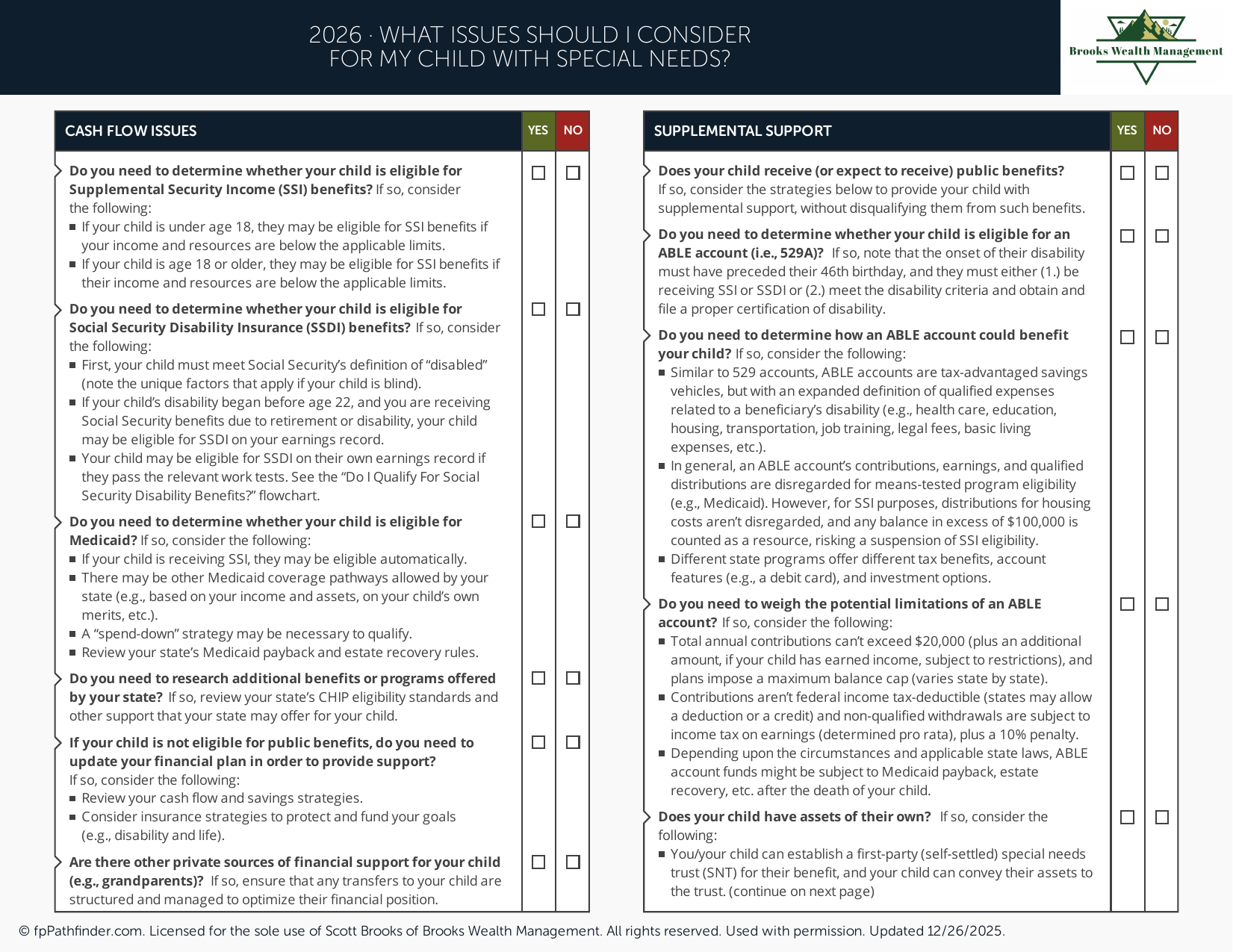
What Issues Should I Consider for My Child With Special Needs?
Families with a child who has special needs often face unique financial, legal, healthcare, education, and long-term planning considerations. While every situation is different, many parents and caregivers find that proactive planning can help provide greater flexibility, organization, and support throughout their child's lifetime.
This checklist is designed to provide a framework for reviewing common financial and planning issues that may arise when caring for a child with special needs. The objective is not to provide legal, tax, healthcare, or financial advice, but rather to help identify important areas that may warrant additional review.
Review Your Child's Current and Future Needs
Every child has unique circumstances, strengths, challenges, and support requirements. Developing a clear understanding of both current and future needs may help families make more informed planning decisions.
Questions that may deserve review include:
- What support services are currently being utilized?
- What future care needs may arise?
- What educational resources are available?
- How might needs change over time?
- Who will be involved in providing care and support?
Because long-term planning often spans many decades, reviewing potential future needs can be an important part of the planning process.
Review Government Benefits and Assistance Programs
Many families explore federal, state, and local programs that may provide assistance or support for individuals with disabilities. Eligibility requirements vary significantly depending on the program and individual circumstances.
Topics that may deserve review include:
- Healthcare-related benefits.
- Disability-related benefits.
- Educational support programs.
- Community-based services.
- Housing assistance programs.
- Employment support resources.
Because program eligibility rules can change and may vary by location, families often consult qualified professionals when evaluating available options.
Review Healthcare and Insurance Coverage
Healthcare planning is often an important component of special needs planning. Understanding available coverage and future healthcare considerations may help families prepare for potential expenses and care needs.
Questions that may be worth reviewing include:
- Does current health insurance adequately meet needs?
- Are specialist services covered?
- What out-of-pocket costs may arise?
- Have future healthcare needs been considered?
- Should supplemental insurance coverage be reviewed?
A related resource that may be helpful is What Issues Should I Consider When Reviewing My Health and Life Insurance Coverage?.
Review Long-Term Financial Planning Goals
Many families choose to incorporate special needs planning into their broader financial plan. Understanding how future support needs may affect savings, retirement, and estate planning goals can help create a more coordinated strategy.
Questions that may deserve review include:
- What long-term financial resources may be needed?
- How do future care costs fit within family goals?
- Are existing savings strategies appropriate?
- How does special needs planning affect retirement objectives?
- What financial resources may be available in the future?
Because planning horizons may extend well beyond a parent's lifetime, many families find long-term planning especially important.
Review Estate Planning Documents
Estate planning often plays a central role in special needs planning. Families frequently review legal documents to ensure they align with their wishes and long-term objectives.
Items that may deserve review include:
- Wills.
- Trusts.
- Powers of attorney.
- Healthcare directives.
- Guardianship-related considerations.
- Beneficiary designations.
Because legal requirements vary by state and circumstances, many families work with qualified estate planning attorneys when reviewing these matters.
Related resources that may be helpful include:
- Should I Consider a Trust?
- What Issues Should I Consider Before I Update My Estate Plan?
- What Issues Should I Consider When Reviewing My Beneficiaries?
Review Life Insurance and Survivor Planning
Many families review life insurance and survivor planning considerations as part of a broader effort to provide financial support for future care needs.
Topics that may deserve review include:
- Existing life insurance coverage.
- Beneficiary arrangements.
- Long-term support objectives.
- Future caregiving plans.
- Funding strategies for future needs.
A related resource that may be helpful is What Issues Should I Consider When Purchasing a Life Insurance Policy?.
Review Caregiver and Guardian Considerations
One of the most important planning discussions for many families involves determining who may provide support or assistance if parents or primary caregivers are no longer able to do so.
Questions that may deserve consideration include:
- Who would provide future support if needed?
- Have potential caregivers been identified?
- Have conversations occurred with family members?
- Are important documents organized and accessible?
- Does the family have a written care plan?
While these discussions can be difficult, many families find value in planning ahead and documenting important information.
Review Education, Employment, and Independence Goals
Depending on a child's circumstances, future goals related to education, employment, housing, and independence may become important planning considerations.
Questions that may be worth reviewing include:
- What educational opportunities are available?
- What employment-related resources exist?
- What level of independence may be achievable?
- Are housing options understood?
- How might future support needs evolve over time?
Because each individual's circumstances are unique, future planning goals often differ significantly from family to family.
Review Family Financial Organization
Maintaining organized financial records may help simplify future planning and decision-making.
Items that may deserve review include:
- Insurance policies.
- Investment accounts.
- Retirement accounts.
- Estate planning documents.
- Medical and healthcare records.
- Important professional contacts.
Many families find it helpful to maintain a centralized record of important information and planning documents.
Questions Worth Reviewing for Families With a Child Who Has Special Needs
Many families find it helpful to review the following questions:
- Have current and future care needs been evaluated?
- Are available support programs understood?
- Does healthcare coverage align with current needs?
- Have estate planning documents been reviewed?
- Are beneficiary designations current?
- Have future caregiver arrangements been discussed?
- Are long-term financial goals aligned with future support needs?
- Is important family information organized and accessible?
A structured review process may help families identify planning opportunities and organize important information for the future.
How to Use This Checklist
This checklist is intended to serve as an educational resource that helps organize common financial, legal, healthcare, education, and planning considerations for families with a child who has special needs. It may be useful as circumstances evolve and as future planning needs become clearer.
The checklist does not provide legal, tax, healthcare, insurance, estate planning, or financial advice. Instead, it is designed to help identify planning topics and questions that may warrant additional review.
About This Resource
This checklist was created as an educational resource to help families better understand common financial, legal, healthcare, and planning considerations associated with raising and supporting a child with special needs. The objective is to provide a framework for reviewing long-term goals, estate planning matters, support resources, and broader financial planning considerations.
Because healthcare situations, legal requirements, benefit eligibility rules, and family circumstances vary significantly, this resource should be used for educational purposes only and should not be interpreted as legal, tax, healthcare, insurance, estate planning, or financial advice.
For additional planning resources, visit the Brooks Wealth Management Resource Library. If you have questions about how special needs planning may affect your broader financial picture, you can schedule an introductory conversation.