
What Issues Do I Need to Consider as My Child Becomes Independent?
Checklist of financial and planning steps as a child transitions to financial independence.
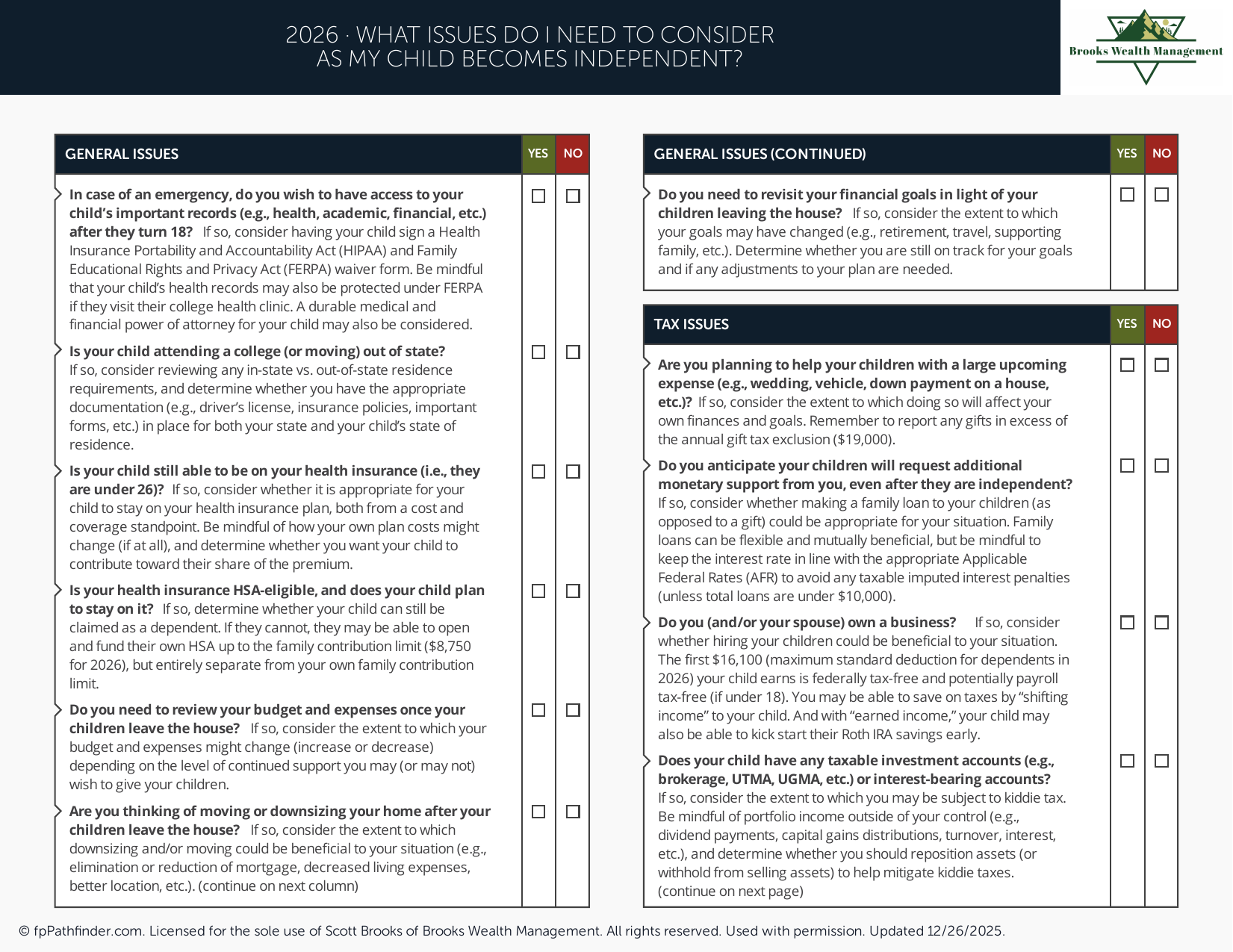
What Issues Should I Consider as My Child Becomes Financially Independent?
One of the major transitions many parents experience is helping a child move from financial dependence to financial independence. Whether a child is graduating from college, starting a career, entering a trade, launching a business, or simply becoming more financially self-sufficient, this period often creates new financial, legal, insurance, and planning considerations for both the child and the parents.
While every family situation is unique, many parents find value in having structured conversations about financial responsibility, savings, insurance, benefits, and long-term planning. This checklist is designed to provide a framework for reviewing common considerations as a child transitions into adulthood and begins managing their own financial life.
Review Income and Cash Flow Management
One of the foundational components of financial independence is learning how to manage income and expenses responsibly. Developing healthy financial habits early may help support long-term financial stability.
Questions that may deserve review include:
- Does your child understand their sources of income?
- Have they created a budget or spending plan?
- Are they tracking expenses?
- Do they understand the difference between fixed and variable expenses?
- Are savings goals being established?
Learning how to manage cash flow is often one of the first major financial skills young adults develop.
Review Emergency Savings
Unexpected expenses can occur at any stage of life. Building emergency reserves may help reduce financial stress and improve flexibility when unexpected events arise.
Questions that may be worth reviewing include:
- Has an emergency fund been established?
- Where are savings being held?
- Are savings contributions occurring regularly?
- Would unexpected expenses create financial hardship?
- Are financial goals competing with emergency savings priorities?
Many young adults find that building emergency reserves is an important step toward greater financial independence.
Review Student Loans and Other Debt
Many young adults begin their financial lives with education-related debt, vehicle loans, credit card balances, or other obligations. Understanding how debt fits into a broader financial plan may help support better long-term decision-making.
Questions that may deserve review include:
- What debts currently exist?
- Are repayment obligations clearly understood?
- Are minimum payments being met consistently?
- Are interest rates understood?
- Is a repayment strategy in place?
A related resource that may be helpful is Should I Pay Off My Debts?.
Review Employer Benefits and Workplace Retirement Plans
For many young adults, a first full-time job introduces new financial opportunities and responsibilities. Understanding available workplace benefits may help maximize the value of an employment package.
Topics that may deserve review include:
- Retirement plan participation.
- Employer matching contributions.
- Health insurance coverage.
- Life insurance benefits.
- Disability insurance coverage.
- Flexible spending or savings accounts.
Individuals starting a new position may also find it helpful to review What Issues Should I Consider When Starting a New Job?.
Review Savings and Investment Habits
Establishing consistent saving and investing habits may be one of the most impactful financial decisions a young adult makes. Developing a long-term perspective can help support future financial goals.
Questions that may deserve review include:
- Are savings contributions occurring consistently?
- Have financial goals been identified?
- Are retirement accounts being utilized where appropriate?
- Does the investment approach align with goals and risk tolerance?
- Are short-term and long-term objectives clearly defined?
A related resource that may be helpful is What Accounts Should I Consider If I Want to Save More?.
Review Credit and Borrowing Decisions
Credit history can influence many future financial opportunities, including housing, vehicle financing, and borrowing arrangements.
Questions that may be worth reviewing include:
- Has credit been established responsibly?
- Are payments being made on time?
- Are credit balances manageable?
- Does your child understand how credit scores are calculated?
- Are borrowing decisions aligned with long-term goals?
Understanding how credit works may help young adults make more informed financial decisions throughout their lives.
Review Insurance Coverage
Insurance needs often change as young adults become financially independent. Reviewing available coverage may help identify potential gaps.
Topics that may deserve review include:
- Health insurance coverage.
- Auto insurance coverage.
- Renters insurance.
- Disability insurance.
- Life insurance considerations.
Related resources that may be helpful include:
- What Issues Should I Consider When Reviewing My Health and Life Insurance Coverage?
- What Issues Should I Consider When Purchasing a Disability Insurance Policy?
Review Estate Planning and Beneficiary Designations
Although estate planning is often associated with older individuals, many young adults may benefit from understanding basic estate planning concepts and account ownership structures.
Items that may deserve review include:
- Beneficiary designations.
- Account ownership arrangements.
- Healthcare directives where appropriate.
- Powers of attorney where appropriate.
A related resource that may be helpful is What Issues Should I Consider When Reviewing My Beneficiaries?.
Review Housing and Major Life Decisions
As financial independence develops, many young adults begin evaluating housing decisions, career opportunities, and other significant milestones.
Questions that may deserve review include:
- Is renting or purchasing housing being considered?
- Are relocation opportunities being evaluated?
- How might future career decisions affect financial goals?
- Are major purchases being evaluated carefully?
- Do current decisions align with long-term objectives?
Related resources that may be helpful include:
- What Issues Should I Consider When Buying a Home?
- What Issues Should I Consider When Moving Out of State?
Review the Parent's Role Going Forward
Financial independence often involves a transition in the relationship between parents and adult children. Determining how support, guidance, and financial assistance may be handled in the future can help create clearer expectations.
Questions that may deserve consideration include:
- Will financial assistance continue?
- Are expectations clearly communicated?
- What financial responsibilities belong to the child?
- How will future financial support decisions be handled?
- Are boundaries and goals understood by both parties?
Each family approaches these decisions differently, and there is no universally correct solution.
Questions Worth Reviewing as a Child Becomes Financially Independent
Many families find it helpful to review the following questions:
- Does the child understand budgeting and cash flow management?
- Has an emergency fund been established?
- Are debt obligations being managed appropriately?
- Are workplace benefits being utilized effectively?
- Are savings and investing habits developing?
- Does the child understand insurance and risk management?
- Have beneficiary designations been reviewed?
- Are financial expectations clearly communicated?
A structured review process may help identify planning opportunities while supporting a smoother transition into financial independence.
How to Use This Checklist
This checklist is intended to serve as an educational resource that helps organize common financial, insurance, employment, savings, and planning considerations that may arise as a child becomes financially independent. It may be useful for parents, recent graduates, young professionals, or anyone transitioning into greater financial responsibility.
The checklist does not provide tax, legal, investment, insurance, or financial advice. Instead, it is designed to help identify planning topics and questions that may warrant additional review.
About This Resource
This checklist was created as an educational resource to help families better understand common financial and planning considerations associated with a child's transition to financial independence. The objective is to provide a framework for reviewing budgeting, savings, debt management, insurance coverage, workplace benefits, and long-term financial planning topics.
Because financial circumstances, career paths, family dynamics, and personal goals vary significantly, this resource should be used for educational purposes only and should not be interpreted as tax, legal, investment, insurance, or financial advice.
For additional planning resources, visit the Brooks Wealth Management Resource Library. If you have questions about how financial independence planning may fit into your family's broader financial picture, you can schedule an introductory conversation.