
What Issues Should I Consider When Buying a Home?
Checklist of financial, tax, and planning considerations when purchasing a home.
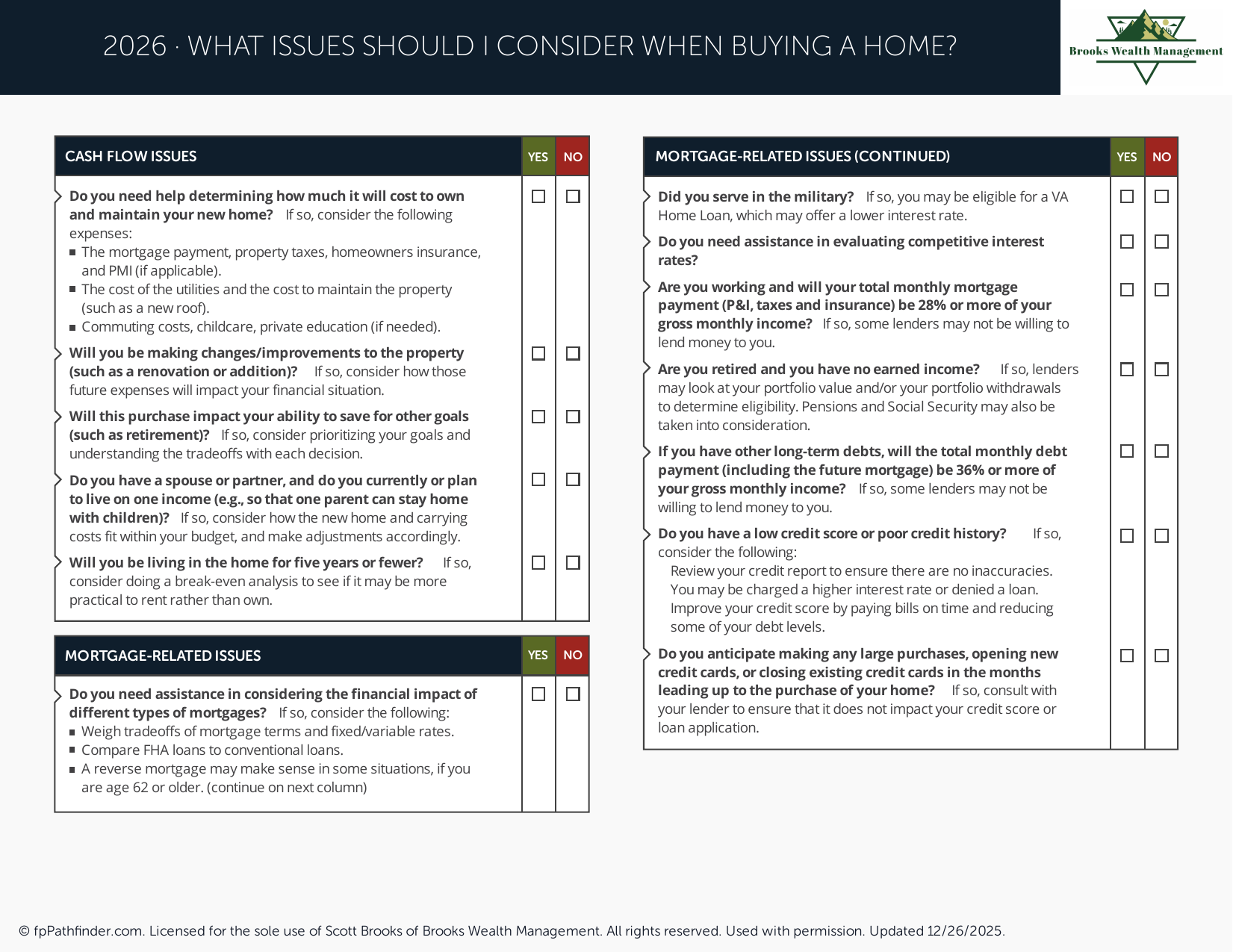
What Issues Should I Consider When Buying a Home?
Buying a home is often one of the largest financial decisions an individual or family will make. While much of the attention naturally focuses on finding the right property, the purchase of a home can involve a variety of financial, tax, insurance, cash flow, and long-term planning considerations that may deserve review before moving forward.
This checklist is designed to provide a framework for evaluating common issues that may arise when purchasing a home. The objective is not to recommend whether a home should be purchased, but rather to help organize important planning considerations that may be relevant before making a significant housing decision.
Review Why You Are Buying the Home
Before evaluating financing options or specific properties, it can be helpful to understand the primary reason for the purchase. Different objectives may lead to different financial considerations.
Common reasons individuals purchase a home include:
- Establishing a primary residence.
- Accommodating a growing family.
- Relocating for employment.
- Retirement planning.
- Lifestyle preferences.
- Reducing housing uncertainty.
Clarifying the purpose of the purchase may help provide context for evaluating affordability, financing decisions, and long-term housing goals.
Review Overall Affordability
The purchase price is only one component of homeownership. Many individuals find it helpful to evaluate how the full cost of ownership may affect their financial plan.
Questions that may deserve review include:
- How will monthly housing costs fit within household cash flow?
- What funds are available for a down payment?
- How much liquidity will remain after closing?
- Will emergency reserves remain intact?
- How might future maintenance costs affect finances?
Reviewing affordability from multiple angles may help provide a more complete understanding of the financial commitment associated with homeownership.
Review Down Payment and Cash Reserve Considerations
Purchasing a home often requires a significant amount of cash for the down payment, closing costs, moving expenses, and other upfront costs.
Topics that may warrant review include:
- Available savings.
- Emergency fund adequacy.
- Expected closing costs.
- Moving expenses.
- Home furnishing or renovation costs.
- Future liquidity needs.
Some individuals focus primarily on the down payment while overlooking the importance of maintaining financial flexibility after the purchase is completed.
Review Mortgage and Financing Decisions
Financing is often one of the most significant components of a home purchase. Understanding available options may help individuals evaluate how borrowing decisions fit within their broader financial plan.
Questions that may be worth reviewing include:
- What loan options are available?
- How does the mortgage payment affect cash flow?
- What closing costs apply?
- How long is the expected ownership period?
- How does financing fit within long-term goals?
Because financing decisions can have long-term implications, many individuals choose to review multiple scenarios before making a final decision.
A related resource that may be helpful is Should I Consider Refinancing My Mortgage?.
Review Housing Costs Beyond the Mortgage Payment
Homeownership expenses often extend beyond principal and interest payments. Reviewing the broader cost of ownership may help reduce future surprises.
Additional costs that may deserve consideration include:
- Property taxes.
- Homeowners insurance.
- HOA dues.
- Maintenance and repairs.
- Utilities.
- Landscaping and upkeep.
- Potential future renovations.
Understanding these ongoing expenses may help create a more realistic picture of long-term affordability.
Review Insurance Needs
Purchasing a home often creates the need to evaluate insurance coverage and risk management considerations.
Topics that may deserve review include:
- Homeowners insurance coverage.
- Flood or other supplemental coverage.
- Umbrella liability insurance.
- Personal property coverage.
- Deductible levels.
Individuals reviewing broader insurance planning topics may also find it useful to review What Issues Should I Consider When Reviewing My Property and Casualty Insurance Policies?.
Review How the Home Purchase Fits Into Your Financial Plan
A home purchase may affect multiple areas of a financial plan. The decision can influence savings rates, retirement planning, investment decisions, and future financial flexibility.
Questions that may warrant review include:
- Will the purchase affect retirement savings goals?
- How does the home fit within overall net worth?
- Will other financial goals need to be adjusted?
- Does the purchase affect future career flexibility?
- How will the home impact long-term financial priorities?
Related resources that may be helpful include Should I Pay Off My Debts? and What Accounts Should I Consider If I Want to Save More?.
Review Estate Planning and Beneficiary Information
For some individuals, a home purchase may create a need to review ownership arrangements, beneficiary designations, and estate planning documents.
Items that may deserve review include:
- Property ownership structure.
- Wills and trusts.
- Powers of attorney.
- Beneficiary designations.
- Estate planning objectives.
A related resource that may be helpful is What Issues Should I Consider When Reviewing My Beneficiaries?.
Questions Worth Reviewing Before Buying a Home
Many individuals find it helpful to review the following questions before purchasing a home:
- Why am I buying this property?
- Can I comfortably afford the total cost of ownership?
- Will sufficient cash reserves remain after closing?
- How does the purchase affect other financial goals?
- Have financing options been thoroughly reviewed?
- Are insurance needs properly addressed?
- Does the property align with long-term plans?
- Have potential risks been considered?
A structured review process may help ensure important planning topics are evaluated before making a major housing decision.
How to Use This Checklist
This checklist is intended to serve as an educational resource that helps organize common financial, housing, insurance, and planning considerations associated with purchasing a home. It may be useful during the home search process, before obtaining financing, or prior to making an offer on a property.
The checklist does not provide legal, tax, lending, real estate, investment, or financial advice. Instead, it is designed to help identify planning topics and questions that may warrant additional review.
About This Resource
This checklist was created as an educational resource to help individuals better understand common financial, tax, insurance, and planning considerations associated with buying a home. The objective is to provide a framework for evaluating affordability, financing decisions, housing costs, and how homeownership may fit within broader financial goals.
Because housing decisions, lending options, tax situations, and financial circumstances vary significantly, this resource should be used for educational purposes only and should not be interpreted as legal, tax, lending, real estate, investment, or financial advice.
For additional planning resources, visit the Brooks Wealth Management Resource Library. If you have questions about how a home purchase may affect your broader financial picture, you can schedule an introductory conversation.