
Should I Pay Off My Debts?
Decision flowchart to prioritize debt payoff vs. investing based on your financial situation.
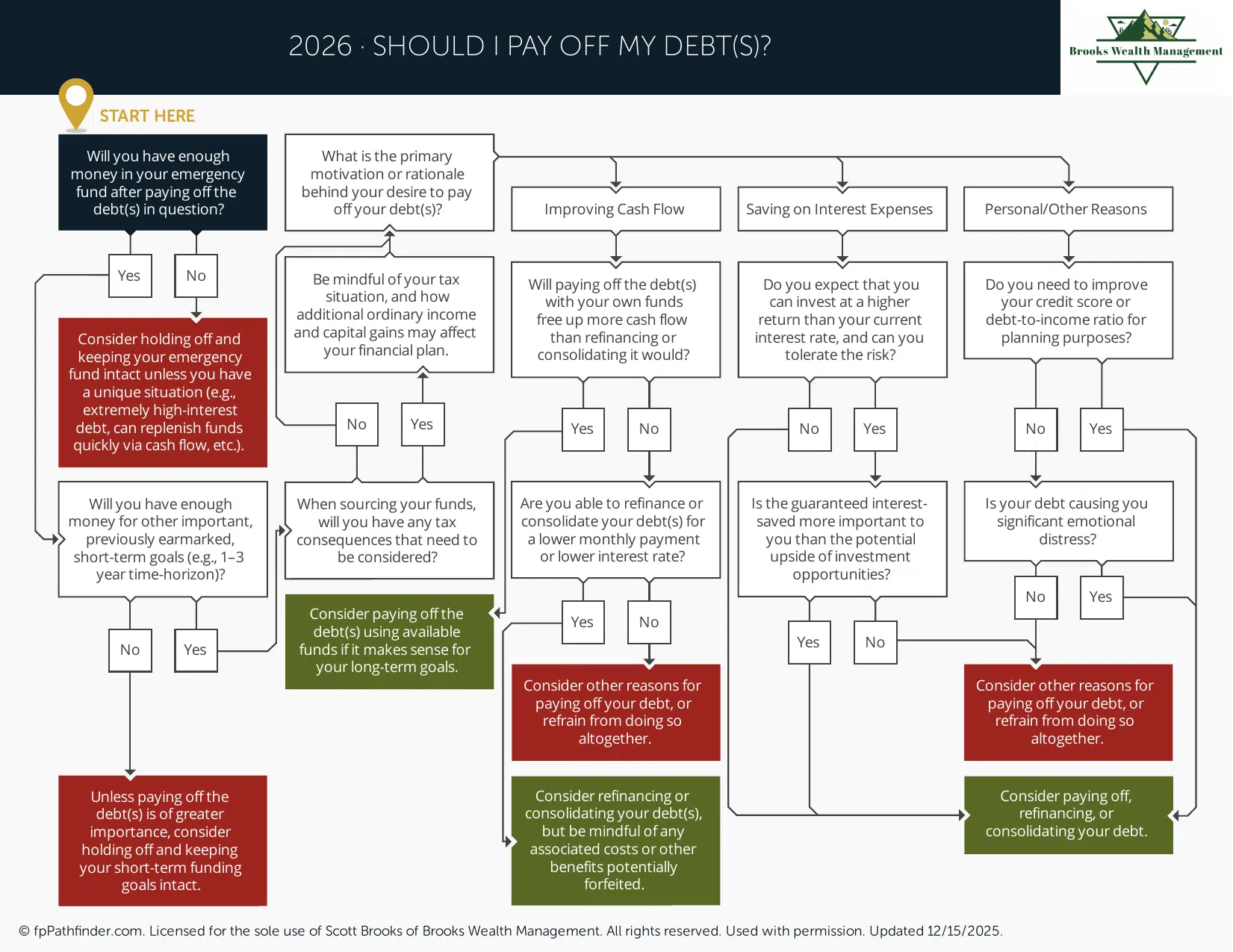
Should I Pay Off My Debts?
Debt can play an important role in a financial plan, but not all debt should be viewed the same way. Some debts may support long-term financial goals, while others can place significant pressure on cash flow and reduce financial flexibility. Determining whether to pay off debt, accelerate repayment, or prioritize other financial goals often requires evaluating multiple factors rather than relying on a single rule of thumb.
This checklist is designed to help individuals and families review the issues that may be worth considering when deciding how to prioritize debt repayment within a broader financial plan.
Review the Types of Debt You Have
The first step is understanding the nature of your outstanding obligations. Different types of debt often carry different costs, risks, and planning considerations.
Examples may include:
- Credit card balances
- Personal loans
- Student loans
- Auto loans
- Mortgage loans
- Home equity borrowing
- Business-related debt
Understanding the purpose, structure, and terms of each obligation can help establish repayment priorities and identify opportunities for improvement.
Review Interest Rates and Borrowing Costs
Interest costs are often one of the most important factors when evaluating debt repayment decisions. The cost of carrying debt can vary significantly depending on the type of loan involved.
Questions worth considering include:
- What is the interest rate on each debt?
- Are rates fixed or variable?
- How much interest is being paid annually?
- Could interest rates change in the future?
- Are there opportunities to reduce borrowing costs?
Understanding the cost of each debt can help provide a framework for prioritizing repayment efforts.
Review Your Cash Flow Situation
Debt repayment decisions should often be evaluated alongside cash flow. A repayment strategy that looks attractive on paper may create challenges if it places excessive strain on monthly finances.
Areas commonly reviewed include:
- Monthly income
- Required debt payments
- Living expenses
- Savings contributions
- Business cash flow needs
- Expected future expenses
Evaluating debt within the context of cash flow can help determine whether additional payments are sustainable and aligned with broader financial priorities.
Related resources include What Issues Should I Consider During a Cash Flow Review? and Where Should My Next Dollar Go?.
Review Emergency Savings Before Accelerating Debt Payments
Many individuals focus on debt reduction while simultaneously trying to maintain financial flexibility. Before directing substantial resources toward debt repayment, it may be helpful to evaluate available emergency reserves.
Questions worth reviewing include:
- Is there an adequate emergency fund?
- Could unexpected expenses create financial stress?
- Would additional debt payments reduce liquidity too significantly?
- Are there upcoming expenses that may require cash reserves?
Maintaining appropriate liquidity can help reduce the risk of needing to incur additional debt when unexpected events occur.
Review Debt Repayment Versus Saving and Investing
One of the most common financial planning questions involves deciding whether excess cash flow should be directed toward debt repayment or other financial goals.
Potential competing priorities may include:
- Retirement savings
- Investment accounts
- Education funding
- Business opportunities
- Home purchases
- Emergency reserves
- Other long-term financial goals
Rather than viewing debt repayment and saving as mutually exclusive, some individuals choose a balanced approach that addresses multiple objectives simultaneously.
You may also find it helpful to review What Accounts Should I Consider If I Want to Save More?.
Review Potential Refinancing Opportunities
In some situations, the decision may not be whether to pay off debt immediately, but whether the debt structure itself can be improved.
Areas that may warrant review include:
- Interest rate reductions
- Loan term adjustments
- Payment flexibility
- Consolidation opportunities
- Changes in cash flow requirements
Refinancing or restructuring debt may improve financial flexibility without requiring accelerated repayment.
Related resources include Should I Consider Refinancing My Mortgage? and Should I Pay Off My Mortgage Early?.
Review Retirement Planning Considerations
Debt repayment decisions often interact with retirement planning. Some individuals prioritize entering retirement with little or no debt, while others focus on building retirement assets before accelerating debt reduction.
Questions worth considering include:
- How close is retirement?
- Are retirement savings goals on track?
- Will debt obligations continue into retirement?
- How will future income sources support debt payments?
- Does the repayment strategy align with retirement objectives?
Reviewing debt decisions alongside retirement goals can help ensure both remain aligned.
Additional guidance may be found in What Issues Should I Consider Before I Retire?.
Review the Emotional and Lifestyle Considerations
Debt decisions are not always driven exclusively by financial calculations. Personal preferences, risk tolerance, and peace of mind often play a meaningful role.
Some individuals value:
- Reducing financial obligations
- Eliminating monthly payments
- Simplifying finances
- Improving peace of mind
- Increasing financial independence
Others may prioritize:
- Maintaining liquidity
- Preserving investment flexibility
- Retaining access to capital
- Pursuing business or investment opportunities
Both perspectives can be valid depending on the individual's circumstances and priorities.
Review Your Long-Term Financial Goals
Ultimately, debt repayment is rarely an isolated decision. It is often one component of a broader financial strategy designed to support long-term objectives.
Questions worth reviewing include:
- What financial goals are most important?
- How does debt affect those goals?
- Will accelerated repayment improve future flexibility?
- Could resources be used more effectively elsewhere?
- Does the strategy align with your overall financial plan?
Evaluating debt within the context of long-term goals can help ensure financial decisions remain aligned with broader priorities.
You may also find value in reviewing Master List of Financial Goals.
About This Resource
This checklist was created to help individuals and families evaluate common issues associated with debt repayment decisions. The objective is to provide a structured framework for reviewing borrowing costs, cash flow, savings goals, retirement planning, liquidity needs, refinancing opportunities, and long-term financial objectives.
Every financial situation is unique. Factors such as income, debt structure, investment opportunities, family circumstances, business ownership, and retirement goals can all influence the appropriate repayment strategy. Reviewing these issues carefully may help support more informed and balanced financial decisions.
This resource is provided for educational purposes only and should not be construed as investment, tax, legal, lending, or financial advice. Individuals should consult appropriate professionals regarding their specific circumstances before implementing any financial strategy.