
Where Should My Next Dollar Go?
Flowchart to determine the optimal use of your next available dollar for savings or debt payoff.
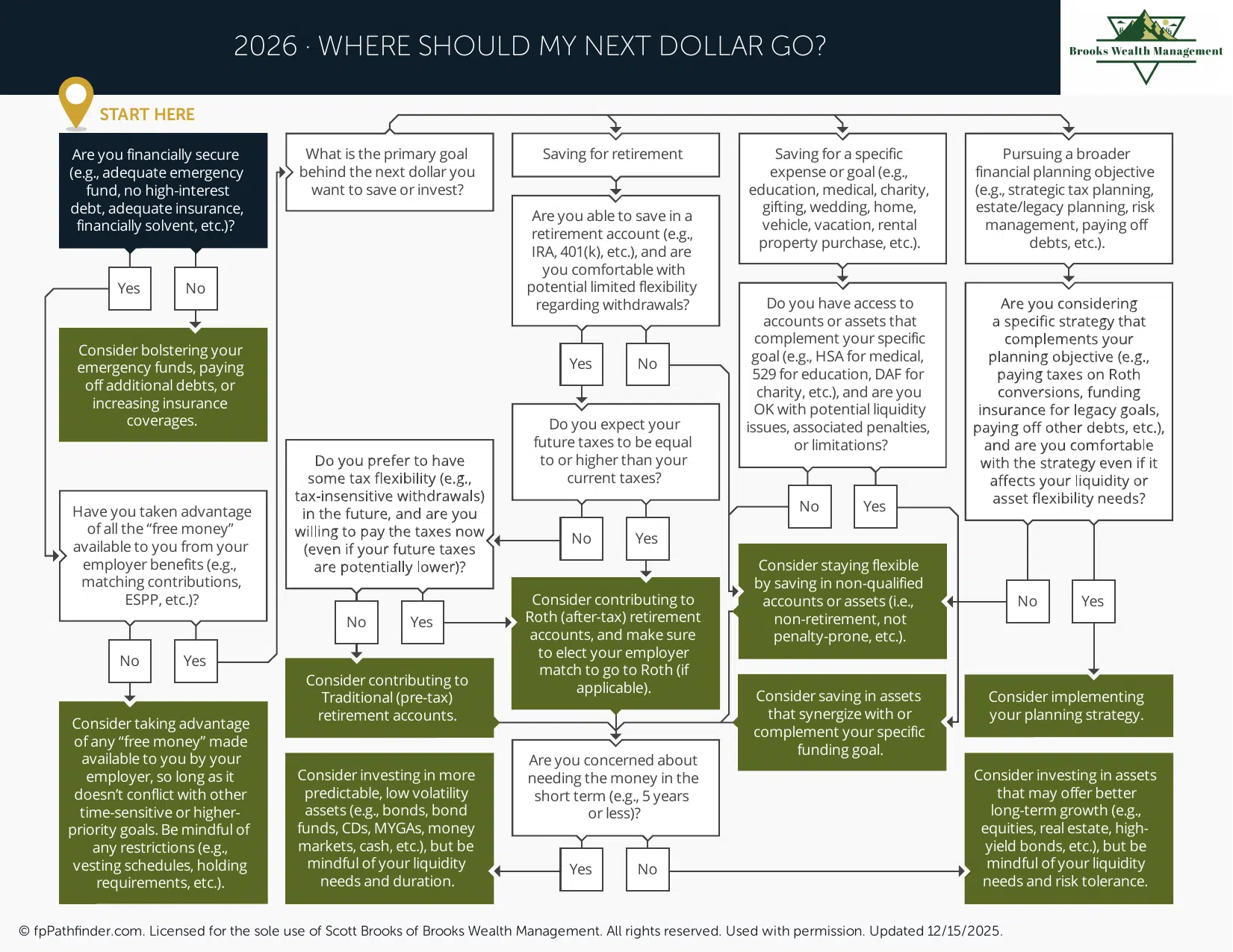
Where Should Your Next Dollar Go? A Framework for Every Stage
Deciding where your next dollar should go is one of the most practical questions in personal finance, and the answer changes depending on where you are in your financial life. Whether you just got a raise, paid off a debt, or finally have a little breathing room in your budget, having a clear framework for your next dollar prevents you from defaulting to whatever feels easiest in the moment.
The Core Order of Operations for Your Next Dollar
Most financial planners agree on a general sequence for directing your next dollar, though the specifics vary by situation. The logic starts with the highest guaranteed returns first and works down from there. Your next dollar should generally follow this order: capture any employer 401k match (that is an immediate 50 to 100% return), pay off high-interest debt (anything above 6 to 7%), build a 3 to 6 month emergency fund, max out tax-advantaged accounts including HSA, Roth IRA, and 401k, and then invest in a taxable brokerage account or pay down lower-interest debt. The reason this order matters is that each step has a different guaranteed or expected return. Capturing your full employer match on your next dollar is a better financial decision than almost anything else you can do. Paying off a 20% credit card balance with your next dollar is a guaranteed 20% return. Investing your next dollar in a broad index fund has an expected return of 7 to 10% over time, but it is not guaranteed.
When the Next Dollar Decision Gets More Complicated
The straightforward framework above works well for most people, but there are situations where the next dollar decision requires more nuance. If you have equity compensation including RSUs, stock options, or an ESPP, your next dollar decisions need to account for concentration risk and tax timing. If you are a business owner, your next dollar may be better deployed back into the business than into a personal investment account. If you are within 10 years of retirement, the next dollar calculus shifts toward tax diversification and sequence-of-returns risk management. High-income earners also face Roth IRA income limits, which means the next dollar going toward retirement savings may need to go into a backdoor Roth IRA or a mega backdoor Roth rather than a standard Roth IRA. And if you have a Health Savings Account available through a high-deductible health plan, directing your next dollar there first before even the 401k is often the most tax-efficient move available.
How Your Next Dollar Connects to Your Broader Financial Plan
The next dollar decision is not just about maximizing returns in isolation. It is about building a financial plan that works together. The accounts where your next dollar lands today determine your tax situation in retirement, your flexibility in a job loss, and your ability to handle unexpected expenses without derailing your long-term goals. A fee-only financial planner can help you model the long-term impact of different next dollar decisions and make sure your choices are aligned with your specific goals. For more on the decisions that connect to where your next dollar should go, see the resources on paying off debt, which accounts to use when saving more, Roth conversions, and reviewing your cash flow in the free resource library.
About This Resource
Scott Brooks, CFP at Brooks Wealth Management helps clients across Ventura County, Westlake Village, and all 50 states make confident decisions about where their next dollar should go. Book a free consultation to talk through your financial plan, or learn more about working together.
Have Questions About Your Situation?
This resource is a starting point. A free consultation with Scott Brooks, CFP® gives you a personalized perspective.
Book a Free ConsultationBased in Westlake Village, CA · Ventura County · Serving clients across all 50 states
Brooks Wealth Management is a Registered Investment Adviser (RIA) in the State of California. Registration does not imply a certain level of skill or training. This resource is provided for educational and informational purposes only and does not constitute investment, tax, or legal advice. Scott Brooks, CFP® · CRD #7227609 · Firm CRD #332237 · 2555 Townsgate Rd STE 200, Westlake Village, CA 91361