What Issues Should I Consider When Reviewing Cash Flow?
Checklist of income, expense, and savings considerations when reviewing your cash flow.
What Issues Should I Consider During a Cash Flow Review?
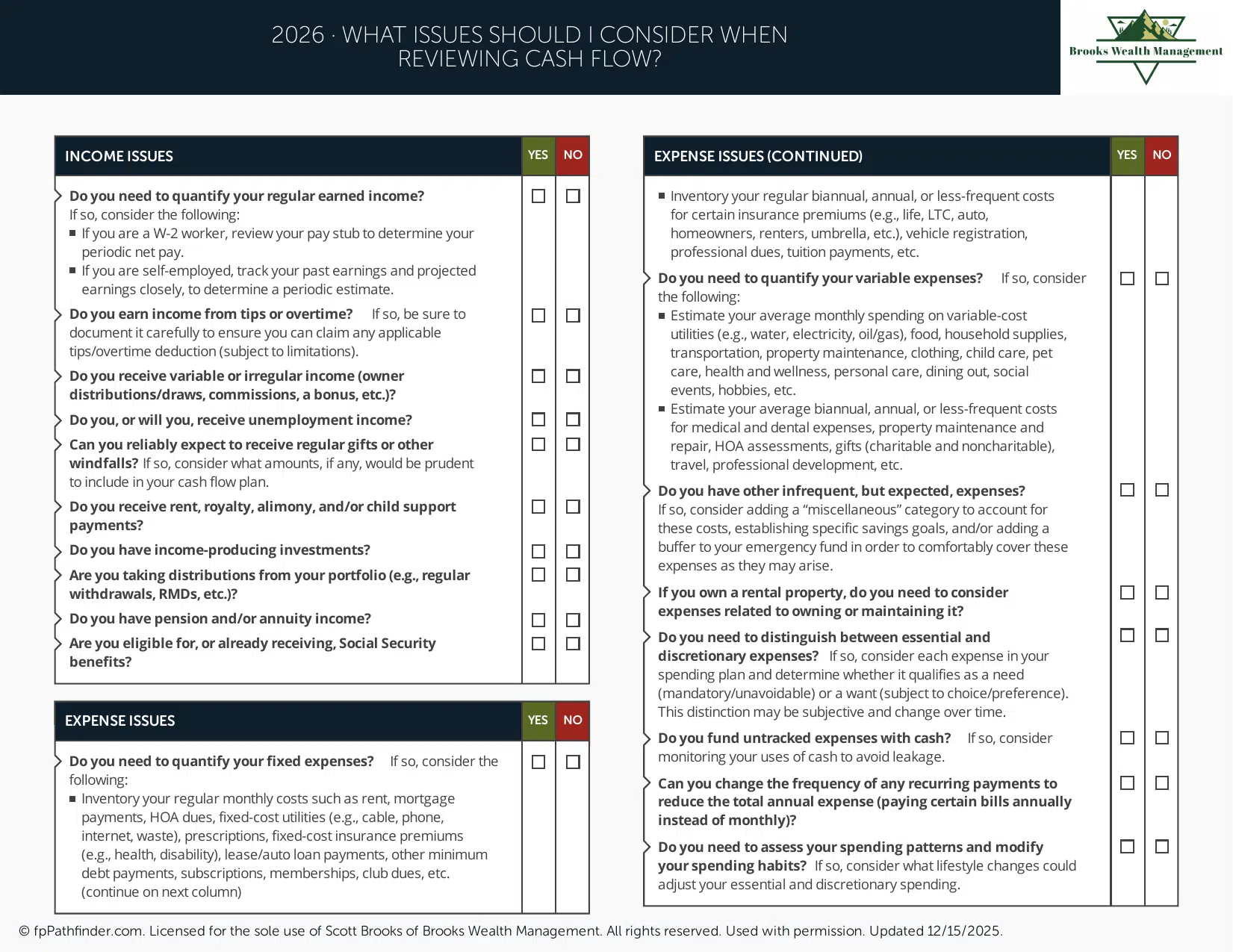
Cash flow is one of the most important components of a financial plan. Regardless of income level, long-term financial success is often influenced by how effectively income is managed, allocated, saved, invested, and spent. A cash flow review can help provide clarity around current financial habits while identifying opportunities to better align resources with future goals.
This checklist is designed to help individuals and families evaluate the key areas that are commonly reviewed during a cash flow analysis. Whether your goal is increasing savings, improving financial organization, preparing for retirement, funding education expenses, reducing debt, or building long-term wealth, understanding your cash flow can provide valuable insight into the decisions available to you.
Review Your Sources of Income
The first step in a cash flow review is understanding where money is coming from. Many households receive income from multiple sources, and evaluating each source can help create a more complete financial picture.
Income sources may include:
- Employment income
- Business income
- Bonus or incentive compensation
- Commission income
- Rental property income
- Investment income
- Pension benefits
- Retirement distributions
- Other recurring income sources
Understanding the consistency, predictability, and variability of income can help establish a foundation for future planning decisions.
Review Essential Household Expenses
Once income has been identified, the next step is evaluating recurring expenses. Fixed and essential expenses often represent the foundation of a household spending plan.
Examples may include:
- Housing expenses
- Utilities
- Insurance premiums
- Transportation costs
- Healthcare expenses
- Childcare costs
- Loan payments
- Basic living expenses
Understanding these obligations can help determine how much flexibility exists within the overall cash flow structure.
Review Discretionary Spending
In addition to essential expenses, most households have spending categories that involve greater flexibility. Reviewing discretionary spending is not necessarily about reducing spending, but rather ensuring spending decisions align with personal priorities and financial goals.
Areas commonly reviewed include:
- Dining and entertainment
- Travel and vacations
- Shopping and personal purchases
- Subscriptions and memberships
- Hobbies and recreation
- Gifts and charitable contributions
A cash flow review can help determine whether current spending patterns reflect the priorities that matter most to you.
Review Savings and Emergency Reserves
Cash flow analysis often reveals opportunities to strengthen savings habits and improve financial flexibility. Consistent savings can support both expected and unexpected financial events.
Questions worth considering include:
- Are savings contributions occurring consistently?
- Is there an adequate emergency reserve?
- Are short-term goals being funded appropriately?
- Do current savings levels align with future objectives?
- Are automatic savings systems being utilized effectively?
Reviewing savings activity can help ensure that future goals are receiving attention alongside current spending needs.
Additional resources that may be helpful include Where Should My Next Dollar Go? and What Accounts Should I Consider If I Want to Save More?.
Review Debt Obligations
Debt obligations can have a significant impact on available cash flow. Understanding how debt fits within the overall financial picture can help households evaluate repayment priorities and future planning opportunities.
Common debt categories may include:
- Mortgage loans
- Student loans
- Auto loans
- Credit card balances
- Personal loans
- Business-related debt
Areas worth reviewing include repayment schedules, interest costs, cash flow impact, and how debt repayment interacts with other financial goals.
You may also find it useful to review Should I Pay Off My Debts?.
Review Retirement Savings Progress
Cash flow decisions often influence long-term retirement outcomes. A review can help determine whether current savings levels remain aligned with future retirement objectives.
Topics commonly evaluated include:
- Workplace retirement plan contributions
- Employer matching opportunities
- IRA contributions
- Self-employed retirement plan funding
- Long-term retirement income goals
- Expected retirement timelines
Retirement planning often benefits from consistent review because small adjustments made today can have long-term implications.
Related resources include What Issues Should I Consider Before I Retire?.
Review Tax Planning Considerations
Cash flow and tax planning are often closely connected. Income, deductions, retirement contributions, business activities, and investment decisions can all influence tax outcomes.
Questions that may warrant review include:
- Have income sources changed?
- Have withholding elections been reviewed?
- Are retirement contributions affecting taxable income?
- Are there anticipated liquidity events?
- Have estimated tax obligations changed?
Evaluating these items periodically can help improve coordination between cash flow decisions and broader financial planning goals.
Review Major Financial Goals
A cash flow review is often most valuable when connected directly to financial goals. Understanding where money is going can help determine whether resources are being allocated toward the objectives that matter most.
Examples of common goals include:
- Purchasing a home
- Funding education expenses
- Building investment accounts
- Starting or growing a business
- Achieving financial independence
- Planning for retirement
- Creating greater financial flexibility
Reviewing goals alongside cash flow can help identify opportunities to improve alignment between current decisions and future priorities.
You may also find value in reviewing Master List of Financial Goals.
Review Cash Flow Trends Over Time
A single month rarely tells the complete story. Many households experience fluctuations in income and spending throughout the year. Looking at trends over longer periods can often provide more meaningful insights than focusing on short-term results.
Areas that may warrant attention include:
- Changes in spending patterns
- Income variability
- Savings consistency
- Debt reduction progress
- Lifestyle inflation
- Major recurring expenses
Tracking trends can help identify opportunities, risks, and areas where adjustments may improve long-term financial outcomes.
About This Resource
This checklist was created to help individuals and families evaluate the key components of a cash flow review. The objective is to provide a structured framework for reviewing income, expenses, savings, debt, retirement contributions, tax considerations, and financial goals.
Every financial situation is unique. Factors such as income sources, family circumstances, business ownership, spending priorities, and long-term objectives can all influence how cash flow should be evaluated. Periodic review can help improve awareness, support decision-making, and ensure financial resources remain aligned with personal goals.
This resource is provided for educational purposes only and should not be construed as investment, tax, legal, or financial advice. Individuals should consult appropriate professionals regarding their specific circumstances before implementing any financial strategy.