
What Issues Should I Consider When Moving Out of State?
Checklist of tax, legal, and financial issues to address when relocating to a new state.
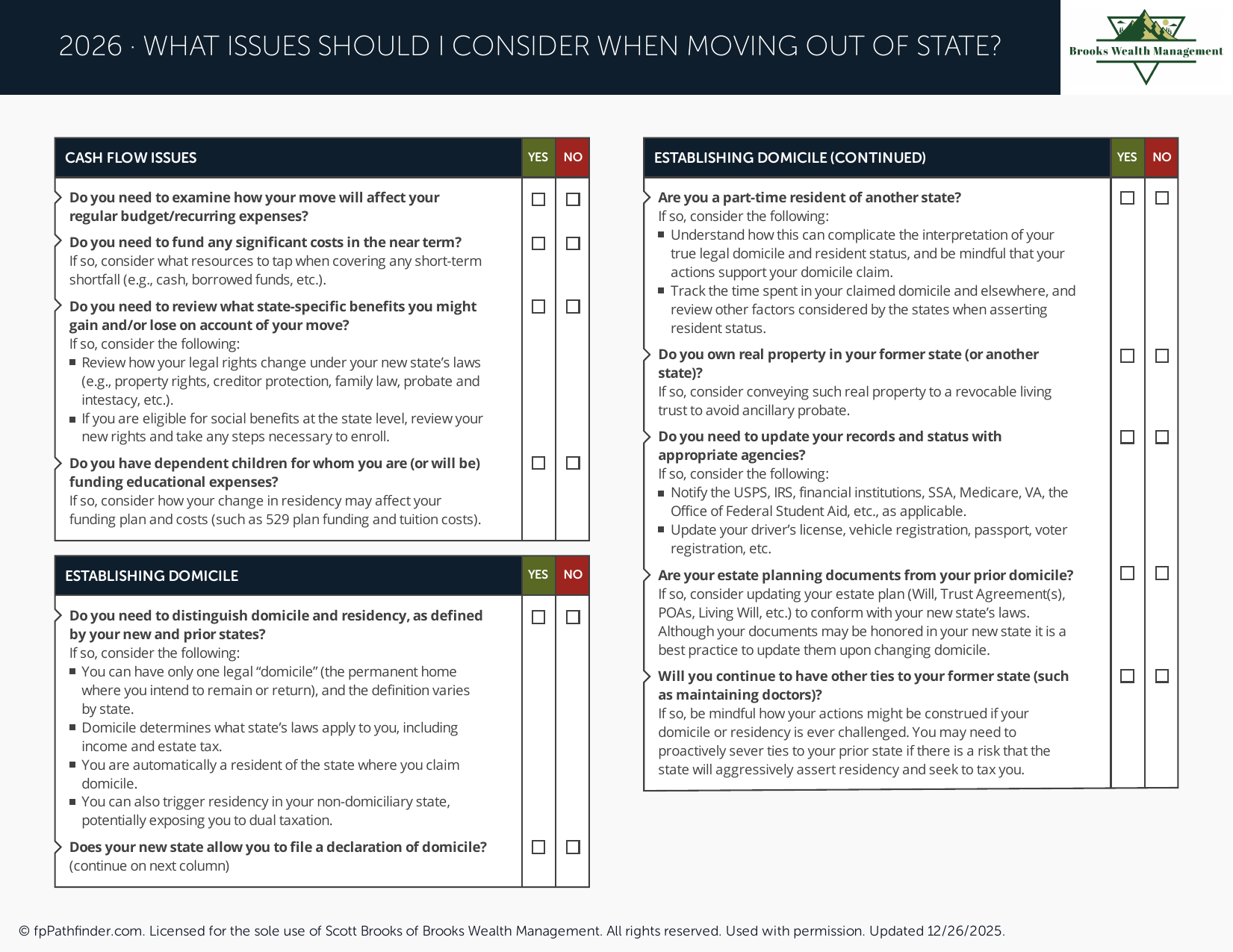
What Issues Should I Consider When Moving Out of State?
Moving to a new state can create a variety of financial, tax, legal, and administrative considerations. While much of the attention often focuses on housing, employment, and logistics, a relocation may also affect income taxes, estate planning documents, insurance coverage, investment accounts, retirement planning, and other aspects of a financial plan.
This checklist is designed to provide a framework for reviewing common issues that may arise when relocating to another state. The objective is not to recommend whether a move should occur, but rather to help organize important planning considerations before, during, and after the transition.
Review Why You Are Moving
The reasons behind a move can often influence many of the financial decisions that follow. Understanding the purpose of the relocation may help provide context for evaluating housing, tax, employment, and lifestyle considerations.
Common reasons individuals relocate include:
- Employment opportunities.
- Retirement planning.
- Family considerations.
- Lifestyle preferences.
- Cost-of-living changes.
- Housing needs.
- Business opportunities.
Clarifying the purpose of the move may help guide other financial planning decisions associated with the transition.
Review State Tax Considerations
One of the most commonly discussed aspects of an interstate move involves state tax implications. Different states may have different tax rules, filing requirements, and residency standards.
Questions that may deserve review include:
- How does the new state treat income taxes?
- Will part-year tax returns be required?
- How is residency determined?
- Are there state-specific filing requirements?
- How may investment income be treated?
- Will business income be affected?
Because tax rules can vary significantly by state and personal circumstances, individuals often review potential tax implications with qualified tax professionals before establishing residency in a new state.
Review Housing and Cost-of-Living Changes
Moving to a new state often involves changes in housing costs, transportation expenses, insurance costs, utility expenses, and other household spending categories.
Topics that may warrant review include:
- Housing affordability.
- Property taxes.
- Homeowners or renters insurance costs.
- Utility expenses.
- Transportation and commuting costs.
- General cost-of-living differences.
Reviewing anticipated expenses before relocating may help support more informed budgeting and cash flow decisions.
Individuals selling a home as part of a relocation may also find it helpful to review What Issues Should I Consider When Selling My Home?.
Review Employment and Benefits Considerations
If the move is related to employment, there may be additional planning topics that deserve attention. New employment arrangements can affect compensation, retirement benefits, healthcare coverage, and other financial considerations.
Questions that may be worth reviewing include:
- Will compensation change?
- Are new employee benefits available?
- Will healthcare coverage change?
- Are retirement plan options different?
- Will state-specific employment rules apply?
A related resource that may be helpful is What Issues Should I Consider When Starting a New Job?.
Review Estate Planning Documents
Estate planning documents are often governed by state law. While many documents may remain valid after a move, some individuals choose to review them following a relocation to ensure they continue to align with state-specific requirements.
Documents that may deserve review include:
- Wills.
- Trusts.
- Powers of attorney.
- Healthcare directives.
- Beneficiary designations.
Individuals reviewing beneficiary information may also find it helpful to review What Issues Should I Consider When Reviewing My Beneficiaries?.
Review Insurance Coverage and Registration Requirements
A move to a new state often requires updates to insurance policies and vehicle registrations. Requirements can vary significantly depending on the location.
Items that may warrant review include:
- Auto insurance policies.
- Homeowners or renters insurance.
- Umbrella insurance coverage.
- Vehicle registration requirements.
- Driver's license requirements.
- State-specific insurance rules.
Updating records promptly may help avoid administrative complications following a move.
Review Financial Accounts and Administrative Updates
Relocation often requires updates across multiple financial and legal records. Creating a checklist in advance can help simplify the process.
Items that individuals commonly update include:
- Bank accounts.
- Investment accounts.
- Retirement accounts.
- Insurance policies.
- Tax records.
- Employer records.
- Mailing addresses.
- Voting registration.
Address changes may seem administrative in nature, but overlooking them can create complications related to taxes, financial accounts, and legal notices.
Review Retirement Planning Considerations
For individuals relocating as part of a retirement transition, it may be helpful to review how the move affects broader retirement planning objectives.
Questions that may be worth considering include:
- How will retirement expenses change?
- Will healthcare coverage be affected?
- How does the move affect retirement cash flow?
- Will housing costs increase or decrease?
- How does the relocation fit into long-term goals?
Individuals evaluating retirement-related moves may also find it helpful to review What Issues Should I Consider Before I Retire?.
Questions Worth Reviewing Before Moving Out of State
Many individuals find it helpful to review the following questions before relocating:
- Have I evaluated potential state tax implications?
- How will housing costs change?
- Are employment and benefits considerations understood?
- Should estate planning documents be reviewed?
- Have insurance and registration requirements been identified?
- What administrative updates will be required?
- How does the move affect my financial plan?
- Have I evaluated the long-term financial impact of relocating?
A structured review process may help reduce the likelihood that important financial and administrative details are overlooked during a relocation.
How to Use This Checklist
This checklist is intended to serve as an educational resource that helps organize common financial, tax, legal, and planning considerations associated with moving to a new state. It may be useful before a relocation, during the transition process, or as part of a broader financial planning review.
The checklist does not provide legal, tax, relocation, insurance, or financial advice. Instead, it is designed to help identify questions and planning topics that may warrant additional review.
About This Resource
This checklist was created as an educational resource to help individuals better understand common issues that may arise when relocating to another state. The objective is to provide a framework for reviewing tax considerations, housing decisions, estate planning matters, insurance updates, and broader financial planning topics.
Because relocation decisions and financial circumstances vary significantly, this resource should be used for educational purposes only and should not be interpreted as legal, tax, insurance, relocation, or financial advice.
For additional planning resources, visit the Brooks Wealth Management Resource Library. If you have questions about how a move may affect your broader financial picture, you can schedule an introductory conversation.