
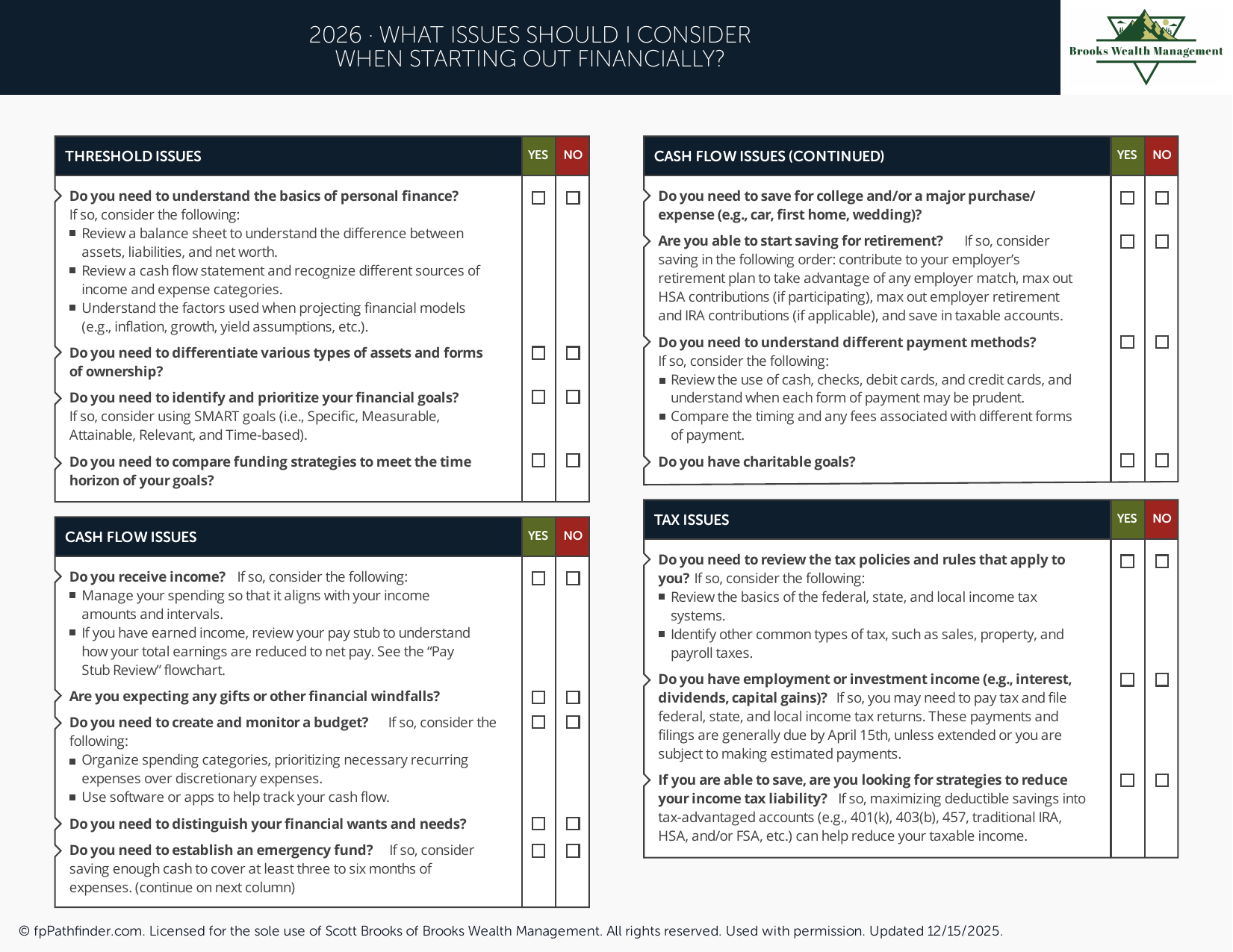
What Issues Should I Consider When Starting Out Financially?
Checklist of foundational financial steps for young adults just beginning their financial journey.
What Issues Should I Consider When Starting a New Job?
Starting a new job often brings changes that extend beyond compensation. New employee benefits, retirement plans, healthcare coverage, tax withholding elections, equity compensation opportunities, and insurance options can all affect your broader financial picture. While the transition can be exciting, it may also create a number of financial planning decisions that deserve careful review.
This checklist is designed to help organize common financial considerations that may arise when beginning a new position. The objective is not to recommend any specific course of action but rather to provide a framework for evaluating important planning topics during a career transition.
Review Your Compensation Package
Compensation often involves more than a base salary. Depending on the employer and position, compensation may include bonuses, commissions, profit-sharing arrangements, stock options, restricted stock units (RSUs), deferred compensation plans, or other incentives.
Questions that may be worth reviewing include:
- How is compensation structured?
- Are bonuses or incentive programs available?
- Are equity compensation benefits included?
- What vesting schedules apply?
- How may compensation change over time?
- Are there employment agreements or restrictions that should be reviewed?
Understanding the various components of compensation may help provide a clearer picture of total earnings and future planning opportunities.
Review Employer Retirement Plan Benefits
Many employers offer retirement savings opportunities through workplace retirement plans. Understanding the available benefits can be an important part of evaluating a new position.
Topics that individuals often review include:
- Available retirement plan options.
- Employer matching contributions.
- Eligibility requirements.
- Investment choices.
- Vesting schedules.
- Contribution opportunities.
Individuals who are evaluating retirement savings decisions may also find it helpful to review resources such as Should I Contribute to My Roth 401(k)? and Should I Consider Doing a Roth Conversion?.
Review Existing Retirement Accounts
Changing employers may create decisions regarding retirement accounts held with a previous employer. Depending on the circumstances, individuals may have several options available.
Questions that may deserve review include:
- What retirement accounts exist with the prior employer?
- What options are available for those accounts?
- What fees or investment options apply?
- How do available options fit within broader retirement goals?
Because retirement account decisions can involve tax, investment, and planning considerations, many individuals choose to review these accounts as part of a broader financial planning discussion.
Review Healthcare and Insurance Benefits
Employer-provided benefits often represent a significant portion of total compensation. Reviewing available healthcare and insurance benefits can help individuals better understand the protection available through a new employer.
Topics that may warrant review include:
- Health insurance options.
- Health Savings Account (HSA) eligibility.
- Dental and vision coverage.
- Life insurance benefits.
- Disability insurance coverage.
- Other voluntary benefits.
Related resources that may be helpful include What Issues Should I Consider with My Employer-Provided Benefits?, What Issues Should I Consider When Purchasing Disability Insurance?, and What Issues Should I Consider When Reviewing My Health and Life Insurance Coverage? if that resource exists within your planning library.
Review Tax Withholding and Payroll Elections
A new job often creates an opportunity to review payroll elections and tax withholding choices. Depending on compensation structure and household circumstances, tax withholding needs may change.
Questions that may be worth reviewing include:
- Are withholding elections appropriate?
- Will bonuses or incentive compensation affect taxes?
- Are there pre-tax benefit opportunities available?
- Have state tax considerations changed?
- Are payroll deductions aligned with current goals?
While tax planning is highly individualized, reviewing withholding elections early may help avoid surprises later.
Review Cash Flow and Savings Goals
A new position may result in changes to household income, expenses, savings capacity, or financial priorities. Reviewing cash flow and savings goals can help ensure that financial decisions remain aligned with long-term objectives.
Topics that individuals sometimes review include:
- Emergency savings.
- Debt repayment goals.
- Retirement savings targets.
- Education savings objectives.
- Major purchase goals.
- Housing decisions.
Related planning resources may include What Accounts Should I Consider If I Want to Save More? and other educational resources available in the Brooks Wealth Management Resource Library.
Review Beneficiaries and Estate Planning Documents
Starting a new job often involves completing beneficiary forms for retirement plans, life insurance benefits, and other employer-sponsored programs. This can provide a useful opportunity to review existing beneficiary designations and estate planning documents.
Items that may deserve review include:
- Retirement account beneficiaries.
- Life insurance beneficiaries.
- Powers of attorney.
- Wills and trusts.
- Estate planning objectives.
A related resource that may be helpful is What Issues Should I Consider When Reviewing My Beneficiaries?.
Questions Worth Reviewing When Starting a New Job
Many individuals find it helpful to review the following questions:
- Do I understand all components of my compensation package?
- Have I reviewed available retirement benefits?
- What should be done with retirement accounts from a prior employer?
- Have healthcare and insurance benefits been evaluated?
- Are payroll elections and withholding choices appropriate?
- How does this job affect my long-term financial goals?
- Have beneficiary designations been updated?
- Are there planning opportunities associated with the new position?
A structured review process can help ensure important planning topics are not overlooked during a career transition.
About This Resource
This checklist was created as an educational resource to help individuals better understand common financial planning considerations that may arise when starting a new job. The objective is to provide a framework for reviewing compensation, benefits, retirement planning opportunities, insurance coverage, and broader financial planning topics.
Because employment benefits, compensation structures, and personal financial circumstances vary significantly, this resource should be used for educational purposes only and should not be interpreted as a recommendation regarding any employment decision, investment selection, benefit election, or planning strategy.
If you have questions about how a new job may affect your broader financial picture, you can schedule an introductory conversation.