
What Issues Should I Consider When Creating My Estate Plan?
Comprehensive checklist of documents, decisions, and strategies to address when creating an estate plan.
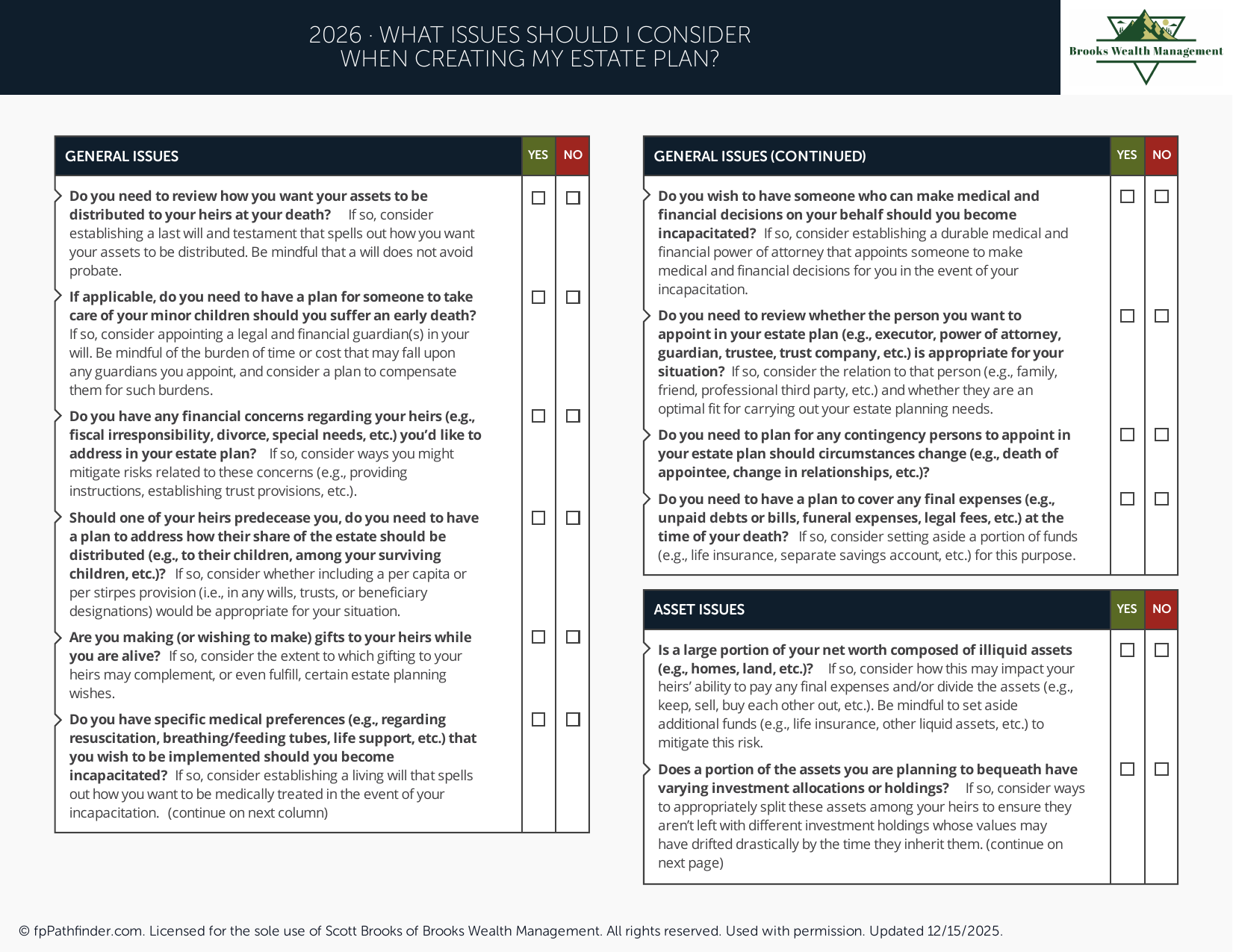
What Issues Should I Consider When Creating an Estate Plan?
Estate planning is the process of organizing your financial, legal, and personal affairs so that your assets, responsibilities, and wishes are carried out according to your intentions. While many people associate estate planning with wealth transfer after death, a comprehensive estate plan often addresses much more, including incapacity planning, beneficiary designations, guardianship decisions, healthcare directives, and long-term family objectives.
An estate plan is not reserved for retirees or ultra-high-net-worth families. Major life events, growing financial responsibilities, business ownership, real estate holdings, and family considerations can all create reasons to establish or update an estate plan. This checklist is designed to provide a framework for evaluating common estate planning considerations and identifying areas that may deserve further review.
Start With Your Estate Planning Goals
Before reviewing legal documents or tax considerations, it can be helpful to identify the objectives you want your estate plan to accomplish.
Questions that may deserve consideration include:
- Who should receive your assets?
- How should assets be distributed?
- Do you want to provide for a spouse, children, grandchildren, or other beneficiaries?
- Are charitable organizations part of your legacy goals?
- Do you want to create protections for future generations?
Clarifying these objectives can provide direction for many of the decisions that follow.
Review Family Circumstances
Family dynamics often influence the structure and complexity of an estate plan.
Questions that may deserve review include:
- Are you married or unmarried?
- Do you have children or grandchildren?
- Are any beneficiaries minors?
- Do family members have special circumstances that require additional planning?
- Have there been significant changes in family relationships?
Estate planning documents are often most effective when they reflect current family circumstances and long-term family goals.
Review Guardianship Considerations
For parents of minor children, guardianship decisions are frequently among the most important aspects of estate planning.
Questions that may deserve consideration include:
- Who would care for your children if you were unable to do so?
- Have alternate guardians been identified?
- Do potential guardians share your values and priorities?
- Would guardians have the resources necessary to fulfill their responsibilities?
Parents may also find it helpful to review What Issues Should I Consider When Having or Adopting a Child?.
Understand Common Estate Planning Documents
A comprehensive estate plan often involves several legal documents that serve different purposes.
Documents that may deserve consideration include:
- Last Will and Testament.
- Revocable Living Trust.
- Durable Financial Power of Attorney.
- Advance Healthcare Directive.
- Healthcare Power of Attorney.
- HIPAA Authorization Forms.
The specific documents that may be appropriate depend on individual circumstances, family considerations, and legal objectives.
Review Beneficiary Designations
Many financial assets transfer according to beneficiary designations rather than instructions contained in a will or trust.
Assets that often include beneficiary elections include:
- Retirement accounts.
- Life insurance policies.
- Annuities.
- Transfer-on-death accounts.
- Payable-on-death accounts.
Questions that may deserve review include:
- Are beneficiaries current?
- Have contingent beneficiaries been named?
- Do beneficiary designations align with estate planning documents?
- Have major life changes occurred since the designations were completed?
A related resource that may be helpful is What Issues Should I Consider When Reviewing My Beneficiaries?.
Review Asset Ownership and Titling
How assets are owned can affect how they transfer and how efficiently an estate plan functions.
Questions that may deserve review include:
- How are bank accounts titled?
- How are investment accounts titled?
- How is real estate owned?
- Are business interests properly documented?
- Do ownership arrangements align with estate planning goals?
Asset titling and beneficiary designations often work together to determine how assets ultimately transfer.
Consider Whether a Trust May Be Appropriate
Many individuals consider trusts as part of their estate planning strategy. Trusts may serve a variety of purposes depending on family circumstances and planning objectives.
Questions that may deserve consideration include:
- Would a trust help accomplish your goals?
- Are minor children involved?
- Are there privacy concerns?
- Are there concerns regarding asset management for beneficiaries?
- Would additional control over distributions be beneficial?
A related resource that may be helpful is Should I Consider a Trust?.
Review Business Ownership Considerations
Business owners often have additional estate planning needs that extend beyond personal assets.
Questions that may deserve review include:
- Does the estate plan address business succession?
- Are ownership interests properly documented?
- Have buy-sell agreements been reviewed?
- Would family members continue operating the business?
- Have contingency plans been developed?
Business succession planning and estate planning frequently overlap and may warrant coordinated review.
Review Incapacity Planning
Estate planning is not solely about what happens after death. It may also address situations involving temporary or permanent incapacity.
Questions that may deserve consideration include:
- Who would make financial decisions if you could not?
- Who would make healthcare decisions on your behalf?
- Have powers of attorney been established?
- Have healthcare directives been completed?
- Are trusted decision-makers identified?
Planning for incapacity may help provide clarity during difficult situations and reduce uncertainty for family members.
Review Insurance and Risk Management
Insurance often plays a role in estate planning and family protection.
Topics that may deserve review include:
- Life insurance coverage.
- Disability insurance coverage.
- Long-term care planning.
- Liability protection strategies.
Related resources that may be helpful include:
- What Issues Should I Consider When Reviewing My Existing Life Insurance Policy?
- What Issues Should I Consider When Purchasing Long-Term Care Insurance?
Review Tax and Wealth Transfer Considerations
Estate planning often intersects with income tax, gift tax, and wealth transfer considerations. The relevance of these issues depends heavily on individual circumstances and applicable laws.
Questions that may deserve review include:
- Have gifting strategies been considered?
- Do charitable goals exist?
- Has asset concentration been evaluated?
- Have potential tax implications been reviewed with qualified professionals?
- Do current strategies align with long-term legacy goals?
Because tax laws change periodically and vary by jurisdiction, many individuals consult qualified tax and legal professionals when evaluating these matters.
Consider Charitable and Legacy Goals
Estate planning often provides an opportunity to define how wealth may support future generations, charitable organizations, or causes that are personally meaningful.
Questions that may deserve consideration include:
- Do you wish to support charitable organizations?
- Have legacy goals been defined?
- Should charitable planning be integrated into your estate plan?
- Are family values being communicated to future generations?
- Does the estate plan reflect your long-term objectives?
A related resource that may be helpful is What Issues Should I Consider When Creating a Charitable Giving Strategy?.
Questions Worth Reviewing When Creating an Estate Plan
Many individuals find it helpful to review the following questions:
- What are my primary estate planning goals?
- Have family circumstances been considered?
- Have guardians been identified for minor children?
- Are beneficiary designations current?
- Would a trust help accomplish my objectives?
- Have business interests been addressed?
- Have incapacity planning documents been completed?
- Does the overall plan reflect my wishes and values?
A structured review process may help create greater clarity around important estate planning decisions and identify areas that deserve additional attention.
How to Use This Checklist
This checklist is intended to serve as an educational resource that helps organize common financial, legal, family, and planning considerations associated with creating an estate plan. It may be useful when establishing an estate plan for the first time or reviewing an existing strategy.
The checklist does not provide legal, tax, estate planning, investment, or financial advice. Instead, it is designed to help identify planning topics and questions that may warrant additional review.
About This Resource
This checklist was created as an educational resource to help individuals better understand common considerations associated with estate planning. The objective is to provide a framework for evaluating family circumstances, beneficiary designations, trusts, guardianship decisions, incapacity planning, business ownership issues, and long-term legacy goals.
Because estate planning laws, tax regulations, family situations, and financial circumstances vary significantly, this resource should be used for educational purposes only and should not be interpreted as legal, tax, estate planning, investment, or financial advice.
For additional planning resources, visit the Brooks Wealth Management Resource Library. If you have questions about how estate planning considerations may affect your broader financial picture, you can schedule an introductory conversation.