
What Issues Should I Consider at the Start of the Year?
Year-start financial planning checklist to set priorities and take early action.
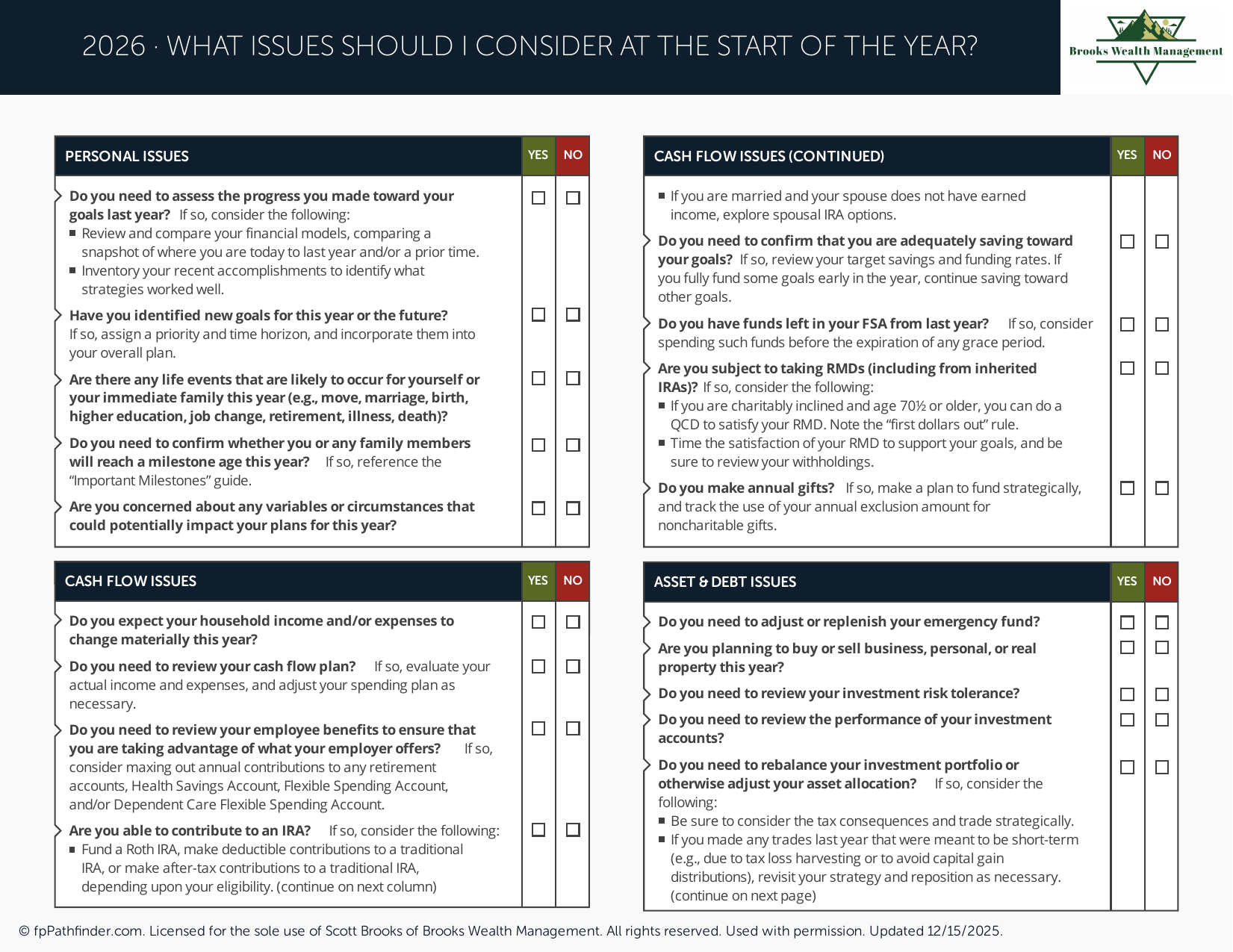
What Issues Should I Consider Before the End of the Year?
Year-end financial planning can provide an opportunity to review decisions that may affect taxes, retirement savings, investment accounts, cash flow, and broader financial goals. While many financial decisions can be made throughout the year, certain opportunities and deadlines are often tied to the calendar year, making a year-end review a useful exercise for many individuals and families.
This checklist is designed to help you evaluate common financial planning topics that are frequently reviewed before year-end. Not every item will apply to every household, but using a structured framework can help identify areas that may deserve additional attention before the year closes.
Review Income and Tax Planning Opportunities
Many year-end planning conversations begin with taxes. While tax considerations should not drive every financial decision, understanding your current income situation may help identify planning opportunities before year-end deadlines pass.
Areas commonly reviewed include:
- Projected taxable income for the current year
- Changes in employment or business income
- Capital gains and capital losses
- Investment income and distributions
- Charitable giving plans
- Estimated tax payments and withholding levels
- Potential tax credits and deductions
A year-end review may also help identify whether significant income changes occurred during the year that could affect tax planning decisions.
Review Retirement Account Contributions
Retirement savings is another area frequently reviewed before year-end. Contributions made during the year may affect both long-term retirement readiness and current-year tax planning considerations depending on the account type involved.
Questions worth considering include:
- Are workplace retirement plan contributions aligned with current goals?
- Have contribution elections been reviewed recently?
- Are employer matching opportunities being fully evaluated?
- Have IRA contribution opportunities been considered?
- Have self-employed retirement plan options been reviewed where applicable?
Because retirement planning often spans multiple decades, year-end can provide a natural checkpoint to evaluate whether savings progress remains aligned with long-term objectives.
You may also find it helpful to review What Issues Should I Consider Before I Retire? and What Accounts Should I Consider If I Want to Save More?.
Review Investment Accounts and Portfolio Positioning
Year-end is often a convenient time to review investment accounts and evaluate whether current allocations continue to reflect personal objectives, risk tolerance, and financial circumstances.
Topics frequently reviewed include:
- Portfolio diversification
- Asset allocation
- Rebalancing considerations
- Concentrated investment positions
- Tax-efficient asset location
- Capital gain and loss activity
- Changes in financial goals or time horizons
Rather than focusing exclusively on recent market performance, many investors use year-end reviews to determine whether their portfolio remains aligned with the purpose for which it was originally designed.
Review Cash Flow, Savings, and Debt Priorities
Financial planning involves more than investments and taxes. Year-end can also be an appropriate time to evaluate how cash flow was managed throughout the year and whether savings and debt repayment goals remain on track.
Areas that may warrant review include:
- Emergency reserves
- Short-term savings goals
- Debt repayment progress
- Major purchases anticipated in the coming year
- Changes in household expenses
- Business cash flow considerations
Understanding how cash flow changed during the year can help establish priorities for the upcoming year and identify areas where adjustments may be beneficial.
Additional guidance may be found in Where Should My Next Dollar Go?.
Review Estate and Beneficiary Information
Year-end reviews often extend beyond taxes and investments. Major life events that occurred during the year may create a need to revisit estate planning documents, account ownership arrangements, and beneficiary designations.
Examples of life changes that may prompt review include:
- Marriage or divorce
- Birth or adoption of a child
- Death of a family member
- Changes in financial circumstances
- Business ownership changes
- Relocation to another state
Even when no major life changes occur, periodically reviewing beneficiary designations and estate documents can help ensure they continue to reflect current wishes.
You may also find it helpful to review What Issues Should I Consider When Reviewing My Beneficiaries?.
Review Education and Family Planning Goals
Families with children may use year-end as an opportunity to evaluate education savings strategies and other long-term family planning objectives.
Questions that may be worth reviewing include:
- Are education savings goals progressing as expected?
- Have family financial priorities changed?
- Should contribution levels be revisited?
- Have account ownership and beneficiary designations been reviewed?
- Do current savings strategies remain aligned with future goals?
Education planning often intersects with retirement planning, tax planning, and cash flow management, making periodic review an important part of a comprehensive financial plan.
Related resources include How Should I Fund My Child's College Education? and Can I Make a 529-to-Roth Transfer?.
Review Goals for the Upcoming Year
One of the most valuable aspects of a year-end review is creating an opportunity to look forward rather than solely focusing on the past. Financial plans are not static documents. Goals, priorities, income, expenses, and personal circumstances often evolve over time.
As the year comes to a close, it may be helpful to evaluate:
- Major financial goals for the coming year
- Expected income changes
- Planned career transitions
- Housing decisions
- Business opportunities
- Retirement planning milestones
- Family-related financial objectives
A structured review can help identify opportunities for improvement while ensuring financial decisions remain aligned with longer-term priorities.
About This Resource
This checklist was created to help individuals and families evaluate common financial planning considerations before the end of the year. The objective is to provide a structured framework for reviewing topics such as taxes, retirement savings, investments, cash flow, estate planning, education funding, and broader financial goals.
Every financial situation is unique. Factors such as income, family circumstances, investment holdings, business ownership, retirement objectives, and tax considerations can all influence which planning opportunities may be relevant. Reviewing these issues periodically can help ensure financial decisions remain aligned with current goals and changing circumstances.
This resource is provided for educational purposes only and should not be construed as investment, tax, legal, or financial advice. Individuals should consult appropriate professionals regarding their specific circumstances before implementing any financial strategy.