
Common Savings Accounts for Children
Reference guide comparing savings and investment account options available for children.
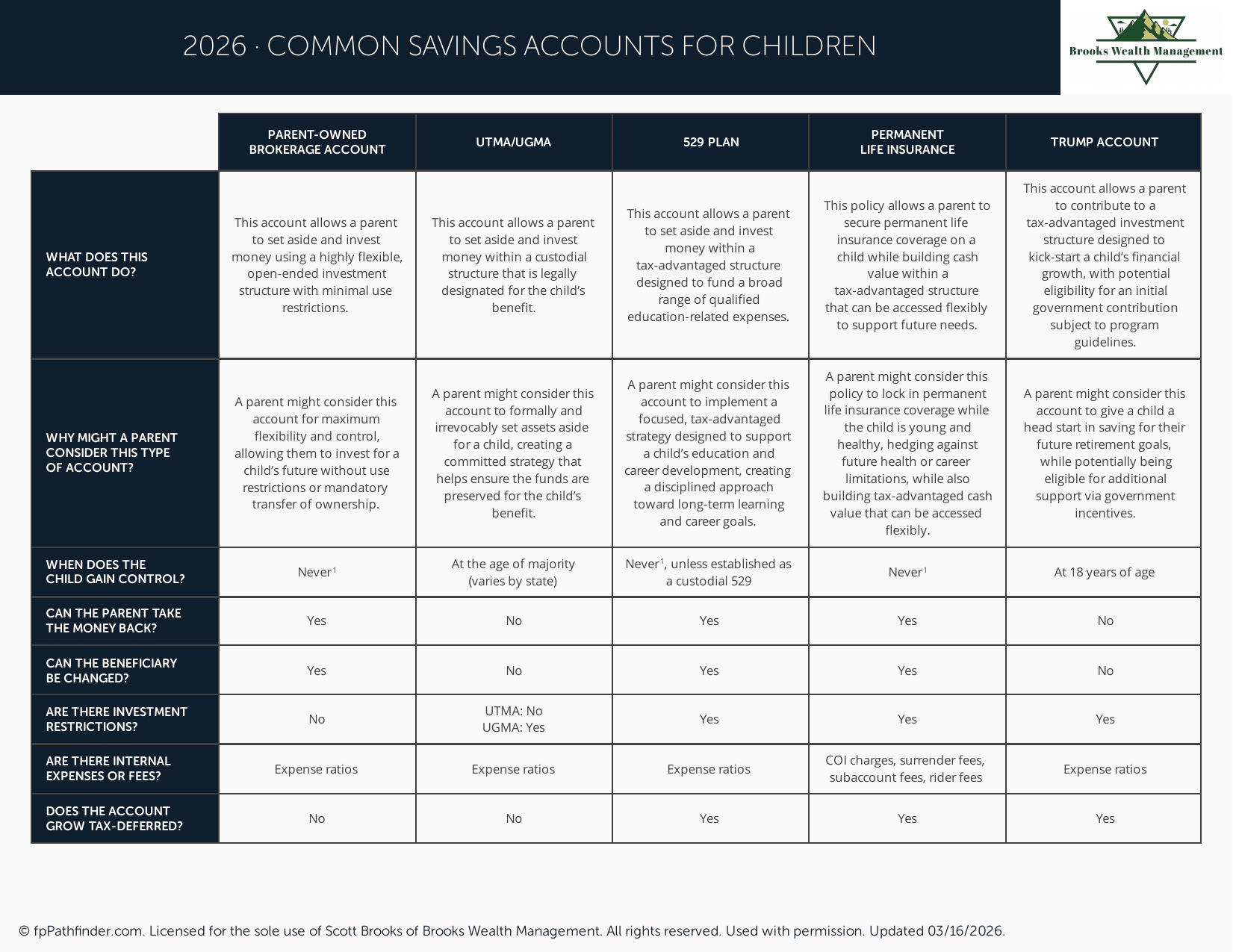
What Accounts Should I Consider for My Children?
Saving and investing for children can be an important part of a family's broader financial plan. Whether the goal is funding future education expenses, building long-term wealth, teaching financial responsibility, supporting future housing needs, or creating financial flexibility later in life, there are a variety of account types that may be worth evaluating.
This checklist is designed to help parents, grandparents, and family members review common account options that are often considered when saving or investing on behalf of a child. The most appropriate solution will depend on factors such as the intended use of the funds, desired flexibility, tax considerations, time horizon, and overall financial objectives.
Review Your Primary Goal for the Funds
Before selecting an account, it can be helpful to identify the purpose of the savings. Different account types are designed to support different objectives.
Questions worth considering include:
- Is the goal funding future education expenses?
- Are the funds intended for general future use?
- Do you want the child to eventually control the assets?
- Is long-term wealth accumulation the objective?
- Are tax considerations a priority?
- How many years remain before the funds may be needed?
Clarifying the intended purpose of the account can often narrow the list of options worth evaluating.
Review Education Savings Accounts
For families focused primarily on education funding, education-specific accounts are often among the first options reviewed.
Potential considerations may include:
- Future college expenses
- Graduate school funding
- Other qualified education expenses
- Tax treatment of contributions and withdrawals
- Control over the account and beneficiaries
Many families evaluate education-focused accounts because they are specifically designed to support future educational objectives.
Additional resources that may be helpful include How Should I Fund My Child's College Education?, Is the Distribution from My 529 Plan Subject to Federal Income Tax?, and Can I Make a 529-to-Roth Transfer?.
Review Custodial Accounts
Custodial accounts are commonly used when assets are intended to benefit a child but will ultimately become the child's property at a specified age under applicable state law.
Areas that may warrant review include:
- Who controls the assets before adulthood?
- When does ownership transfer to the child?
- How flexible are future uses of the funds?
- What tax considerations may apply?
- How do the assets fit within broader family goals?
These accounts are often considered when flexibility is important and the funds may eventually be used for a variety of purposes beyond education.
Review Savings Accounts for Children
Traditional savings accounts may also play a role in a child's financial plan, particularly when the objective is teaching financial habits or maintaining access to funds for shorter-term needs.
Potential uses may include:
- Teaching savings habits
- Managing gifts and allowances
- Building short-term reserves
- Supporting future purchases
- Developing financial responsibility
While these accounts may not always offer the growth potential of investment-oriented accounts, they can serve an important educational and practical purpose.
Review Investment Accounts for Long-Term Goals
Some families prioritize long-term growth and flexibility when saving for children. In those situations, investment accounts may be evaluated alongside education-focused and custodial options.
Questions worth considering include:
- What is the investment time horizon?
- How much flexibility is desired?
- What level of investment risk is appropriate?
- How important is access to the funds before adulthood?
- How does the account fit within broader family planning goals?
Because children often have long investment horizons, some families evaluate investment-oriented accounts as part of a broader strategy.
Review Retirement Account Opportunities for Working Children
Children who have earned income may have additional account options available to them. Long-term savings opportunities can sometimes provide unique planning benefits due to the extended time available for potential growth.
Areas worth reviewing include:
- Earned income requirements
- Contribution eligibility
- Long-term retirement objectives
- Potential tax considerations
- Flexibility of future use
For some families, introducing retirement savings concepts at an early age can become part of a broader financial education strategy.
Review Control and Ownership Considerations
One of the most important differences among children's accounts involves who ultimately controls the assets.
Questions worth considering include:
- Who owns the account?
- Who controls investment decisions?
- When does the child gain access?
- Can beneficiaries be changed?
- How much flexibility does the account owner retain?
Understanding ownership and control provisions can help ensure account selection remains aligned with family objectives.
Review Tax Considerations
Different account types may receive different tax treatment. While taxes should not be the sole factor driving a decision, they often influence how families evaluate various savings options.
Areas commonly reviewed include:
- Tax treatment of contributions
- Tax treatment of earnings
- Tax treatment of withdrawals
- Potential gift tax considerations
- Income attribution rules where applicable
Because tax rules can change over time and vary based on individual circumstances, many families review these issues periodically.
Review How Children's Savings Fit Within the Overall Financial Plan
Saving for children is often one of several important financial priorities. Balancing competing goals may require evaluating how children's accounts fit alongside other objectives.
Examples may include:
- Retirement savings
- Emergency reserves
- Debt repayment
- Homeownership goals
- Business planning objectives
- Estate planning considerations
Evaluating children's savings within the context of an overall financial plan can help ensure resources remain aligned with broader family priorities.
Related resources include What Accounts Should I Consider If I Want to Save More?, Master List of Financial Goals, and What Issues Should I Consider When Reviewing My Beneficiaries?.
About This Resource
This checklist was created to help parents, grandparents, and family members evaluate common account types that may be considered when saving or investing for children. The objective is to provide a structured framework for reviewing education savings options, custodial accounts, investment accounts, ownership considerations, tax issues, and long-term family goals.
Every family's circumstances are unique. Factors such as financial resources, education objectives, tax considerations, family dynamics, and long-term priorities can all influence which accounts may be appropriate to evaluate. Reviewing these issues carefully can help support informed financial decisions and long-term planning.
This resource is provided for educational purposes only and should not be construed as investment, tax, legal, or financial advice. Individuals should consult appropriate professionals regarding their specific circumstances before implementing any financial strategy.