
What Issues Should I Consider When Establishing My Charitable Giving Strategy?
Checklist of tax-efficient giving strategies and vehicles to consider when planning charitable contributions.
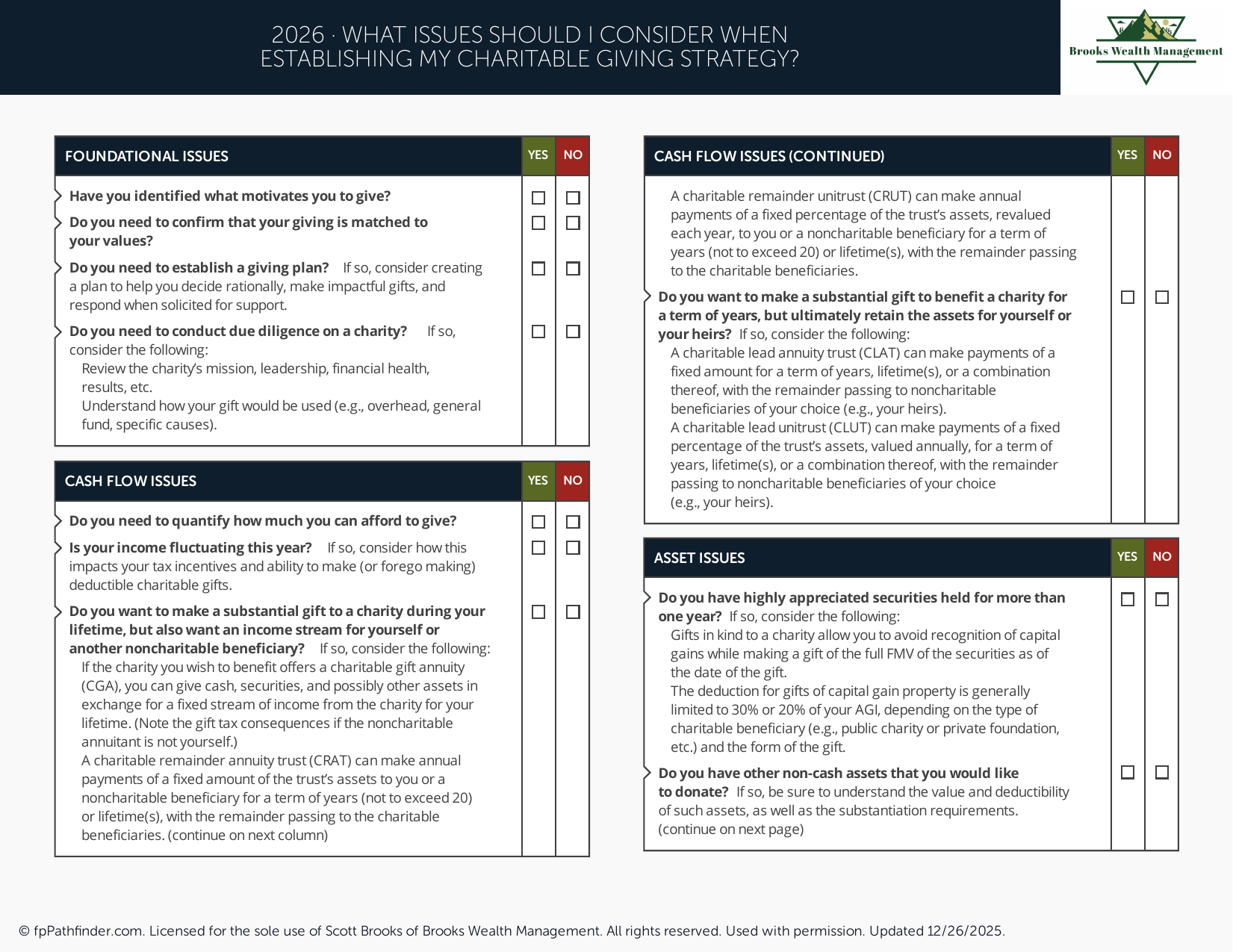
What Issues Should I Consider When Creating a Charitable Giving Strategy?
Charitable giving can be an important component of a comprehensive financial plan. Whether your goals involve supporting causes that are meaningful to you, creating a family legacy of philanthropy, making tax-efficient gifts, or incorporating charitable intentions into an estate plan, a thoughtful charitable giving strategy can help bring structure and clarity to those decisions.
Many individuals make charitable contributions throughout their lives but never develop a formal plan. This checklist is designed to help identify common considerations that may be worth evaluating when building or reviewing a charitable giving strategy.
Start With Your Charitable Goals
Before evaluating giving techniques or tax considerations, it can be helpful to clarify the purpose behind your charitable giving.
Questions that may deserve consideration include:
- Which causes are most important to you?
- Do you prefer supporting local, national, or international organizations?
- Do you want to focus on current impact or long-term legacy?
- Would you like family members involved in charitable decisions?
- Are there specific organizations you want to support over time?
Establishing clear goals can provide a foundation for future charitable planning decisions.
Review Your Current Giving Practices
Many people are already giving regularly without realizing they have developed patterns that can be reviewed and improved.
Questions that may deserve review include:
- How much do you currently donate each year?
- Which organizations receive your contributions?
- Are donations made consistently or sporadically?
- Are contributions primarily cash gifts?
- Do current giving patterns align with your values?
A review of current giving habits may help identify opportunities to create a more intentional strategy.
Evaluate Cash Versus Non-Cash Gifts
While many charitable contributions are made in cash, other assets may also be used to support charitable goals. Depending on the circumstances, individuals may choose to contribute appreciated securities, business interests, real estate, or other assets.
Questions that may deserve consideration include:
- Are charitable gifts currently made in cash?
- Do you own appreciated investments?
- Would gifting assets better align with your goals?
- Have you reviewed the administrative requirements of non-cash gifts?
- Have tax implications been evaluated with qualified professionals?
Because tax treatment can vary significantly, many individuals consult qualified tax professionals before implementing gifting strategies involving appreciated assets.
Review Donor-Advised Funds and Other Giving Vehicles
Individuals who give regularly may consider whether additional charitable planning tools deserve evaluation.
Common charitable giving vehicles may include:
- Direct charitable contributions.
- Donor-advised funds (DAFs).
- Private foundations.
- Charitable remainder trusts.
- Charitable lead trusts.
Questions that may deserve review include:
- Would a donor-advised fund simplify giving?
- Are charitable trusts appropriate for your circumstances?
- Do current giving methods support your long-term goals?
- Would additional flexibility be beneficial?
- Should charitable giving be incorporated into broader estate planning?
A related resource that may be helpful is Should I Use a Donor-Advised Fund (DAF) When Giving to Public Charities?.
Consider Charitable Giving During High-Income Years
Major financial events may create opportunities to review charitable planning.
Situations that often prompt additional charitable planning include:
- Business sales.
- Liquidity events.
- Large bonuses.
- Exercise of stock options.
- Significant investment gains.
- Inheritance or sudden wealth events.
Individuals experiencing major financial changes may also find it helpful to review What Issues Should I Consider If I Come Into a Large Sum of Money?.
Review Charitable Giving Within Your Estate Plan
Many individuals choose to incorporate charitable goals into their broader estate planning strategy. Reviewing charitable intentions alongside wills, trusts, beneficiary designations, and legacy planning objectives may help create greater consistency.
Questions that may deserve consideration include:
- Should charitable organizations be included in your estate plan?
- Have charitable intentions been documented?
- Do beneficiary designations align with charitable goals?
- Have trusts been evaluated as part of charitable planning?
- Are family legacy objectives clearly defined?
Related resources may include:
- What Issues Should I Consider Before Updating My Estate Plan?
- What Issues Should I Consider When Reviewing My Beneficiaries?
- Should I Consider a Trust?
Consider Family Involvement
For some individuals, charitable giving extends beyond personal philanthropy and becomes part of a broader family legacy.
Questions that may deserve review include:
- Do you want children involved in charitable decisions?
- Would family giving meetings be beneficial?
- Are charitable values being communicated to future generations?
- Should charitable planning become part of family wealth discussions?
- Do charitable goals align with broader legacy objectives?
Families often find that charitable giving provides opportunities to discuss values, priorities, and long-term stewardship of wealth.
Review Tax Considerations Carefully
Tax considerations frequently influence charitable planning decisions. However, tax outcomes vary significantly based on individual circumstances, the type of asset donated, and applicable laws.
Questions that may deserve review include:
- Have potential tax implications been evaluated?
- Would different gifting methods produce different outcomes?
- Have qualified tax professionals been consulted?
- Do charitable goals remain the primary motivation?
- Have documentation requirements been reviewed?
Because tax laws change periodically and individual situations vary, tax-related decisions should generally be reviewed with qualified tax professionals.
Evaluate Charitable Organizations
A charitable giving strategy may also include periodic evaluation of the organizations receiving support.
Questions that may deserve consideration include:
- Does the organization's mission align with your values?
- Are you comfortable with how contributions are used?
- Has the organization's focus changed?
- Do you wish to continue supporting the same causes?
- Would diversifying charitable support be appropriate?
Periodic review can help ensure charitable contributions continue to align with personal priorities and philanthropic objectives.
Create a Process for Ongoing Review
Charitable planning often works best when reviewed periodically rather than only during tax season or after a major financial event.
Questions that may deserve consideration include:
- Will charitable goals be reviewed annually?
- Have giving priorities changed?
- Has your financial situation evolved?
- Do current giving methods remain appropriate?
- Are charitable goals still aligned with your broader financial plan?
Regular reviews may help ensure charitable giving remains intentional and consistent with evolving circumstances.
Questions Worth Reviewing When Building a Charitable Giving Strategy
Many individuals find it helpful to review the following questions:
- What causes matter most to you?
- How do you currently give?
- Should non-cash gifts be considered?
- Would a donor-advised fund be appropriate?
- Should charitable goals be integrated into your estate plan?
- Do you want family members involved in giving decisions?
- Have potential tax implications been reviewed?
- Does your current approach align with your long-term goals?
A structured review process may help create greater clarity around charitable objectives and giving strategies.
How to Use This Checklist
This checklist is intended to serve as an educational resource that helps organize common financial, tax, estate planning, and philanthropic considerations associated with charitable giving. It may be useful when establishing a new charitable strategy, reviewing existing giving practices, or evaluating major financial events.
The checklist does not provide tax, legal, investment, estate planning, or financial advice. Instead, it is designed to help identify planning topics and questions that may warrant additional review.
About This Resource
This checklist was created as an educational resource to help individuals better understand common considerations associated with charitable giving strategies. The objective is to provide a framework for evaluating philanthropic goals, gifting methods, estate planning considerations, family legacy objectives, and broader financial planning issues.
Because tax laws, charitable regulations, financial circumstances, and personal goals vary significantly, this resource should be used for educational purposes only and should not be interpreted as tax, legal, investment, estate planning, or financial advice.
For additional planning resources, visit the Brooks Wealth Management Resource Library. If you have questions about how charitable planning may affect your broader financial picture, you can schedule an introductory conversation.