
What Issues Should I Consider to Fund My Child's College Education?
Checklist of savings strategies, account types, and timing decisions for funding college education.
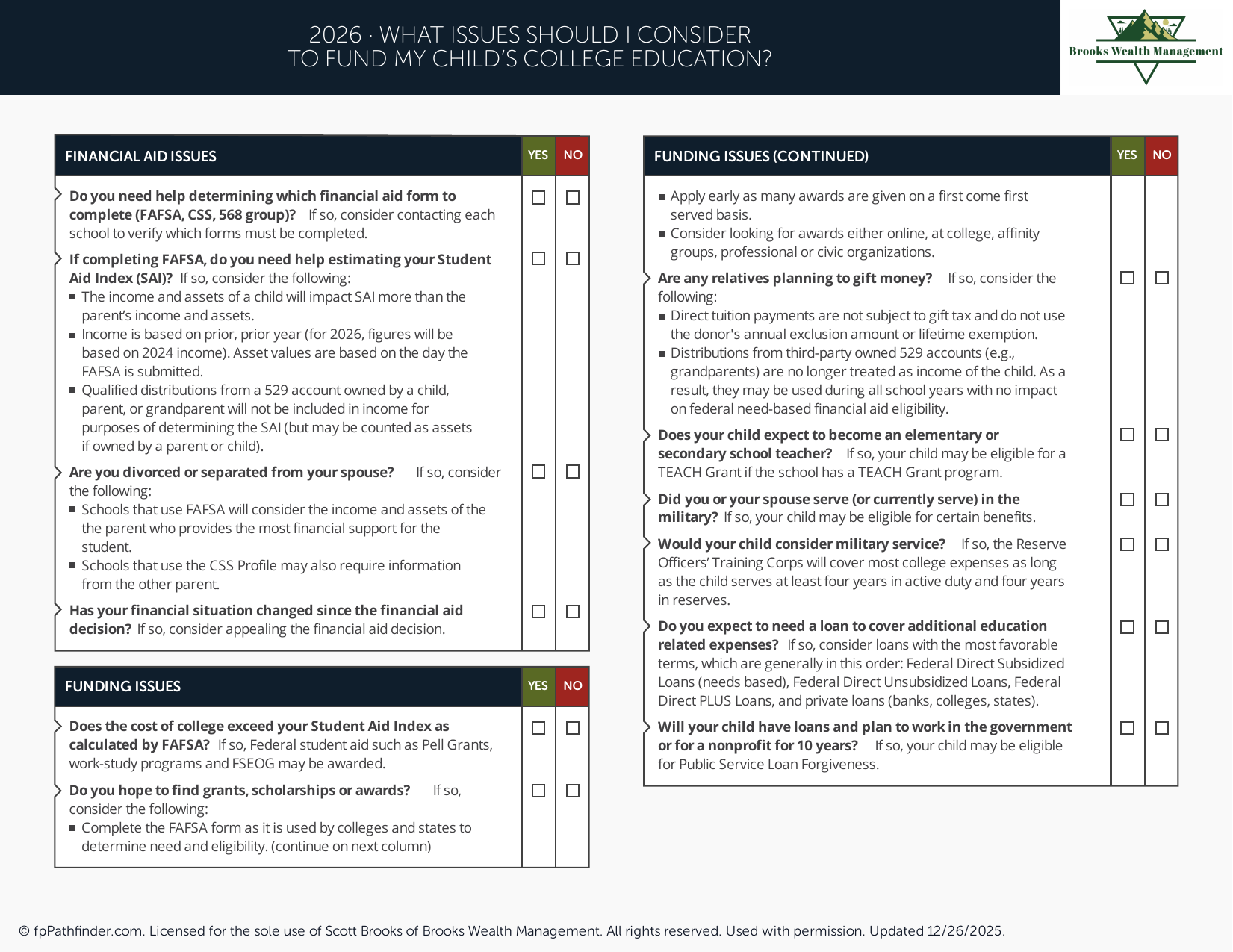
How Should I Fund My Child's College Education?
Funding a child's college education is a goal shared by many families, but deciding how to save can be more complicated than simply choosing an account and making contributions. Education planning often involves balancing competing priorities, evaluating different account types, understanding tax considerations, and determining how college savings fits into a broader financial plan.
This decision flowchart is designed to help you think through the factors that may influence how you fund future education expenses. While there is no universal solution that works for every family, understanding the available options and their tradeoffs can help create a more informed decision-making process.
Review How College Funding Fits Within Your Overall Financial Plan
Before selecting an education savings strategy, it can be helpful to evaluate where college funding falls among your broader financial priorities. Many households are simultaneously working toward multiple goals, including retirement savings, emergency reserves, debt reduction, home purchases, and other long-term objectives.
Because resources are often limited, funding education may require tradeoffs. Determining how much can reasonably be directed toward future college expenses often starts with understanding the strength of your overall financial foundation.
Additional planning resources that may be helpful include Where Should My Next Dollar Go? and What Accounts Should I Consider If I Want to Save More?.
Review Your Education Funding Goals
Families approach college funding differently. Some intend to pay the full cost of education, while others plan to cover only a portion of expenses. Some prioritize flexibility and simply want to save consistently without targeting a specific funding amount.
Questions worth considering may include:
- How much of the anticipated education costs do you hope to cover?
- How many children may require funding support?
- How many years remain before funds are expected to be needed?
- Will educational goals potentially include public, private, in-state, or out-of-state institutions?
- Are grandparents or other family members expected to contribute?
- How important is flexibility if plans change?
The answers to these questions can influence account selection, contribution priorities, investment decisions, and overall savings expectations.
Review Available College Savings Options
There are multiple ways families may choose to save for future education expenses. Depending on individual circumstances, options may include dedicated education savings accounts, taxable investment accounts, cash reserves, or a combination of several approaches.
Each option carries its own advantages and limitations. Factors often reviewed include:
- Tax treatment of contributions and withdrawals
- Investment flexibility
- Control over the assets
- Beneficiary flexibility
- Administrative complexity
- Potential impact on financial aid calculations
- Accessibility of funds if educational plans change
Rather than focusing solely on potential tax benefits, many families benefit from evaluating how an account fits within their broader planning objectives.
Review Financial Aid and Tax Considerations
College funding decisions can have implications that extend beyond simply accumulating assets. Financial aid formulas, ownership structures, distribution rules, and tax treatment can all influence outcomes.
Areas that may warrant additional review include:
- How education assets may be treated in financial aid calculations
- Qualified and non-qualified withdrawal rules
- Potential tax benefits associated with certain account types
- Coordination with scholarships and grants
- Timing of withdrawals and distributions
- Changes in legislation or regulations that may affect planning decisions
Because tax laws and education funding rules can change over time, periodic review may help ensure that a strategy remains aligned with current circumstances.
Review Investment and Time Horizon Considerations
The number of years before funds may be needed often plays a significant role in determining how college savings are invested. A longer time horizon may create different planning considerations than a situation where education expenses are expected in the near future.
As the anticipated college years approach, many families review whether their investment allocation remains appropriate for the remaining timeline and potential withdrawal schedule.
Questions that may be helpful include:
- How soon are withdrawals likely to begin?
- Will education expenses occur over multiple years?
- Would a market decline significantly affect the funding plan?
- How much flexibility exists if investment results differ from expectations?
- Are college savings being coordinated with other investment objectives?
Education planning is often both a savings decision and an investment decision, making periodic review an important part of the process.
Review Flexibility and Alternative Outcomes
One of the most important considerations in college planning is recognizing that educational paths often change. Students may receive scholarships, choose different schools, delay attendance, pursue alternative education paths, or incur lower costs than originally expected.
Building flexibility into a college funding strategy may help families adapt to changing circumstances while maintaining progress toward other financial goals.
When evaluating flexibility, considerations may include:
- What happens if education costs are lower than expected?
- What if the student receives scholarships or grants?
- What if educational plans change entirely?
- How easily can funds be redirected if necessary?
- How does college funding interact with retirement planning goals?
Families may also benefit from reviewing What Issues Should I Consider Before I Retire? and What Issues Should I Consider When Reviewing My Beneficiaries? as part of a broader planning process.
About This Resource
This decision flowchart was created to help individuals and families think through the factors involved in funding a child's college education. It is intended to provide a structured framework for evaluating common considerations such as savings priorities, account selection, financial aid implications, investment timelines, tax considerations, and long-term planning tradeoffs.
Every family approaches education planning differently. Factors such as income, savings capacity, family size, retirement readiness, investment preferences, and educational goals can all influence the appropriate approach. Reviewing these issues periodically can help ensure that college funding decisions remain aligned with changing financial circumstances and priorities.
This resource is provided for educational purposes only and should not be considered investment, tax, legal, or financial advice. Individuals should consult appropriate professionals regarding their specific circumstances before implementing any financial strategy.