
What Issues Should I Consider If I Experience a Sudden Wealth Event?
Checklist of financial, tax, and planning steps following a sudden wealth event such as an inheritance or business sale.
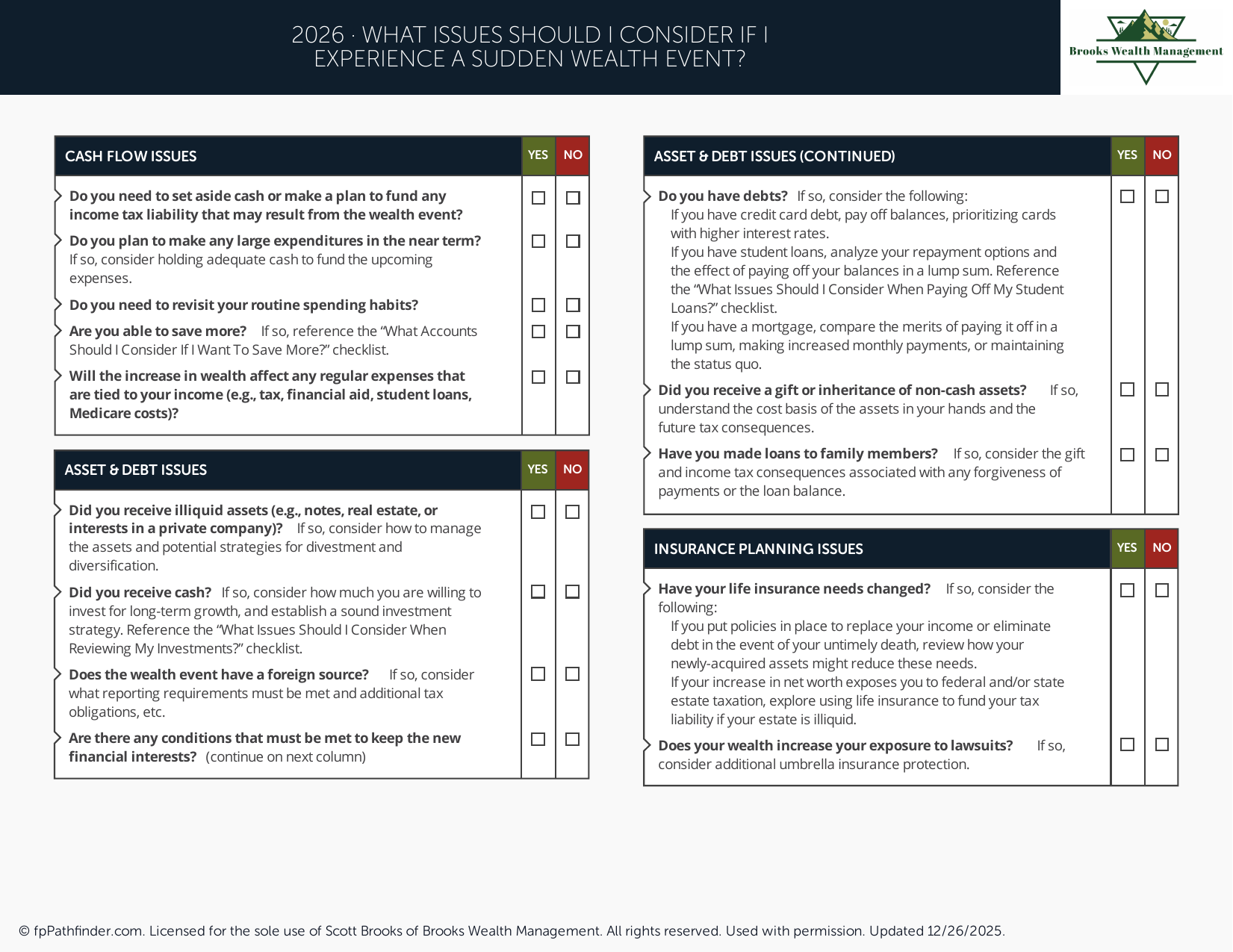
What Issues Should I Consider If I Experience Sudden Wealth?
Receiving a large sum of money can be a life-changing event. Whether the wealth comes from an inheritance, business sale, equity compensation event, legal settlement, insurance proceeds, real estate transaction, or another source, the financial decisions made in the months following the event can have long-term consequences.
While sudden wealth may create new opportunities, it can also introduce new risks, responsibilities, and complexities. This checklist is designed to provide a framework for reviewing common financial, tax, legal, investment, and planning considerations that may arise when an individual experiences a significant increase in wealth.
Review Immediate Decisions Carefully
One of the most common challenges associated with sudden wealth is the pressure to make immediate decisions. Family members, friends, advisors, investment opportunities, and major purchases may all compete for attention shortly after a liquidity event occurs.
Questions that may deserve review include:
- Do any decisions need to be made immediately?
- Are there funds that can be held temporarily while planning occurs?
- Have major purchases been evaluated carefully?
- Are there requests from family or friends that require consideration?
- Have financial priorities been clearly identified?
Many individuals find value in creating a structured decision-making process before making significant changes to their financial lives.
Review the Source of the Wealth
The source of the wealth often influences tax treatment, planning opportunities, and future financial decisions.
Sources of sudden wealth may include:
- Inheritance.
- Business sale proceeds.
- Restricted stock or equity compensation events.
- Legal settlements.
- Insurance proceeds.
- Real estate transactions.
- Executive compensation arrangements.
Understanding where the funds originated and how they are treated under applicable laws and regulations is often an important first step.
Review Potential Tax Considerations
Tax implications can vary significantly depending on the source of the wealth. Before making major financial decisions, many individuals choose to understand the tax consequences associated with the event.
Topics that may deserve review include:
- Income tax considerations.
- Capital gain implications.
- Estate-related considerations.
- Business sale taxation.
- Investment-related tax consequences.
- Future tax planning opportunities.
Because tax outcomes depend heavily on individual circumstances, many individuals work with qualified tax professionals when evaluating these matters.
Review Cash Flow and Liquidity Needs
While sudden wealth may increase financial resources, it can also create new planning considerations. Reviewing cash flow and liquidity needs may help ensure that future decisions align with personal goals and obligations.
Questions that may be worth reviewing include:
- What funds may be needed in the short term?
- Are there outstanding liabilities or obligations?
- Should emergency reserves be updated?
- How much liquidity should remain available?
- Have future spending needs been evaluated?
Understanding liquidity needs may help support more informed long-term planning decisions.
Review Existing Debt and Financial Obligations
Some individuals choose to review existing liabilities following a significant increase in wealth. While there is no universal approach, understanding current obligations may help clarify available options.
Items that may deserve review include:
- Mortgages.
- Student loans.
- Business loans.
- Lines of credit.
- Personal liabilities.
A related resource that may be helpful is Should I Pay Off My Debts?.
Review Investment and Portfolio Considerations
Sudden wealth may substantially change an individual's overall financial picture. As a result, investment decisions may deserve review within the context of broader financial goals.
Questions that may be worth reviewing include:
- How does the new wealth affect overall net worth?
- Have investment objectives changed?
- Are there concentration risks that deserve attention?
- How much risk is appropriate moving forward?
- Do investment decisions align with long-term goals?
Investment decisions often become more effective when they are evaluated as part of a comprehensive financial plan rather than in isolation.
Review Estate Planning Documents
A significant increase in wealth may create a need to revisit estate planning documents and beneficiary arrangements.
Items that may deserve review include:
- Wills.
- Trusts.
- Beneficiary designations.
- Powers of attorney.
- Healthcare directives.
- Asset ownership structures.
Related resources that may be helpful include:
- What Issues Should I Consider Before I Update My Estate Plan?
- Should I Consider a Trust?
- What Issues Should I Consider When Reviewing My Beneficiaries?
Review Charitable and Legacy Planning Goals
Some individuals choose to evaluate charitable, family, or legacy-related goals after experiencing sudden wealth. Clarifying personal values and priorities may help guide future decisions.
Questions that may deserve consideration include:
- Are charitable goals important?
- Should family wealth transfer objectives be reviewed?
- Are there causes or organizations that align with personal values?
- How does charitable giving fit within broader financial goals?
A related resource that may be helpful is Should I Use a Donor-Advised Fund (DAF) When Giving to Charity?.
Review Personal and Family Goals
One of the most important planning considerations following sudden wealth is understanding what the money is intended to accomplish. Financial resources are often most effective when aligned with clearly defined goals.
Questions that may be worth reviewing include:
- How has the wealth event changed future priorities?
- What goals are most important moving forward?
- Have retirement objectives changed?
- Are there family planning considerations that deserve attention?
- How should financial resources support long-term objectives?
Many individuals find that defining goals before making major financial decisions helps provide clarity and direction.
Review Professional Guidance and Support
Significant wealth events often involve multiple disciplines, including tax planning, estate planning, investment management, insurance planning, and legal considerations.
Questions that may deserve review include:
- Are qualified professionals involved where appropriate?
- Do existing advisors understand the new financial situation?
- Are legal and tax matters being addressed appropriately?
- Has a coordinated planning process been established?
Depending on the circumstances, individuals may choose to work with financial, legal, tax, and estate planning professionals to help evaluate available options.
Questions Worth Reviewing Following a Sudden Wealth Event
Many individuals find it helpful to review the following questions:
- Do any major decisions need to be made immediately?
- What are the tax implications of the wealth event?
- How does the wealth affect existing financial goals?
- Should estate planning documents be updated?
- Have beneficiary designations been reviewed?
- How much liquidity should be maintained?
- Have charitable or legacy planning goals changed?
- Does the current financial plan remain appropriate?
A structured review process may help individuals evaluate opportunities and risks while reducing the likelihood of emotionally driven financial decisions.
How to Use This Checklist
This checklist is intended to serve as an educational resource that helps organize common financial, tax, legal, investment, and planning considerations associated with receiving a large sum of money. It may be useful following an inheritance, business sale, liquidity event, settlement, or other significant financial windfall.
The checklist does not provide legal, tax, investment, estate planning, or financial advice. Instead, it is designed to help identify planning topics and questions that may warrant additional review.
About This Resource
This checklist was created as an educational resource to help individuals better understand common financial and planning considerations associated with sudden wealth. The objective is to provide a framework for evaluating taxes, investments, estate planning, liquidity needs, and long-term goals following a significant increase in financial resources.
Because financial situations, tax consequences, legal considerations, and personal objectives vary significantly, this resource should be used for educational purposes only and should not be interpreted as legal, tax, investment, estate planning, or financial advice.
For additional planning resources, visit the Brooks Wealth Management Resource Library. If you have questions about how a significant liquidity event may affect your broader financial picture, you can schedule an introductory conversation.