
Common Long-Term Care (LTC) Products
Reference guide comparing traditional LTC insurance, hybrid policies, and other long-term care funding options.
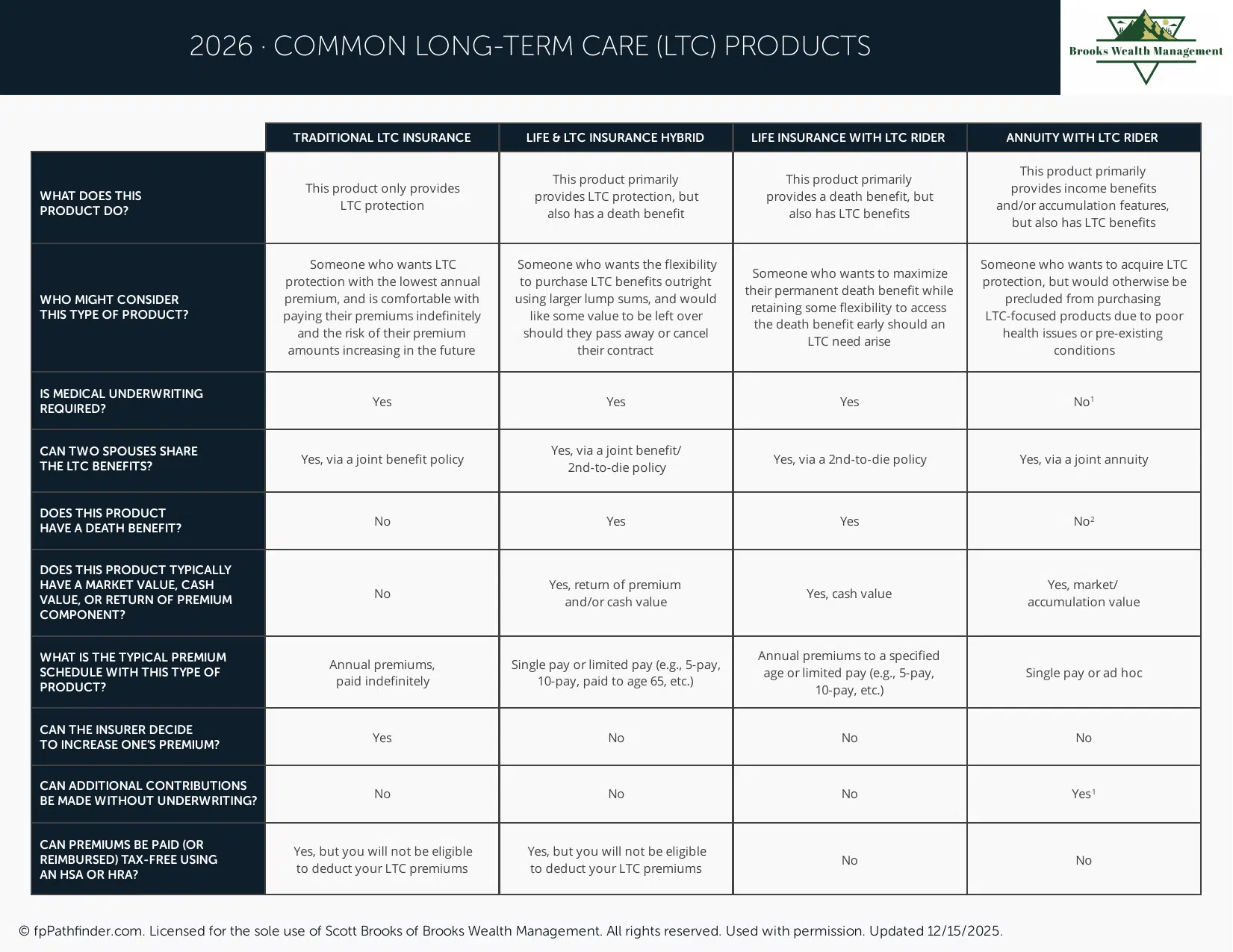
What Are Common Long-Term Care Products?
Long-term care planning is a topic that many individuals encounter as part of retirement planning, healthcare planning, and broader financial decision-making. While future healthcare needs are difficult to predict, some individuals choose to evaluate various long-term care products as part of a strategy for addressing potential care-related expenses later in life.
This checklist is designed to provide an overview of common long-term care products and planning approaches. The goal is not to recommend any particular product or strategy. Instead, it is intended to help individuals understand the types of solutions that may be available and the questions that may deserve further review.
Review Why Long-Term Care Planning Matters
Long-term care planning often focuses on preparing for the possibility that assistance may be needed with daily activities, healthcare needs, or extended care services later in life. Depending on individual circumstances, care may occur in a variety of settings, including at home, in assisted living communities, or in other care environments.
Because future care needs, healthcare costs, and family circumstances can vary significantly, many individuals choose to review long-term care planning as part of a broader retirement strategy.
For a related resource, consider reviewing What Issues Should I Consider When Purchasing Long-Term Care Insurance?.
Review Traditional Long-Term Care Insurance
Traditional long-term care insurance is one of the more widely recognized long-term care products. These policies are generally designed specifically to address certain long-term care expenses if policy requirements are met.
When evaluating traditional long-term care insurance, individuals often review factors such as:
- Eligibility requirements.
- Covered services and care settings.
- Benefit periods.
- Benefit amounts.
- Inflation-related provisions.
- Premium structures.
- Policy limitations and exclusions.
Policy provisions vary significantly, making it important to review specific policy details carefully when comparing available options.
Review Life Insurance Policies with Long-Term Care Features
Some life insurance products include provisions that may provide access to benefits if certain long-term care-related conditions occur. These arrangements are sometimes evaluated by individuals seeking solutions that combine multiple planning objectives within a single product.
When reviewing these products, individuals often consider:
- The relationship between life insurance benefits and long-term care benefits.
- How benefits are accessed.
- Policy costs and funding requirements.
- Flexibility of available benefits.
- Potential impact on beneficiaries.
Individuals evaluating life insurance planning topics may also find it useful to review What Issues Should I Consider When Purchasing a Life Insurance Policy? and What Issues Should I Consider When Reviewing My Existing Life Insurance Policy?.
Review Annuity-Based Long-Term Care Products
Some annuity products include provisions designed to address certain long-term care-related expenses. These products may be structured differently from traditional long-term care insurance and may be evaluated within the context of broader retirement income and healthcare planning discussions.
Topics that individuals sometimes review include:
- How long-term care benefits are triggered.
- How annuity benefits interact with care-related provisions.
- Funding requirements.
- Liquidity considerations.
- Contract terms and limitations.
As with any financial product, understanding contractual provisions may help improve overall understanding of available options.
Review Self-Funding as a Planning Approach
Not all long-term care planning involves insurance products. Some individuals choose to evaluate whether existing assets, retirement resources, or other financial resources may play a role in addressing potential future care costs.
Questions that may be worth reviewing include:
- What financial resources may be available if care is needed?
- How would potential care expenses affect retirement goals?
- How might long-term care costs affect family members or beneficiaries?
- What level of financial flexibility currently exists?
- How does long-term care planning fit within broader retirement objectives?
Because every household's financial situation is different, self-funding considerations often depend heavily on individual circumstances.
Review Long-Term Care Planning Alongside Retirement Planning
Long-term care planning is often interconnected with retirement planning, healthcare planning, estate planning, and risk management. Reviewing these topics together may help create a more complete understanding of future financial considerations.
Related resources that may be helpful include:
- What Issues Should I Consider Before I Retire?
- Will Healthcare Change as I Transition Into Retirement?
- If I Retire Early, Should I Buy Health Insurance Through the Health Insurance Marketplace?
Reviewing healthcare and retirement planning considerations together may help individuals better understand how long-term care planning fits within a broader financial framework.
Questions Worth Reviewing When Comparing Long-Term Care Products
Many individuals find it helpful to review the following questions when evaluating available options:
- What long-term care products are available?
- How do different products operate?
- What benefits may be available under each option?
- What costs and funding requirements apply?
- How flexible are the available solutions?
- How do the products fit within broader retirement planning goals?
- What role could existing assets play in future care planning?
- How might long-term care planning affect family members or beneficiaries?
A structured review process can help organize these considerations and support more informed decision-making.
How to Use This Checklist
This checklist is intended to function as an educational resource that introduces common long-term care products and planning approaches. It may be useful when beginning research, comparing options, or reviewing long-term care planning within a broader financial planning context.
The checklist does not provide recommendations regarding any product, insurance carrier, annuity contract, life insurance policy, or planning strategy. Instead, it is designed to help identify topics and questions that may warrant additional review.
About This Resource
This checklist was created as an educational resource to help individuals better understand common long-term care products and planning considerations. The objective is to provide a framework for reviewing available options, healthcare planning factors, retirement planning considerations, and broader financial planning topics.
Because long-term care needs, financial resources, and planning objectives vary significantly among individuals, this resource should be used for educational purposes only and should not be interpreted as a recommendation regarding any insurance product, annuity contract, life insurance policy, or planning strategy.
If you have questions about how long-term care planning fits into your broader financial picture, you can schedule an introductory conversation.