
Common Estate Plan Elements
Reference guide summarizing the key documents and components of a comprehensive estate plan.
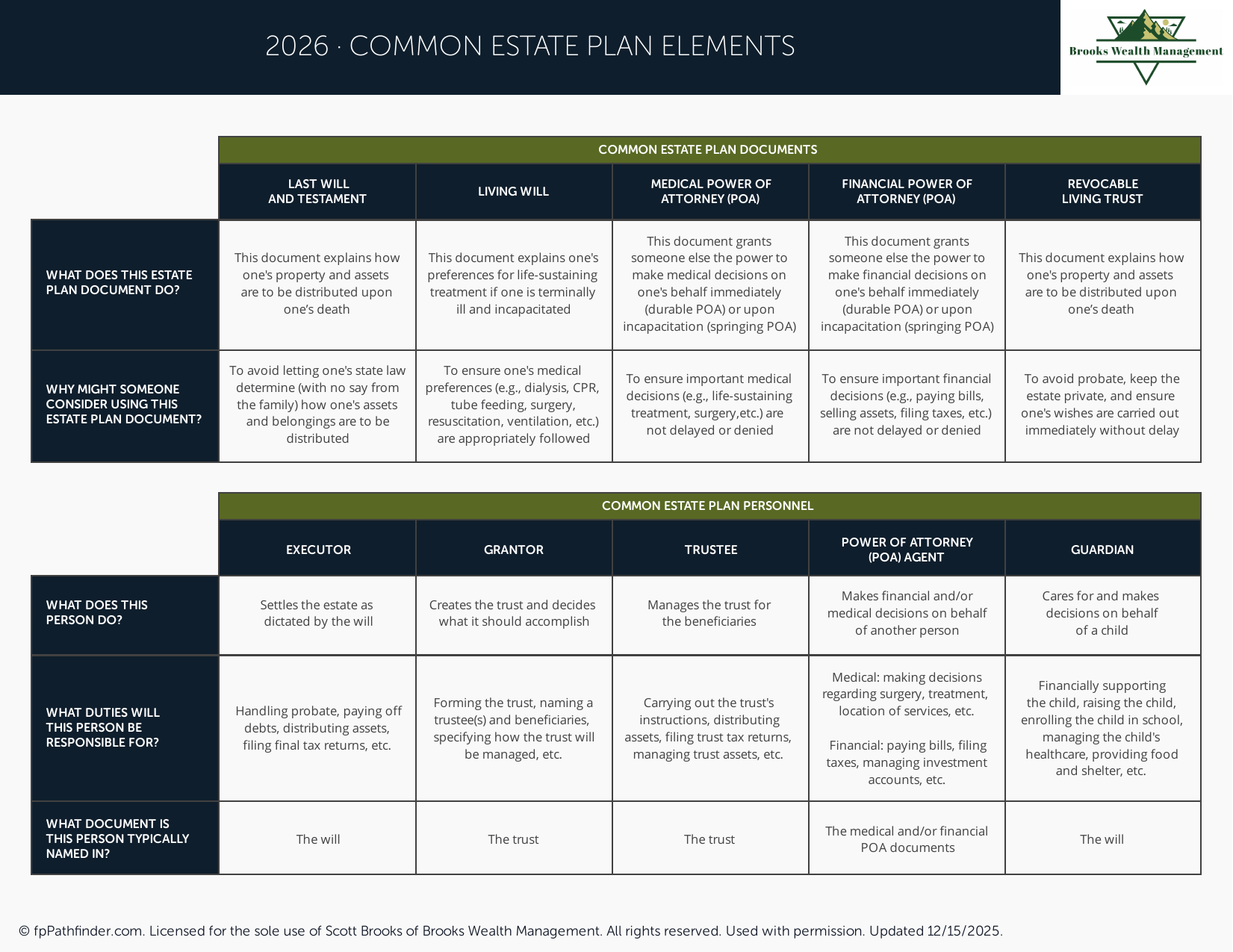
What Common Estate Planning Documents Should I Consider?
Estate planning is not a single document. It is a collection of legal, financial, and administrative tools designed to help manage assets, provide instructions, protect loved ones, and prepare for both incapacity and death.
While every situation is unique, most estate plans are built around a handful of core documents and beneficiary arrangements. Understanding these common estate planning elements can help you identify gaps and have more productive conversations with your attorney and financial advisor.
Review Your Last Will and Testament
A Last Will and Testament is one of the foundational estate planning documents. A will generally provides instructions regarding the distribution of assets, names an executor to administer the estate, and may designate guardians for minor children.
Questions worth considering include:
- Does your will reflect your current wishes?
- Are your named beneficiaries still appropriate?
- Have you designated backup beneficiaries?
- Are guardian designations current?
- Does your executor remain willing and able to serve?
Major life changes such as marriage, divorce, births, deaths, or significant changes in wealth often warrant a review.
Review Whether a Trust May Be Appropriate
Some individuals and families choose to incorporate trusts into their estate plan. Trusts can be used for a variety of planning purposes, including asset management, beneficiary protection, incapacity planning, charitable giving, and estate administration.
Questions worth considering include:
- Would a trust help accomplish your planning goals?
- Are there concerns regarding beneficiary management?
- Do you own property in multiple states?
- Are there privacy or administrative concerns?
- Do you have specialized family or business planning needs?
You may also find it helpful to review Should I Consider a Trust? and What Are Some Common Trusts?.
Review Powers of Attorney
Powers of attorney are often overlooked but represent an important part of a comprehensive estate plan.
A financial power of attorney generally authorizes another individual to handle certain financial matters if you become unable to act on your own behalf.
Questions worth reviewing include:
- Who would manage your finances if you became incapacitated?
- Does your selected agent remain appropriate?
- Do successor agents need to be updated?
- Have there been changes in family circumstances?
Because state laws vary, legal counsel should review these documents periodically.
Review Healthcare Directives
Healthcare directives help communicate medical wishes and designate individuals who may make healthcare decisions if you cannot do so yourself.
Common healthcare planning documents may include:
- Advance healthcare directives.
- Healthcare powers of attorney.
- Living wills.
- Medical authorization forms.
Questions worth considering include:
- Do your healthcare instructions reflect your current wishes?
- Are your healthcare agents still appropriate?
- Do family members know where documents are located?
Review Beneficiary Designations
Many assets transfer through beneficiary designations rather than through a will or trust.
Common accounts that often contain beneficiary designations include:
- IRAs.
- 401(k) plans.
- 403(b) plans.
- Life insurance policies.
- Annuities.
- Transfer-on-death accounts.
Questions worth considering include:
- Are primary beneficiaries current?
- Have contingent beneficiaries been named?
- Do beneficiary designations align with the rest of your estate plan?
- Have major life events occurred since the last review?
You may also find value in reviewing What Issues Should I Consider When Reviewing My Beneficiaries?.
Review Asset Ownership and Titling
How assets are titled can affect how they transfer at death and how they integrate with the rest of an estate plan.
Assets commonly reviewed include:
- Bank accounts.
- Brokerage accounts.
- Real estate.
- Business interests.
- Vehicles.
Questions worth considering include:
- Does ownership align with your planning goals?
- Have assets been properly coordinated with your estate plan?
- Have major assets been acquired since your last review?
Review Business Succession Planning
Business owners often have additional planning considerations beyond traditional estate documents.
Questions worth considering include:
- Who would manage the business if you became incapacitated?
- What happens to ownership at death?
- Are buy-sell agreements current?
- Have business valuations been updated?
- Do family members understand the succession plan?
Business succession planning is often coordinated among financial advisors, attorneys, accountants, and business partners.
Review Charitable Planning Goals
Some individuals incorporate charitable goals into their estate plan.
Questions worth considering include:
- Do charitable organizations play a role in your legacy goals?
- Should charitable gifts occur during life, at death, or both?
- Have charitable intentions been documented appropriately?
Related resources include Should I Use a Donor-Advised Fund? and What Issues Should I Consider When Developing a Charitable Giving Strategy?.
Review Your Estate Plan Regularly
Estate planning is an ongoing process rather than a one-time event. Documents and strategies may need to be reviewed following major life events, changes in financial circumstances, changes in family dynamics, or changes in applicable laws.
Questions worth asking include:
- When was the last time your estate plan was reviewed?
- Have there been major life changes?
- Have your financial goals changed?
- Do your current documents still reflect your wishes?
You may also find it helpful to review What Issues Should I Consider Before Creating an Estate Plan? and What Issues Should I Consider Before Updating My Estate Plan?.
About This Resource
Financial planning works best when you have the right tools and frameworks to guide your decisions.
This resource was created to provide an overview of common estate planning documents and strategies that individuals and families frequently review. Estate planning may involve wills, trusts, powers of attorney, healthcare directives, beneficiary designations, business planning considerations, and charitable planning goals. The appropriate approach depends on your individual circumstances and objectives.
Scott Brooks, CFP® at Brooks Wealth Management uses resources like this with clients across Ventura County, Westlake Village, and throughout all 50 states to make complex financial topics easier to navigate. Review it, discuss it with your legal and tax professionals, and bring your questions to an introductory conversation.