
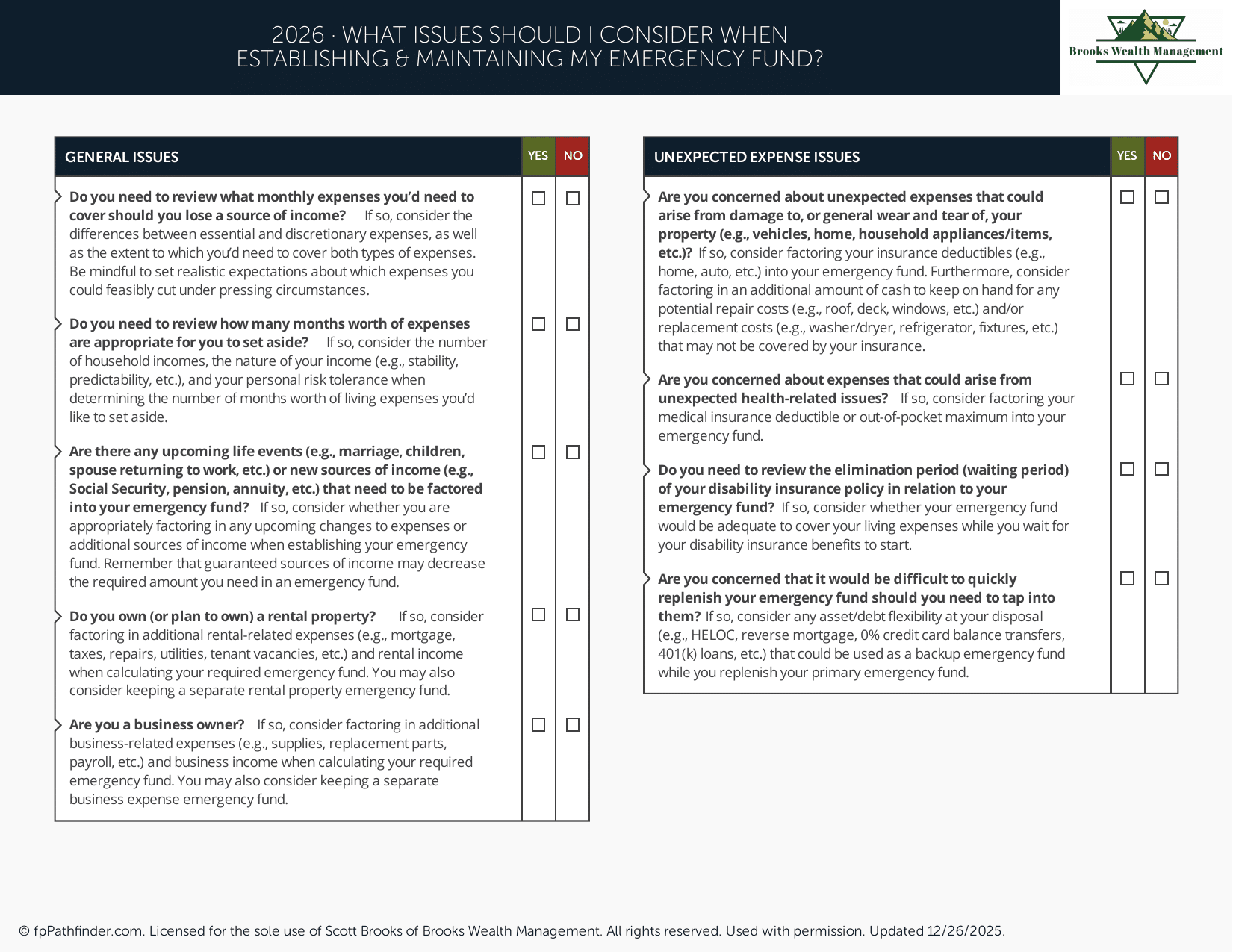
What Issues Should I Consider When Establishing and Maintaining My Emergency Fund?
Checklist for building and maintaining an adequate emergency fund.
What Issues Should I Consider Regarding Estate Management and Execution?
Estate management and execution involves more than simply deciding who receives assets after death. It encompasses a broad range of legal, financial, administrative, and personal considerations that can affect family members, beneficiaries, fiduciaries, and the overall transfer of wealth.
This checklist is designed to help individuals and families think through the major issues that may warrant review when evaluating an estate plan. Whether your objective is preserving assets, simplifying administration, protecting beneficiaries, supporting charitable causes, or ensuring your wishes are carried out efficiently, a structured review can help identify areas that may deserve attention.
Review Your Estate Planning Objectives
Before reviewing specific documents or strategies, it can be helpful to clarify the goals of the estate plan itself. Different families often have different priorities, and those priorities frequently influence how estate planning decisions are structured.
Questions worth considering include:
- Who should receive assets?
- How should assets be distributed?
- Are there beneficiaries who may require additional protection or oversight?
- Are charitable goals part of the plan?
- Should privacy be a priority?
- Are there family dynamics that may require special consideration?
Clearly defining objectives can provide a useful foundation for evaluating the rest of the estate plan.
Review Core Estate Planning Documents
Most estate plans rely on a combination of legal documents that work together to communicate wishes and establish authority for decision-making.
Documents commonly reviewed include:
- Wills
- Trusts
- Financial powers of attorney
- Healthcare powers of attorney
- Advance healthcare directives
- Guardianship designations where applicable
Periodic review can help ensure these documents remain consistent with current wishes, family circumstances, and applicable laws.
Review Beneficiary Designations
Beneficiary designations often play a significant role in estate administration and may determine how certain assets transfer at death. In many cases, beneficiary designations can operate independently of a will.
Accounts and assets commonly reviewed include:
- Retirement accounts
- Life insurance policies
- Annuities
- Transfer-on-death accounts
- Payable-on-death accounts
Life events such as marriage, divorce, births, deaths, and changes in family circumstances may warrant a review of existing beneficiary designations.
Additional resources that may be helpful include What Issues Should I Consider When Reviewing My Beneficiaries?.
Review Asset Ownership and Titling
How assets are owned can influence estate administration, probate considerations, beneficiary outcomes, and overall estate complexity.
Areas that may warrant review include:
- Individual ownership arrangements
- Joint ownership structures
- Trust ownership arrangements
- Business ownership interests
- Real estate ownership
- Transfer-on-death provisions
Understanding how assets are titled can help ensure ownership arrangements remain aligned with broader estate planning goals.
Review Trust Considerations
Some estate plans incorporate trusts to address specific planning objectives. Trusts can serve a variety of purposes depending on family circumstances, asset types, and long-term goals.
Potential considerations may include:
- Management of assets for beneficiaries
- Privacy considerations
- Incapacity planning
- Business succession planning
- Asset protection objectives
- Charitable planning goals
Because trust provisions can have long-term implications, periodic review may help ensure they continue to reflect current intentions.
Review Incapacity Planning Issues
Estate planning is often associated with the transfer of assets at death, but many plans also address situations involving temporary or permanent incapacity.
Questions worth reviewing include:
- Who should make financial decisions if you become unable to do so?
- Who should make healthcare decisions on your behalf?
- Are the designated individuals still appropriate?
- Do key decision-makers understand their responsibilities?
Addressing incapacity planning can help provide continuity and reduce uncertainty during difficult circumstances.
Review Family, Business, and Legacy Considerations
Estate plans often involve more than the transfer of financial assets. Family relationships, business interests, charitable objectives, and personal values may all influence planning decisions.
Areas that may warrant review include:
- Business succession planning
- Family communication objectives
- Charitable intentions
- Special needs planning considerations
- Multi-generational planning goals
- Personal legacy objectives
Reviewing these topics can help ensure the estate plan reflects broader personal and family priorities.
Review Tax and Administrative Considerations
Estate administration often involves legal, tax, and administrative responsibilities. While tax considerations should not be the sole driver of estate planning decisions, they frequently play a role in evaluating potential outcomes.
Areas commonly reviewed include:
- Income tax considerations
- Estate tax considerations
- Trust administration requirements
- Probate-related issues
- Recordkeeping and document organization
- Executor and trustee responsibilities
Because laws and regulations may change over time, periodic review can help identify areas where updates may be appropriate.
Review Your Estate Plan Regularly
Estate planning is rarely a one-time event. Family circumstances, financial situations, asset levels, and personal objectives often evolve over time.
Life events that frequently prompt review include:
- Marriage or divorce
- Birth or adoption of children
- Deaths within the family
- Business ownership changes
- Significant asset growth
- Retirement
- Relocation to another state
Periodic review can help ensure that estate planning documents and strategies remain aligned with current wishes and circumstances.
You may also find value in reviewing Master List of Financial Goals and What Issues Should I Consider Before I Retire?.
About This Resource
This checklist was created to help individuals and families evaluate common issues related to estate management and execution. The objective is to provide a structured framework for reviewing estate planning documents, beneficiary designations, asset ownership, incapacity planning, trust considerations, family objectives, and administrative responsibilities.
Every estate plan is unique. Factors such as family structure, asset composition, business ownership, charitable goals, and personal priorities can all influence planning decisions. Periodic review can help ensure an estate plan remains aligned with changing circumstances and long-term objectives.
This resource is provided for educational purposes only and should not be construed as investment, tax, legal, or financial advice. Individuals should consult qualified legal, tax, and financial professionals regarding their specific circumstances before implementing any estate planning strategy.