
What Issues Should I Consider If My Spouse Passed Away?
Checklist of financial, legal, and administrative steps to take after the death of a spouse.
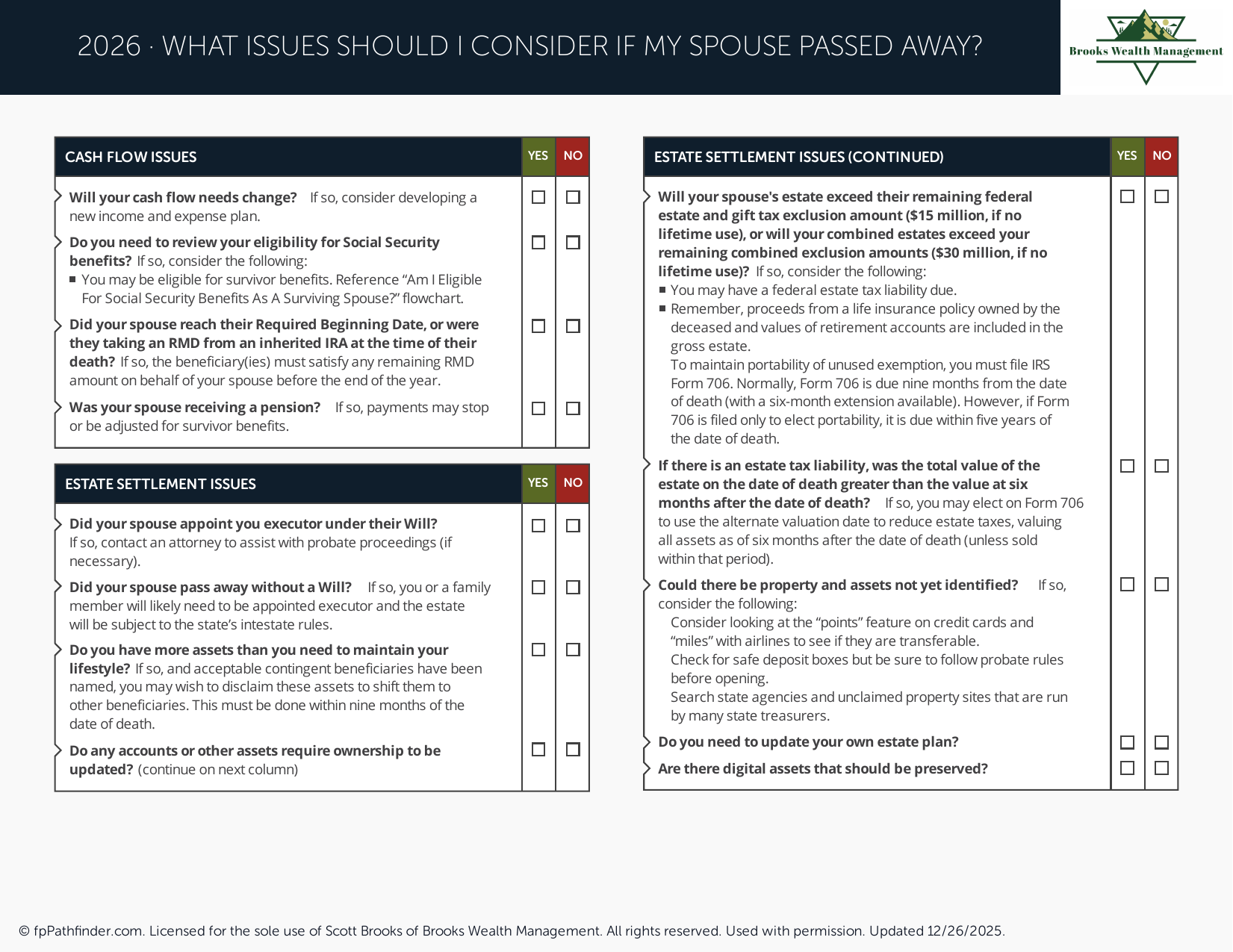
What Issues Should I Consider If My Spouse Passed Away?
The loss of a spouse is one of the most difficult life events a person can experience. During a time of grief, survivors are often faced with a variety of financial, legal, administrative, and personal decisions that may require attention. While many decisions can wait, certain responsibilities and planning considerations may need to be addressed in the weeks and months that follow.
This checklist is designed to provide a framework for reviewing common issues that may arise following the death of a spouse. The objective is not to provide legal, tax, or financial advice, but rather to help organize important considerations and identify areas that may warrant further review.
Review Immediate Administrative Responsibilities
In the days and weeks following a loss, there may be several administrative tasks that require attention. Because circumstances vary, priorities will differ from family to family.
Items that may deserve review include:
- Obtaining certified copies of the death certificate.
- Locating estate planning documents.
- Reviewing beneficiary designations.
- Notifying appropriate financial institutions.
- Contacting insurance companies.
- Reviewing employer-sponsored benefits.
Creating a list of accounts, policies, and important documents may help simplify the process during an emotionally challenging time.
Review Cash Flow and Household Finances
The loss of a spouse may affect household income, expenses, and financial obligations. Reviewing the household's financial picture can help identify areas that may require attention.
Questions that may be worth reviewing include:
- What sources of income remain available?
- Have household expenses changed?
- Are there immediate cash needs?
- Which bills and obligations require ongoing payment?
- Are there automatic payments that should be reviewed?
Many individuals find it helpful to create an updated summary of household income, expenses, assets, and liabilities following a major life transition.
Review Life Insurance and Survivor Benefits
Depending on the circumstances, life insurance policies, employer benefits, pensions, and other survivor benefits may be available.
Topics that may deserve review include:
- Individual life insurance policies.
- Employer-provided life insurance benefits.
- Pension survivor benefits.
- Deferred compensation arrangements.
- Retirement account beneficiary provisions.
- Other available survivor benefits.
Individuals reviewing insurance-related matters may also find it helpful to review What Issues Should I Consider When Reviewing My Existing Life Insurance Policy?.
Review Social Security and Retirement Benefits
The death of a spouse may affect Social Security benefits, retirement accounts, and other retirement-related resources.
Questions that may be worth reviewing include:
- Are survivor benefits available?
- What retirement accounts require attention?
- Have beneficiary designations been updated?
- What options may be available regarding inherited retirement assets?
- How does the loss affect retirement planning goals?
Because retirement and Social Security rules can be complex, individuals often review these issues with qualified professionals before making decisions.
Review Estate Settlement Considerations
Estate administration may involve a variety of legal and financial responsibilities. While the process differs based on individual circumstances and state law, certain issues commonly arise.
Topics that may deserve review include:
- Wills and trusts.
- Probate considerations.
- Asset ownership arrangements.
- Beneficiary designations.
- Outstanding debts and obligations.
- Estate administration requirements.
Because estate matters often involve legal considerations, individuals frequently work with qualified legal professionals during this process.
Review Property and Housing Decisions
For some individuals, the loss of a spouse may eventually lead to housing-related decisions. While major decisions are often not urgent, it can be helpful to understand how housing fits into the broader financial picture.
Questions that may warrant review include:
- Is the current home affordable and practical?
- Have housing-related expenses changed?
- Are there maintenance responsibilities that need attention?
- Should future housing options be evaluated?
If housing decisions become relevant, you may also find it helpful to review What Issues Should I Consider When Selling My Home? and What Issues Should I Consider When Buying a Home?.
Review Tax Considerations
The death of a spouse may create tax-related considerations that deserve attention. While tax situations vary significantly, some individuals choose to review:
- Income tax filing requirements.
- Changes in filing status.
- Investment account ownership changes.
- Retirement account considerations.
- Estate-related tax matters.
Because tax implications depend heavily on individual circumstances, many individuals work with qualified tax professionals when evaluating these matters.
Review Beneficiaries and Estate Planning Documents
Following the death of a spouse, many individuals choose to review their own estate planning documents and beneficiary designations.
Items that may deserve attention include:
- Retirement account beneficiaries.
- Life insurance beneficiaries.
- Wills and trusts.
- Powers of attorney.
- Healthcare directives.
A related resource that may be helpful is What Issues Should I Consider When Reviewing My Beneficiaries?.
Review Long-Term Financial Planning Goals
Over time, the loss of a spouse may affect retirement plans, spending goals, investment objectives, and other aspects of a financial plan. While many decisions do not need to be made immediately, it may eventually be appropriate to revisit long-term goals.
Questions that may be worth reviewing include:
- Have retirement goals changed?
- Does the current financial plan still reflect future needs?
- Have spending priorities changed?
- Should investment allocations be reviewed?
- How has the loss affected long-term planning objectives?
A thoughtful review may help ensure that future decisions remain aligned with evolving circumstances and priorities.
Questions Worth Reviewing After the Loss of a Spouse
Many individuals find it helpful to review the following questions:
- Have immediate administrative responsibilities been addressed?
- Are household finances organized and understood?
- Have insurance and survivor benefits been reviewed?
- Are Social Security and retirement benefits understood?
- Do estate administration issues require attention?
- Have beneficiary designations been updated?
- Are there tax matters that deserve review?
- How has this life event affected long-term financial goals?
A structured review process can help organize important considerations during a difficult period and may help reduce the likelihood that critical issues are overlooked.
How to Use This Checklist
This checklist is intended to serve as an educational resource that helps organize common financial, legal, administrative, and planning considerations following the death of a spouse. It may be useful in the weeks, months, and years following a loss as circumstances and priorities evolve.
The checklist does not provide legal, tax, estate planning, investment, or financial advice. Instead, it is designed to help identify questions and planning topics that may warrant additional review.
About This Resource
This checklist was created as an educational resource to help individuals better understand common financial, legal, and administrative considerations that may arise following the death of a spouse. The objective is to provide a framework for organizing important decisions and understanding how this life event may affect broader financial planning considerations.
Because family circumstances, estate matters, tax considerations, and financial situations vary significantly, this resource should be used for educational purposes only and should not be interpreted as legal, tax, estate planning, investment, or financial advice.
For additional planning resources, visit the Brooks Wealth Management Resource Library. If you have questions about how the loss of a spouse may affect your broader financial picture, you can schedule an introductory conversation.