
What Issues Should I Consider If I'm Concerned About Outliving My Assets?
Checklist of income strategies, spending adjustments, and planning tools to address longevity risk.
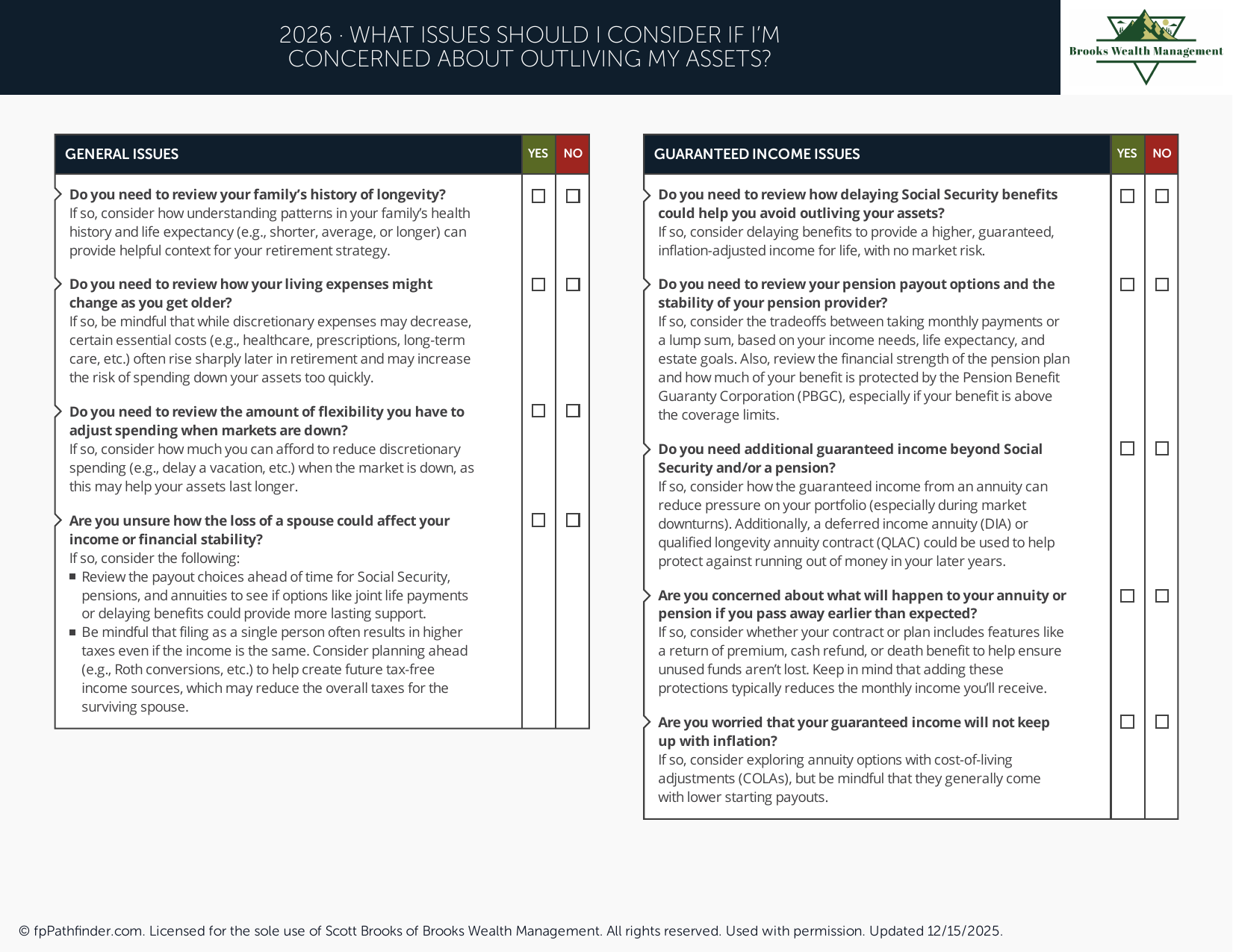
Will I Outlive My Assets?
One of the most common concerns retirees and pre-retirees have is whether their savings will last for the rest of their lives. For many individuals, the possibility of running out of money in retirement can feel more concerning than market volatility or short-term economic uncertainty.
Fortunately, retirement planning is not simply about accumulating assets. It is also about creating a strategy that helps support spending needs over what could be a retirement lasting 20, 30, or even 40 years. Understanding the factors that affect retirement sustainability can help individuals make more informed financial decisions.
Understanding Longevity Risk
Longevity risk refers to the possibility of living longer than expected and depleting financial resources during retirement. Advances in healthcare, improved lifestyles, and longer life expectancies have increased the importance of planning for extended retirement periods.
While a longer life expectancy is generally positive, it often means retirement assets must support spending needs for more years than previous generations experienced. Reviewing projected retirement income, spending, inflation, and healthcare costs can help individuals better evaluate this risk.
The Impact of Inflation Over Time
Inflation can significantly affect purchasing power throughout retirement. Even modest inflation can reduce the value of a fixed income stream over time.
For example, a retirement budget that comfortably supports expenses today may require substantially more income several decades from now. Because retirement can last many years, inflation is often an important consideration when evaluating withdrawal strategies, investment allocations, and long-term spending plans.
Many retirees review whether their portfolio has sufficient growth potential to help offset inflation while still maintaining an appropriate level of risk.
Healthcare Costs in Retirement
Healthcare expenses may represent a significant portion of retirement spending for many individuals. Medicare can help cover many healthcare costs, but retirees may still face expenses related to premiums, deductibles, prescription medications, supplemental coverage, and long-term care needs.
Individuals approaching retirement often evaluate how future healthcare costs fit into their overall retirement income plan. Some may also review available healthcare savings vehicles, such as Health Savings Accounts (HSAs), before retirement.
For more information, visit our resource on Medicare Part A and Part B eligibility.
Investment Strategy and Withdrawal Planning
The transition from accumulating assets to withdrawing assets creates a new set of planning considerations. Market declines early in retirement, combined with ongoing withdrawals, can affect the long-term sustainability of a portfolio.
As a result, many retirees review:
- Portfolio allocation
- Withdrawal sequencing
- Cash reserve needs
- Expected withdrawal rates
- Tax treatment of distributions
- Required Minimum Distributions (RMDs)
Evaluating these factors together may help individuals better understand how their retirement assets could perform under different market and spending scenarios.
For additional guidance, review our resource on accounts to consider for saving more.
Social Security and Other Income Sources
Social Security benefits often provide an important source of retirement income. Claiming decisions can affect lifetime benefits, making timing an important consideration for many retirees.
In addition to Social Security, retirement income may come from pensions, annuities, investment accounts, rental properties, deferred compensation plans, or part-time employment.
Reviewing how these income sources work together can help create a clearer picture of future retirement cash flow.
For additional information, visit our resource on Social Security retirement benefits.
Reviewing Retirement Readiness
Individuals concerned about whether their assets will last throughout retirement often review several key questions:
- Do my projected income sources cover expected spending?
- How might inflation affect my retirement plan?
- Have I accounted for future healthcare expenses?
- Is my investment allocation appropriate for retirement?
- Do I understand my withdrawal strategy?
- Have I reviewed Social Security claiming options?
- Have I evaluated future tax considerations?
- Does my estate plan reflect my current goals?
Reviewing these areas can help individuals better understand potential risks and opportunities as they prepare for retirement.
About This Resource
This resource provides general educational information regarding retirement income planning and longevity risk. It is not intended as investment, tax, legal, or financial advice. Individual circumstances vary and financial decisions should be evaluated based on personal goals and applicable laws.
If you would like to discuss your situation, we invite you to schedule an introductory conversation.