
Should I Lease or Buy My Next Automobile?
Decision flowchart comparing the financial pros and cons of leasing vs. buying a vehicle.
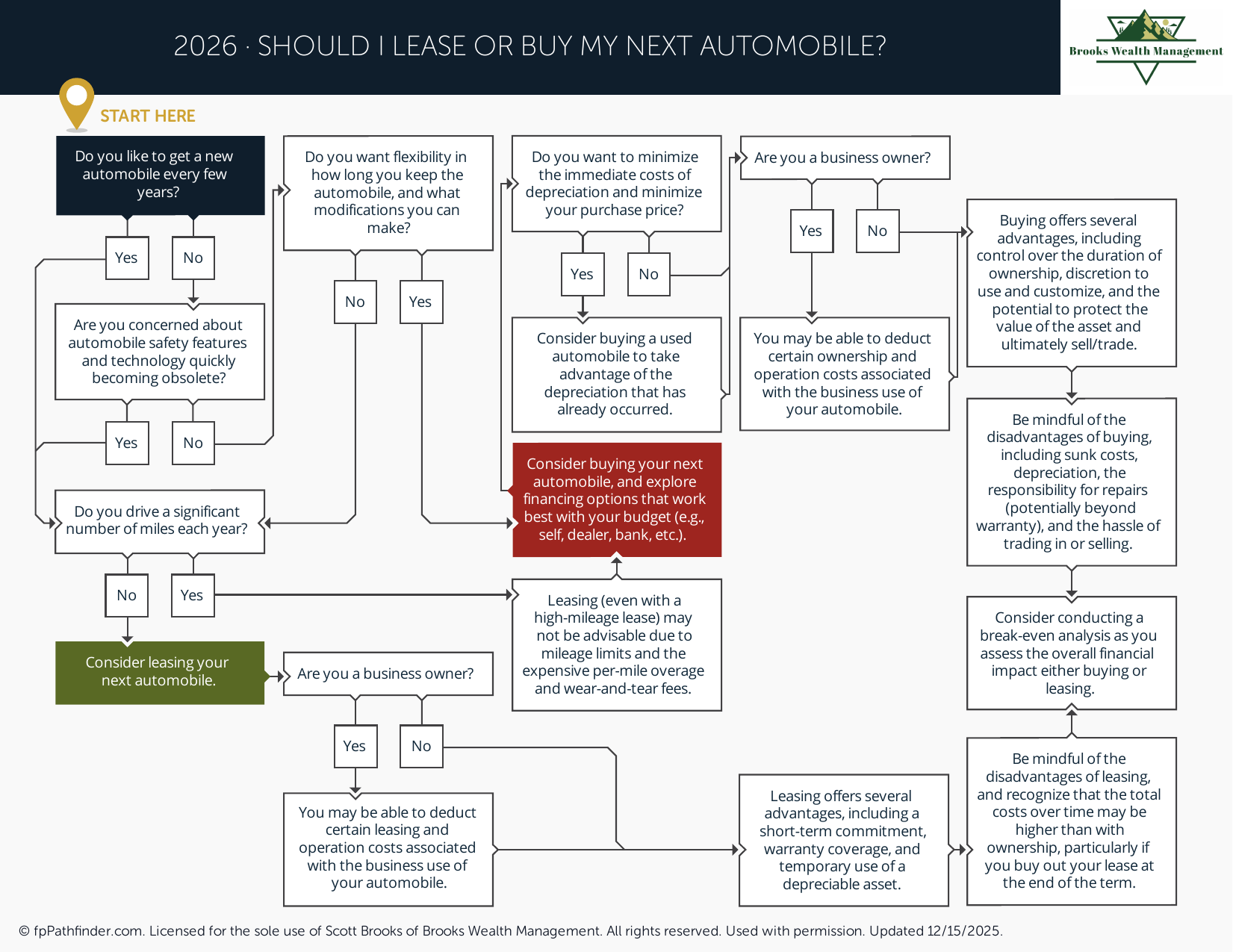
What Issues Should I Consider When Deciding Whether to Lease or Buy a Vehicle?
Purchasing or leasing a vehicle is a significant financial decision that can affect cash flow, savings goals, debt levels, and long-term financial flexibility. While vehicles are often necessary for transportation, the method used to acquire a vehicle may have meaningful financial implications over time.
There is no universally correct answer to whether leasing or buying is better. The appropriate choice often depends on an individual's financial situation, driving habits, business use, lifestyle preferences, and long-term goals. This checklist is designed to provide a framework for reviewing common financial and planning considerations when evaluating whether to lease or buy a vehicle.
Review Your Transportation Needs
Before evaluating financing options, it may be helpful to first determine how the vehicle will be used and what requirements are most important.
Questions that may deserve review include:
- How many miles are typically driven each year?
- Will the vehicle be used primarily for commuting, business, or personal purposes?
- How important is having a newer vehicle?
- How long do you typically keep vehicles?
- Are reliability or warranty considerations a priority?
Understanding how the vehicle will be used may help narrow the available options.
Review the Financial Differences Between Leasing and Buying
Leasing and purchasing involve different financial arrangements and may affect cash flow in different ways.
Questions that may deserve review include:
- What are the expected monthly payments under each option?
- What upfront costs are required?
- How do interest rates or financing costs compare?
- What fees may apply at the beginning or end of the agreement?
- How does each option affect overall cash flow?
Comparing total costs rather than focusing solely on monthly payments may provide a more complete understanding of the financial impact.
Review Long-Term Ownership Costs
Vehicle costs extend beyond the initial purchase or lease agreement. Understanding the long-term financial commitment may help support more informed decision-making.
Items that may deserve review include:
- Fuel costs.
- Insurance premiums.
- Maintenance expenses.
- Repair costs.
- Registration fees.
- Vehicle replacement timelines.
Considering the full cost of ownership may provide additional context beyond the initial transaction.
Review Cash Flow and Budget Considerations
A vehicle decision should generally be evaluated within the context of broader financial goals and obligations.
Questions that may deserve review include:
- How will the payment affect monthly cash flow?
- Will savings goals be impacted?
- Could the vehicle decision affect emergency reserves?
- Are other financial priorities competing for resources?
- Does the decision align with broader financial goals?
Related resources that may be helpful include:
Review Mileage and Usage Restrictions
Lease agreements often include specific terms regarding vehicle use, mileage, and condition. Understanding these requirements before entering an agreement may help avoid unexpected costs.
Questions that may deserve review include:
- How many miles are driven annually?
- Will mileage limits be exceeded?
- Does the vehicle experience significant wear and tear?
- Are modifications or customization planned?
- Could lifestyle changes affect future vehicle usage?
Individuals who drive frequently or anticipate significant vehicle use may wish to carefully review these provisions.
Review Business Use Considerations
For business owners and self-employed individuals, vehicle decisions may involve additional considerations related to business operations and recordkeeping.
Questions that may deserve review include:
- Will the vehicle be used for business purposes?
- How will business mileage be tracked?
- Are there recordkeeping requirements?
- Will business use affect insurance needs?
- Are there potential tax considerations associated with vehicle ownership or leasing?
Because tax rules can change and individual circumstances vary, many business owners consult qualified tax professionals when evaluating these matters.
Review Depreciation and Vehicle Value
Vehicles typically decline in value over time. Understanding how depreciation may affect future decisions can be an important part of evaluating leasing versus purchasing.
Questions that may deserve review include:
- How quickly is the vehicle expected to depreciate?
- How long is the vehicle likely to be owned?
- Will future resale value be important?
- How does depreciation affect overall costs?
- What happens at the end of the lease term or ownership period?
Evaluating expected ownership duration may help provide context when comparing alternatives.
Review Insurance Requirements
Vehicle financing and lease agreements may involve specific insurance requirements that differ from traditional ownership arrangements.
Topics that may deserve review include:
- Required coverage levels.
- Comprehensive and collision requirements.
- Gap coverage considerations.
- Deductible levels.
- Liability protection.
A related resource that may be helpful is What Issues Should I Consider When Reviewing My Property and Casualty Insurance Policies?.
Review Opportunity Costs
Vehicle decisions may affect the ability to save, invest, or pursue other financial objectives. Evaluating opportunity costs may help place the decision within the context of broader financial planning.
Questions that may deserve review include:
- Could higher vehicle costs reduce savings opportunities?
- Will retirement contributions be affected?
- Could the decision delay other goals?
- How does the vehicle fit within the overall financial plan?
- Are there competing priorities that deserve consideration?
Individuals focused on long-term wealth accumulation often evaluate vehicle decisions alongside broader financial objectives.
A related resource that may be helpful is What Accounts Should I Consider If I Want to Save More?.
Review Major Life Changes That Could Affect the Decision
Future life events may affect vehicle needs and financial priorities.
Questions that may deserve review include:
- Is a move being considered?
- Could family circumstances change?
- Are career changes anticipated?
- Will commuting needs change?
- Are retirement plans approaching?
Considering future changes may help determine whether flexibility is important.
Questions Worth Reviewing Before Leasing or Buying a Vehicle
Many individuals find it helpful to review the following questions:
- How long do I expect to keep the vehicle?
- What impact will the payment have on cash flow?
- How many miles do I drive annually?
- Will the vehicle be used for business purposes?
- Have insurance requirements been reviewed?
- How does this decision affect other financial goals?
- Have long-term ownership costs been evaluated?
- Does the decision align with my broader financial plan?
A structured review process may help identify important financial considerations before committing to a lease or purchase agreement.
How to Use This Checklist
This checklist is intended to serve as an educational resource that helps organize common financial, insurance, budgeting, and planning considerations associated with leasing or purchasing a vehicle. It may be useful before obtaining financing, signing a lease agreement, or replacing an existing vehicle.
The checklist does not provide tax, legal, insurance, investment, or financial advice. Instead, it is designed to help identify planning topics and questions that may warrant additional review.
About This Resource
This checklist was created as an educational resource to help individuals better understand common financial and planning considerations associated with leasing or buying a vehicle. The objective is to provide a framework for reviewing ownership costs, cash flow implications, insurance requirements, business use considerations, and broader financial planning impacts.
Because financial circumstances, vehicle usage patterns, tax considerations, and personal preferences vary significantly, this resource should be used for educational purposes only and should not be interpreted as tax, legal, insurance, investment, or financial advice.
For additional planning resources, visit the Brooks Wealth Management Resource Library. If you have questions about how a vehicle purchase or lease decision may affect your broader financial picture, you can schedule an introductory conversation.