
What Issues Should I Consider If My Spouse Has Been Diagnosed with a Terminal Illness?
Checklist of financial, legal, and planning steps when a spouse receives a terminal diagnosis.
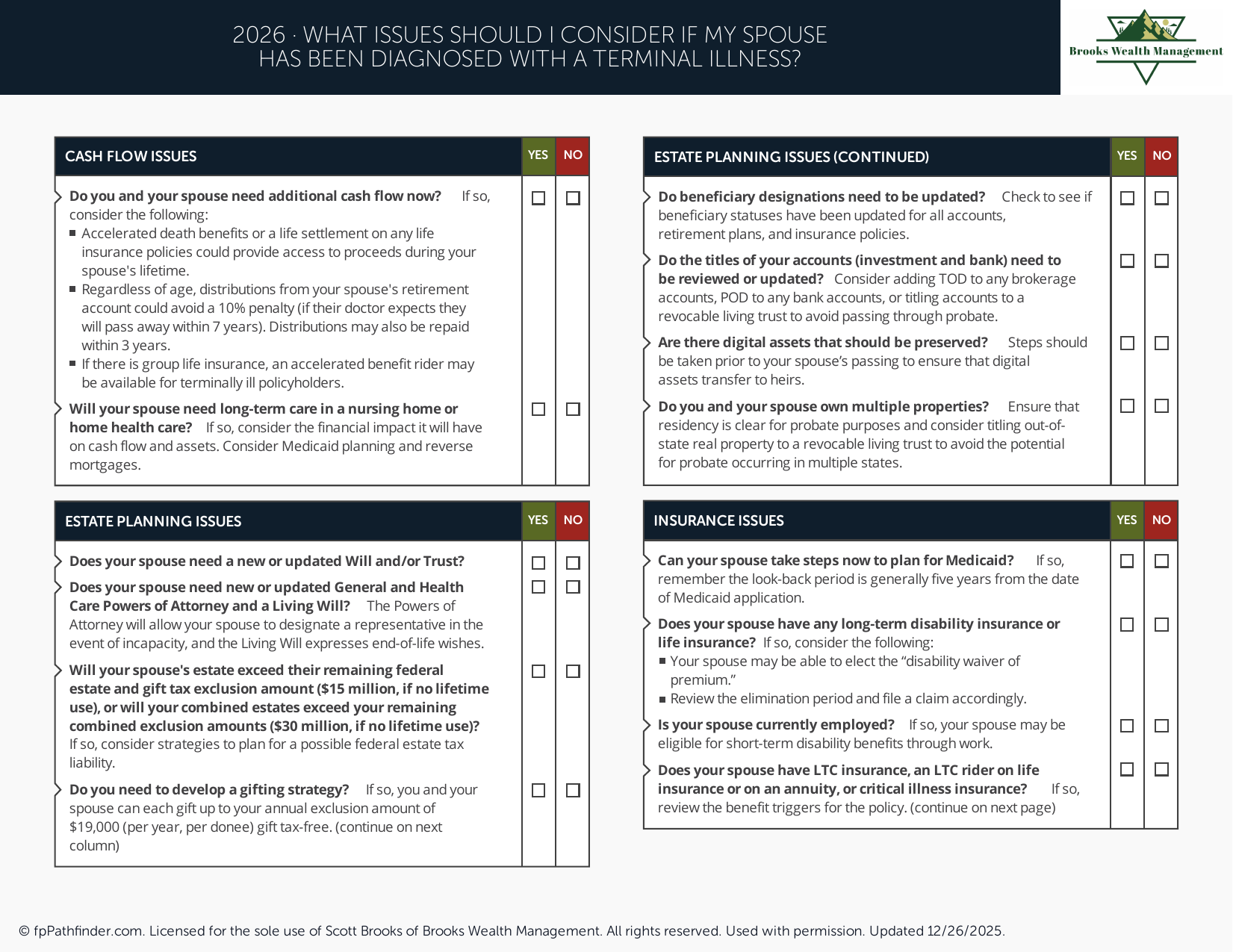
What Issues Should I Consider If My Spouse Has Been Diagnosed With a Terminal Illness?
A terminal illness diagnosis can create significant emotional, medical, legal, and financial challenges for an individual and their family. During an already difficult time, there may be important decisions that require attention regarding healthcare, insurance, estate planning, retirement accounts, cash flow, and family finances.
This checklist is designed to provide a framework for reviewing common financial, legal, and planning considerations that may arise following a spouse's terminal diagnosis. The objective is not to provide medical, legal, tax, or financial advice, but rather to help organize important topics that may deserve review as circumstances evolve.
Review Immediate Priorities and Available Support Resources
Every family's circumstances are unique. Following a diagnosis, priorities often focus on healthcare decisions, family support, caregiving responsibilities, and understanding available resources.
Questions that may deserve review include:
- What healthcare resources are available?
- Who will help coordinate medical care?
- What support systems are available for caregivers?
- Are family members aware of the situation and any desired involvement?
- What practical responsibilities may need to be addressed?
While financial planning may become important, many families find it helpful to first identify immediate support resources and caregiving needs.
Review Health Insurance and Medical Benefits
Healthcare costs and insurance coverage often become increasingly important following a serious diagnosis. Understanding available benefits may help reduce uncertainty and improve planning.
Topics that may deserve review include:
- Health insurance coverage.
- Out-of-pocket cost responsibilities.
- Employer-provided healthcare benefits.
- Prescription coverage.
- Care coordination resources.
- Available leave benefits.
Individuals reviewing healthcare-related planning topics may also find it useful to review What Issues Should I Consider When Reviewing My Health and Life Insurance Coverage?, if available within your resource library.
Review Household Cash Flow and Financial Obligations
A terminal illness may affect household income, spending patterns, and ongoing financial obligations. Some families choose to review their financial situation early so they have a better understanding of available resources.
Questions that may be worth reviewing include:
- How might income be affected?
- What recurring expenses require attention?
- Are emergency savings available?
- Have healthcare-related expenses increased?
- Are there major financial obligations that deserve review?
Creating an updated household balance sheet and cash flow summary may help provide clarity during a challenging period.
Review Life Insurance Coverage and Employer Benefits
Many individuals choose to review life insurance policies and employer benefits following a serious diagnosis. Understanding what coverage exists may help support future planning discussions.
Topics that may deserve review include:
- Individual life insurance policies.
- Employer-provided life insurance.
- Disability benefits.
- Retirement plan benefits.
- Deferred compensation plans.
- Other employer-sponsored programs.
A related resource that may be helpful is What Issues Should I Consider When Reviewing My Existing Life Insurance Policy?.
Review Estate Planning Documents
A terminal diagnosis often prompts families to review estate planning documents to ensure they continue to reflect current wishes and intentions.
Items that may deserve review include:
- Wills.
- Trusts.
- Powers of attorney.
- Healthcare directives.
- Beneficiary designations.
- Guardianship provisions, if applicable.
Because estate planning documents may carry legal significance, many individuals choose to review them with qualified legal professionals.
Individuals reviewing beneficiary information may also find it helpful to review What Issues Should I Consider When Reviewing My Beneficiaries?.
Review Asset Ownership and Account Organization
Organizing financial information may help simplify future administrative responsibilities and reduce uncertainty for family members.
Topics that may deserve review include:
- Bank accounts.
- Investment accounts.
- Retirement accounts.
- Insurance policies.
- Real estate ownership.
- Business ownership interests.
- Digital account access and records.
Many families find it helpful to create a centralized list of important accounts, contacts, and documents.
Review Retirement and Survivor Benefit Considerations
Depending on the circumstances, retirement plans, pensions, and government benefits may involve survivor-related provisions.
Questions that may be worth reviewing include:
- What retirement accounts are involved?
- Are survivor benefits available?
- How are beneficiaries designated?
- What options may exist for retirement assets?
- How could future retirement plans be affected?
Because retirement plan provisions vary significantly, reviewing available options before decisions become urgent may be beneficial.
Review Long-Term Financial Planning Goals
A serious illness may affect retirement plans, spending goals, housing decisions, and other long-term financial priorities. While not every decision needs to be made immediately, some families choose to review how changing circumstances may affect future plans.
Questions that may deserve consideration include:
- Have long-term goals changed?
- Are existing financial plans still realistic?
- How may future income needs change?
- Should housing decisions be revisited?
- What planning priorities are most important moving forward?
Thoughtful review may help ensure that future decisions remain aligned with family priorities and evolving circumstances.
Review Planning for Surviving Family Members
Many individuals choose to use this time to help organize information and simplify future responsibilities for family members.
Topics that may deserve review include:
- Location of important documents.
- Household financial responsibilities.
- Account access information.
- Professional contacts.
- Insurance information.
- Estate planning documents.
While these conversations can be difficult, some families find value in ensuring important information is organized and accessible.
Questions Worth Reviewing Following a Terminal Diagnosis
Many individuals find it helpful to review the following questions:
- Are healthcare and insurance benefits understood?
- Have estate planning documents been reviewed?
- Are beneficiary designations current?
- Have important financial records been organized?
- Are household cash flow needs understood?
- Have life insurance and survivor benefits been reviewed?
- Are long-term planning goals still appropriate?
- What support resources are available to the family?
A structured review process may help organize important considerations during an emotionally difficult period.
How to Use This Checklist
This checklist is intended to serve as an educational resource that helps organize common financial, legal, administrative, and planning considerations following a spouse's terminal diagnosis. It may be useful for identifying areas that deserve attention and facilitating conversations with healthcare providers, legal professionals, tax professionals, and financial advisors.
The checklist does not provide medical, legal, tax, insurance, estate planning, investment, or financial advice. Instead, it is designed to help identify questions and planning topics that may warrant additional review.
About This Resource
This checklist was created as an educational resource to help individuals better understand common financial, legal, and planning considerations that may arise when a spouse receives a terminal diagnosis. The objective is to provide a framework for organizing important information, reviewing key documents, and understanding how changing circumstances may affect broader financial planning considerations.
Because healthcare situations, family circumstances, estate planning matters, and financial needs vary significantly, this resource should be used for educational purposes only and should not be interpreted as medical, legal, tax, insurance, estate planning, investment, or financial advice.
For additional planning resources, visit the Brooks Wealth Management Resource Library. If you have questions about how a significant life event may affect your broader financial picture, you can schedule an introductory conversation.