
Is My Rental Property Tax Deductible?
Flowchart to determine whether rental property losses are deductible against ordinary income.
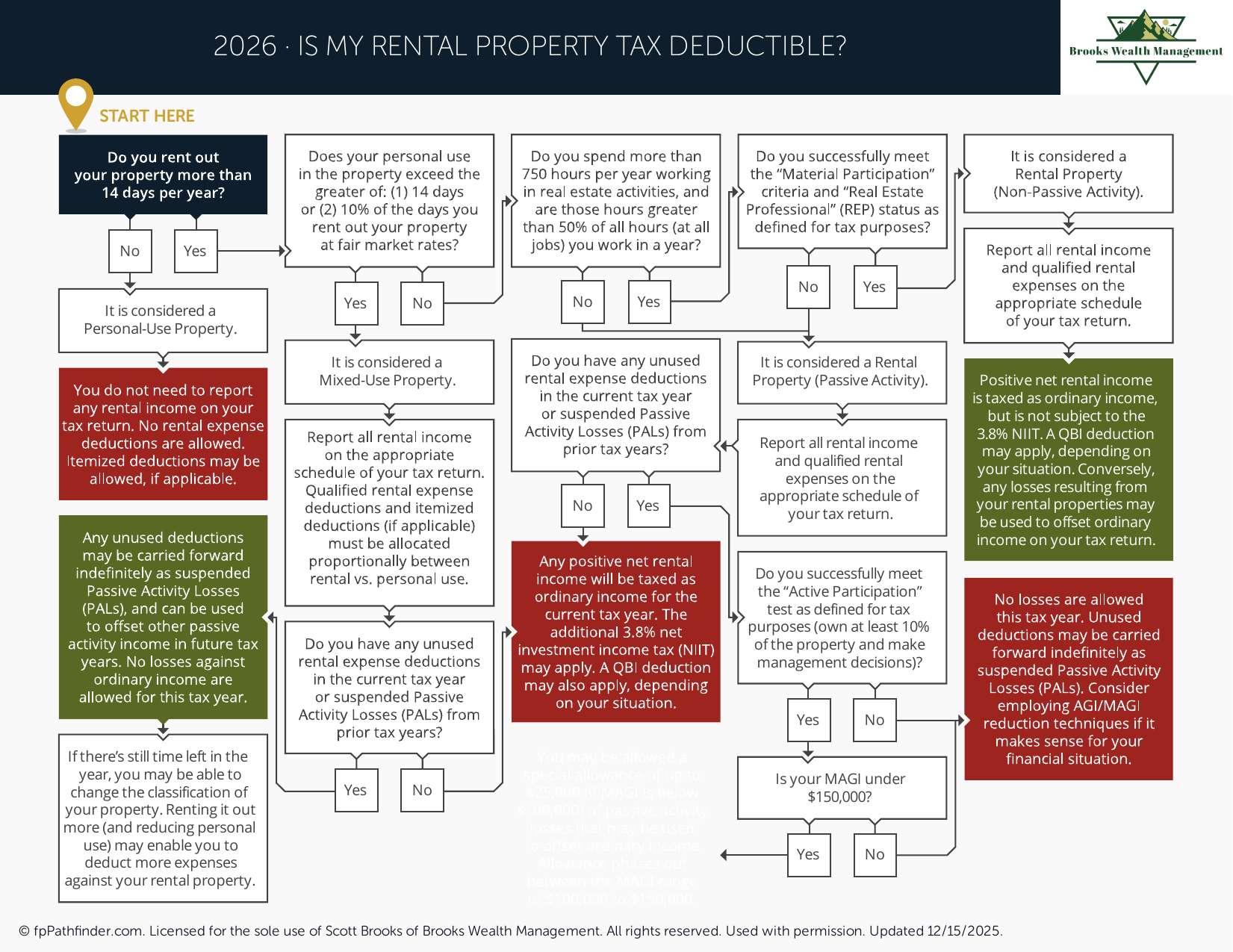
What Rental Property Expenses May Be Tax Deductible?
Rental property owners are often permitted to deduct certain expenses associated with owning, maintaining, and operating rental real estate. These deductions may reduce taxable rental income, although eligibility depends on how the property is used, how expenses are categorized, and individual tax circumstances.
Common deductible expenses may include property operating costs, financing expenses, professional services, and depreciation. Because tax rules can be complex and subject to change, many individuals review these deductions annually as part of their overall tax planning process.
Review Which Expenses May Qualify for Deduction
The IRS generally allows deductions for ordinary and necessary expenses related to managing, maintaining, and preserving rental property. Understanding which expenses may qualify can help property owners maintain accurate records throughout the year.
- Advertising: Costs associated with marketing a rental property, including online listings and other promotional expenses.
- Cleaning and Maintenance: Routine expenses incurred to keep a property in rentable condition, such as cleaning services, landscaping, painting, and minor repairs.
- Commissions and Management Fees: Fees paid to property managers, leasing agents, or other third parties involved in operating the property.
- Insurance: Premiums for landlord, liability, property, flood, or other insurance policies related to the rental activity.
- Legal and Professional Fees: Accounting fees, legal services, tax preparation costs, and similar professional expenses associated with the rental property.
- Mortgage Interest: Interest paid on loans secured by the rental property may be deductible, subject to applicable tax rules.
- Property Taxes: State and local real estate taxes assessed against the rental property.
- Utilities: Utility expenses paid by the property owner, including electricity, water, gas, sewer, internet, or trash services when applicable.
- Travel and Transportation: Certain travel expenses related to property management, inspections, repairs, or maintenance may qualify if properly documented.
Individuals often review expense records regularly to help distinguish deductible operating expenses from costs that may require different tax treatment.
Additional educational resources can be found in our free resources library.
Review the Difference Between Repairs and Improvements
One area that commonly creates confusion involves distinguishing repairs from property improvements.
Repairs generally restore a property to its previous condition and may be deductible in the year incurred. Improvements typically add value, extend useful life, or adapt the property to a new use. These costs are often capitalized and recovered over time rather than deducted immediately.
Common considerations include:
- Whether the work restores existing functionality or creates new functionality.
- Whether the project extends the property's useful life.
- Whether the project substantially improves the property's value.
- How the expense is classified under applicable tax rules.
Proper classification may affect both current-year taxes and long-term reporting requirements.
Review How Depreciation May Affect Rental Property Taxes
Depreciation is a commonly reviewed tax provision for rental property owners. It allows the cost of certain property assets to be recovered over time for tax purposes.
For many residential rental properties, the building portion of the property may be depreciated over a prescribed recovery period, while land is generally not depreciable. Certain improvements may also qualify for depreciation under separate schedules.
Because depreciation does not necessarily require a current cash outlay, it is often one of the larger deductions associated with rental real estate ownership.
Common considerations include:
- Purchase price allocation between land and building value.
- Major property improvements.
- Depreciation recapture considerations when a property is sold.
- Record-keeping requirements supporting depreciation calculations.
Individuals evaluating broader savings and investment decisions may also find it helpful to review what accounts to consider when saving more.
Review Passive Activity Loss Rules
Rental real estate is frequently classified as a passive activity under federal tax rules. As a result, losses generated from rental properties may not always be deductible against other sources of income.
The treatment of rental losses depends on several factors, including income levels, ownership structure, participation in the activity, and whether certain exceptions apply.
Common considerations include:
- Passive income and passive loss limitations.
- Active participation requirements.
- Income-based phaseouts.
- Real estate professional status under IRS rules.
- Carryforward treatment of unused losses.
Because these rules can affect both current and future tax years, many property owners review them as part of ongoing tax planning.
Those evaluating broader tax planning opportunities may also wish to review information regarding Roth conversions.
Review Record-Keeping Requirements
Maintaining accurate records is an important part of managing rental property expenses and supporting any deductions claimed on a tax return.
Individuals often review and retain documentation such as:
- Receipts and invoices.
- Bank and credit card statements.
- Mortgage statements.
- Property tax records.
- Insurance documents.
- Mileage logs and travel records.
- Property management reports.
- Lease agreements and rental income records.
Maintaining organized records throughout the year may help simplify tax reporting and provide support if documentation is requested by taxing authorities.
About This Resource
This resource provides general educational information regarding rental property tax deductions and rental real estate ownership. It is not intended as investment, tax, legal, insurance, healthcare, cybersecurity, or financial advice. Individual circumstances vary and rules may change over time.
If you would like to discuss how this topic fits into your broader financial plan, we invite you to schedule an introductory conversation.