
Common Charitable Giving Vehicles
Reference guide comparing charitable giving vehicles including DAFs, CRTs, CLTs, and private foundations.
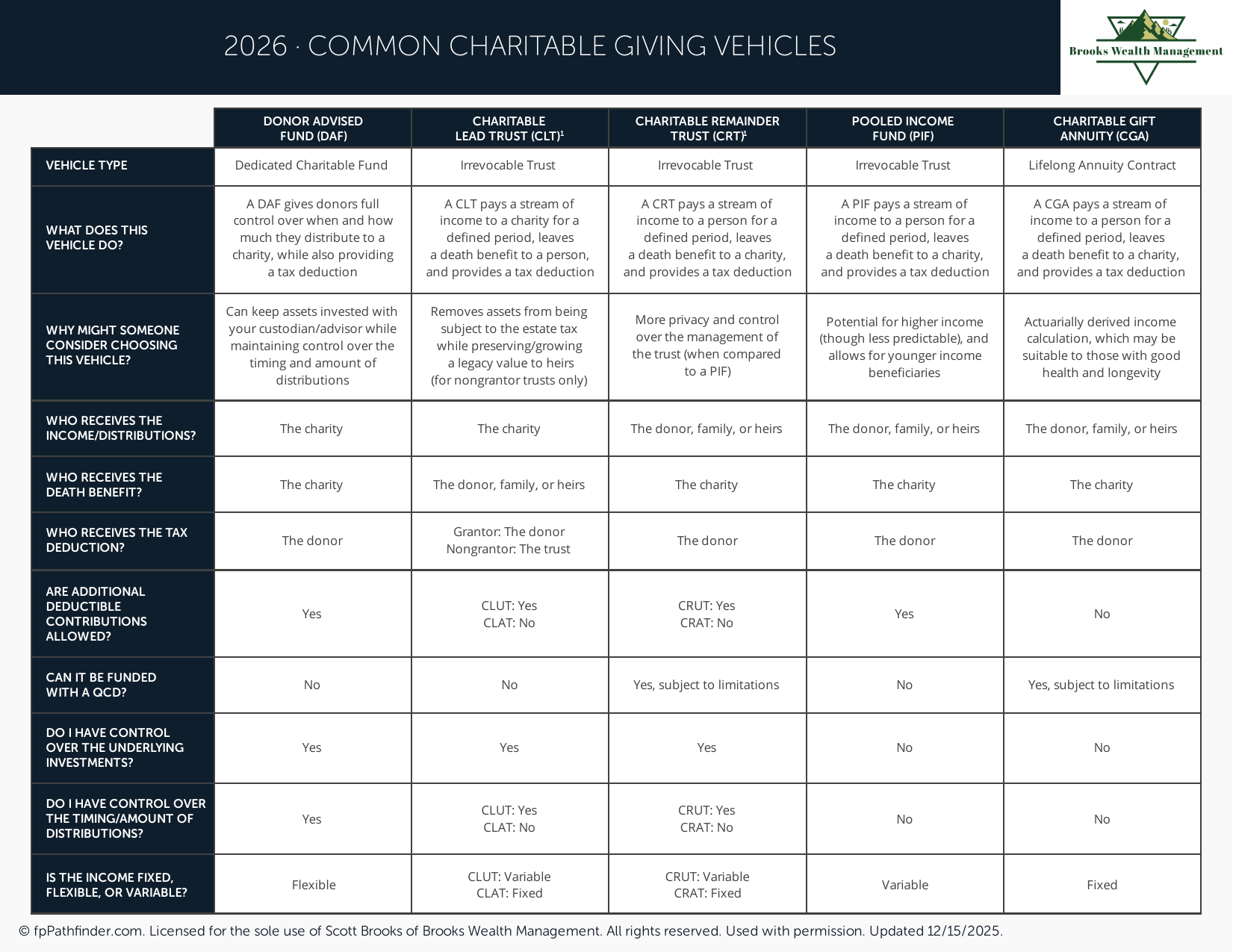
What Charitable Giving Vehicles Should I Consider?
Charitable giving can be an important part of a financial plan, but there is no single approach that works for everyone. The most appropriate charitable giving vehicle often depends on your income, assets, tax situation, charitable goals, and long-term estate planning objectives.
Understanding the most common charitable giving vehicles can help you evaluate which strategies may fit your overall financial plan. This resource provides an overview of several options commonly considered by individuals, families, and business owners who wish to support charitable organizations in a tax-efficient manner.
Review Direct Cash Contributions
Cash donations remain one of the simplest and most common forms of charitable giving.
Questions worth considering include:
- How much do you typically give each year?
- Do you support the same organizations annually?
- Are you itemizing deductions?
- Would a more structured giving strategy be beneficial?
For many individuals, direct cash contributions provide a straightforward way to support causes they care about without additional administrative complexity.
Review Donor-Advised Funds (DAFs)
A donor-advised fund (DAF) is one of the most commonly used charitable giving vehicles for individuals and families seeking flexibility.
A DAF generally allows you to:
- Make charitable contributions and potentially receive an immediate tax deduction.
- Invest assets within the fund.
- Recommend grants to charities over time.
- Consolidate charitable giving records.
Questions worth considering include:
- Do you make charitable gifts regularly?
- Do you expect unusually high income in certain years?
- Would you prefer to separate the timing of tax deductions from charitable distributions?
- Would simplified recordkeeping be valuable?
Related resource: Should I Use a Donor-Advised Fund (DAF) When Giving to Public Charities?.
Review Gifts of Appreciated Securities
Many charitable gifts involve appreciated investments such as stocks, mutual funds, or exchange-traded funds held in taxable accounts.
Questions worth considering include:
- Do you own highly appreciated investments?
- Would gifting securities align with your charitable goals?
- How would gifting affect your portfolio allocation?
- Have tax implications been reviewed with a qualified tax professional?
For some investors, gifting appreciated assets may be more efficient than selling investments and donating cash proceeds.
Review Qualified Charitable Distributions (QCDs)
Qualified Charitable Distributions (QCDs) are available to certain IRA owners who meet eligibility requirements under current tax law.
Questions worth considering include:
- Are charitable gifts part of your retirement income strategy?
- Do you regularly support charitable organizations?
- Are required minimum distributions part of your planning considerations?
- Have you reviewed QCD eligibility with your tax professional?
QCDs are often evaluated alongside broader retirement income and tax planning strategies.
Review Charitable Remainder Trusts (CRTs)
A Charitable Remainder Trust (CRT) is a more advanced charitable planning strategy that may be considered by individuals with significant assets.
A CRT generally provides:
- Potential charitable benefits.
- An income stream to designated beneficiaries.
- Potential planning flexibility for appreciated assets.
- Integration with estate planning objectives.
Questions worth considering include:
- Do you own highly appreciated assets?
- Are charitable goals part of your long-term plan?
- Would lifetime income be beneficial?
- Have legal and tax implications been reviewed?
Because CRTs are complex planning tools, they typically require coordination among financial, legal, and tax professionals.
Review Charitable Lead Trusts (CLTs)
A Charitable Lead Trust (CLT) is another advanced charitable giving vehicle that may be considered in certain estate planning situations.
Questions worth considering include:
- Are wealth transfer goals a priority?
- Do charitable organizations play a meaningful role in your legacy planning?
- Are estate planning considerations driving the strategy?
- Have professional advisors reviewed the structure?
CLTs are often evaluated as part of a broader estate planning strategy rather than as a standalone charitable tool.
Review Private Foundations
Private foundations are charitable entities that allow individuals or families to create a dedicated philanthropic organization.
Questions worth considering include:
- Do you want substantial control over charitable activities?
- Is creating a family legacy important?
- Are you comfortable with administrative responsibilities?
- Would ongoing governance requirements be practical?
While private foundations offer flexibility and control, they often involve greater complexity than other charitable giving vehicles.
Review Real Estate and Business Interest Gifts
Certain charitable gifts involve assets other than cash or marketable securities.
Examples may include:
- Real estate.
- Closely held business interests.
- Private investments.
- Other specialized assets.
Questions worth considering include:
- Do you own appreciated non-cash assets?
- Is a future liquidity event anticipated?
- Would charitable giving support broader tax or estate planning goals?
- Have valuation and documentation requirements been reviewed?
These strategies often require careful coordination among attorneys, accountants, and financial advisors.
Review Your Overall Charitable Giving Strategy
The most effective charitable giving vehicle often depends on your broader financial goals rather than any single tax benefit.
Questions worth considering include:
- What causes are most important to you?
- Do you prefer giving during life, at death, or both?
- How important is tax efficiency?
- Should charitable giving be incorporated into your estate plan?
- Would a formal giving strategy improve decision-making?
Related resources include What Issues Should I Consider When Developing a Charitable Giving Strategy?, Should I Use a Donor-Advised Fund?, What Types of Charitable Gifts Are Deductible?, and Should I Consider a Trust?.
About This Resource
Financial planning works best when you have the right tools and frameworks to guide your decisions.
This resource was created to help you understand common charitable giving vehicles and the role they may play in a broader financial plan. Depending on your circumstances, charitable giving may involve direct donations, donor-advised funds, charitable trusts, qualified charitable distributions, private foundations, or other strategies. Each option carries unique planning, tax, administrative, and estate considerations.
Scott Brooks, CFP® at Brooks Wealth Management uses resources like this with clients across Ventura County, Westlake Village, and throughout all 50 states to help simplify complex financial decisions. Review it, discuss it with your tax and legal professionals, and bring your questions to an introductory conversation.