
What Documents Do I Need to Keep on File?
Reference guide for how long to retain financial, tax, legal, and personal documents.
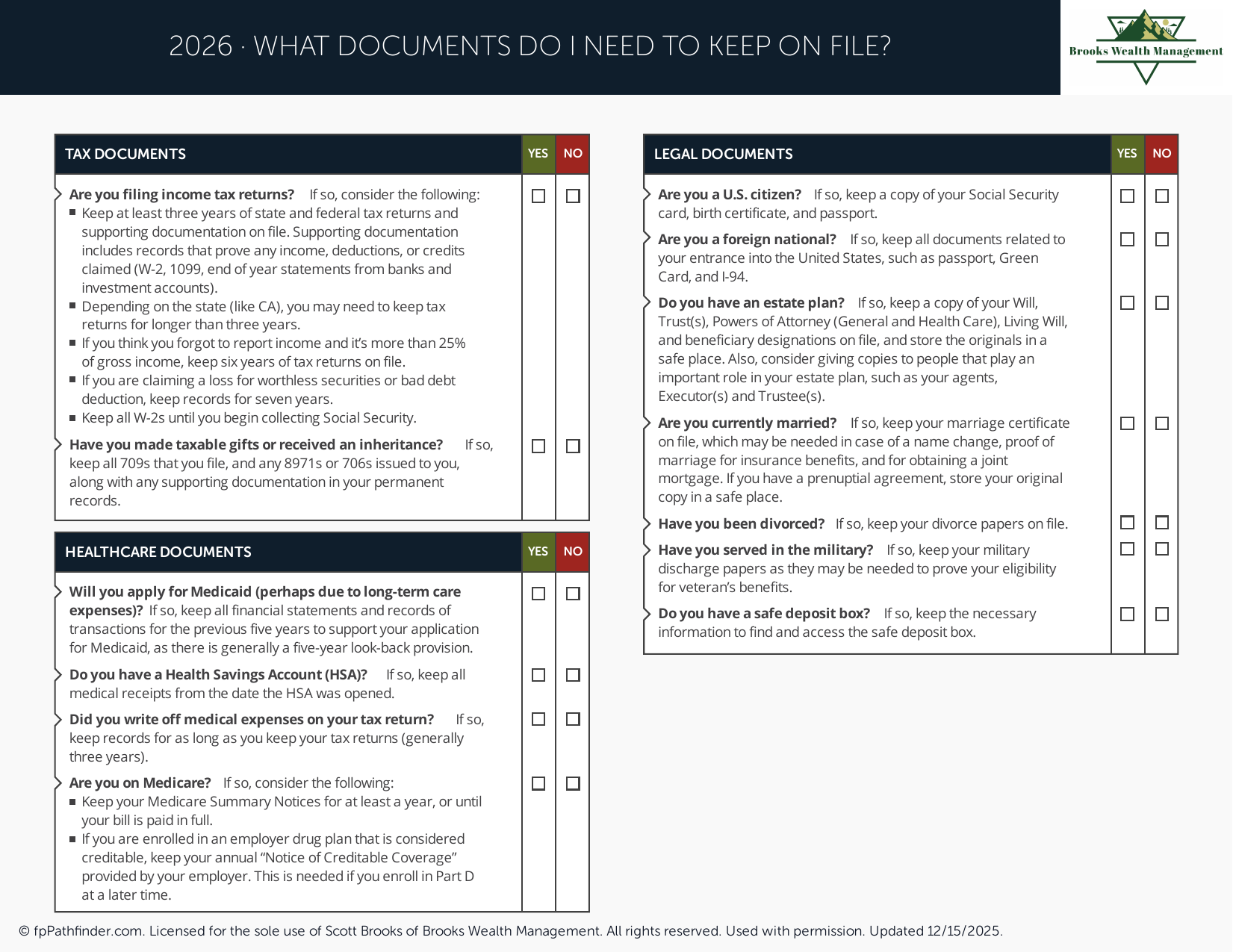
What Financial Documents Should I Keep?
Maintaining organized financial records can make tax preparation, retirement planning, estate administration, and major financial decisions easier. Many individuals periodically review which financial documents to keep, how long to retain them, and whether records should be maintained in paper or digital form.
The appropriate retention period for financial records may vary depending on individual circumstances, legal requirements, tax considerations, and the type of document involved.
Review Tax Returns and Supporting Tax Documents
Tax returns are among the most commonly retained financial records. Individuals often maintain copies of federal and state tax returns, along with supporting documentation used to prepare those returns.
Examples may include:
- W-2 forms
- 1099 forms
- K-1 forms
- Receipts supporting deductions or credits
- Tax payment records
- Supporting schedules and worksheets
Because tax records may be relevant for future tax filings, audits, amended returns, or financial planning reviews, many individuals retain these documents for multiple years.
Review Investment Account Records
Investment account records often play an important role in long-term financial planning.
Common documents individuals review and retain include:
- Brokerage account statements
- Retirement account statements
- Trade confirmations
- Cost basis records
- Capital gain and loss records
- Beneficiary designations
Investment records may be useful when reviewing portfolio performance, calculating taxable gains, documenting ownership, or coordinating future retirement withdrawals.
For additional retirement planning resources, visit our guide on retirement planning considerations.
Review Banking and Credit Records
Bank account and credit card records are commonly maintained for budgeting, tax reporting, account reconciliation, and fraud detection purposes.
Examples include:
- Checking account statements
- Savings account statements
- Credit card statements
- Electronic payment confirmations
- Deposit records
- Loan payment records
Individuals often review these records periodically to verify transactions, track spending, and maintain documentation of financial activity.
Review Loan and Property Records
Documents associated with real estate, mortgages, and other loans are often retained throughout the ownership period and beyond.
Common records may include:
- Mortgage agreements
- Property closing documents
- Home improvement records
- Vehicle loan documents
- Student loan records
- Payoff confirmations
Property records can be particularly important when documenting ownership history, tracking improvements, or calculating future tax consequences associated with the sale of an asset.
Review Insurance and Beneficiary Documents
Insurance coverage and beneficiary designations are often reviewed as part of a broader financial planning process.
Common documents include:
- Life insurance policies
- Homeowners insurance policies
- Auto insurance policies
- Disability insurance policies
- Long-term care insurance policies
- Beneficiary designation forms
Keeping current copies of insurance and beneficiary information may help individuals coordinate coverage reviews and estate planning updates.
Review Estate Planning Documents
Estate planning documents are often among the most important financial records individuals maintain.
Examples may include:
- Wills
- Trust documents
- Powers of attorney
- Healthcare directives
- Guardianship documents
- Estate planning correspondence
Many individuals review these documents periodically to ensure they continue to reflect current wishes, family circumstances, and financial goals.
Review Digital Record Storage and Organization
Many financial institutions now provide electronic access to statements, tax forms, and account records. As a result, individuals often evaluate whether documents should be stored physically, digitally, or through a combination of both methods.
Common considerations include:
- Document security
- Backup procedures
- Account access information
- File organization systems
- Estate access considerations
- Long-term record retention needs
Maintaining an organized record-keeping system may help simplify future financial, tax, and estate planning decisions.
About This Resource
This resource provides general educational information regarding financial record retention and document organization. Appropriate retention periods may vary based on individual circumstances, tax requirements, legal considerations, and financial planning needs.
If you would like to discuss how record organization fits into your broader financial plan, we invite you to schedule an introductory conversation.