
As a Retiree, What Issues Should I Consider When Reviewing My 2025 Tax Return?
Checklist of tax planning opportunities and issues specific to retirees reviewing their 2025 tax return.
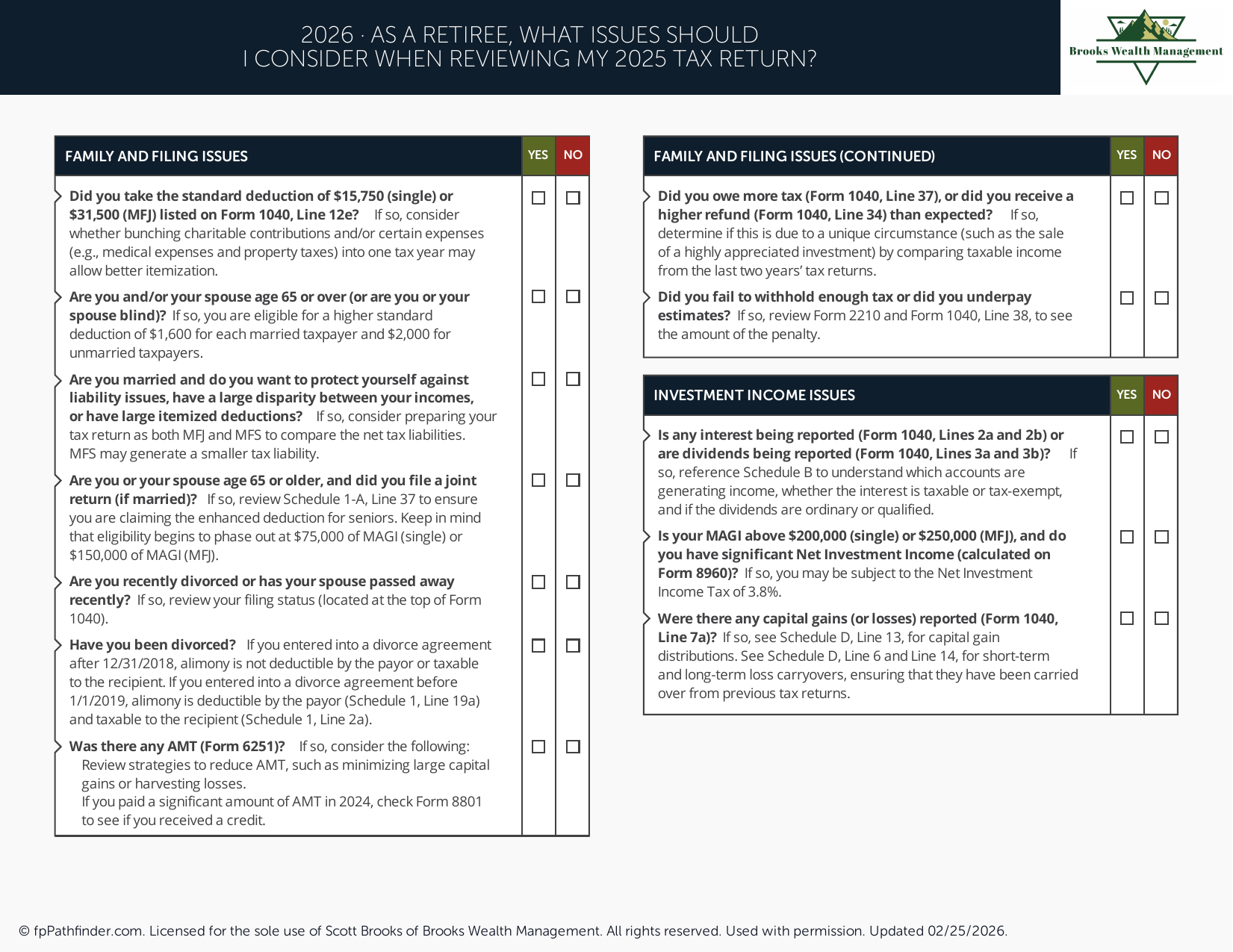
What Should Retirees Review Before Filing Their Tax Return?
Retirement often brings new sources of income, different tax rules, and additional planning considerations. Reviewing your financial information before filing a tax return can help confirm that income has been reported correctly and that retirement-related tax rules have been properly addressed.
Many retirees receive income from multiple sources, including retirement accounts, Social Security, pensions, investments, and real estate. Understanding how these sources are reported for tax purposes is an important part of the filing process.
Review Retirement Account Distributions
Many retirees receive distributions from retirement accounts such as:
- Traditional IRAs
- 401(k) plans
- 403(b) plans
- 457 plans
- Pension plans
Taxpayers often review Forms 1099-R and other tax reporting documents to verify that distributions have been reported accurately and match their records.
The tax treatment of retirement account withdrawals depends on factors such as account type, contribution history, and distribution rules.
Review Required Minimum Distributions (RMDs)
Individuals who have reached the applicable Required Minimum Distribution (RMD) age may need to take annual distributions from certain retirement accounts.
A review may include confirming:
- Whether an RMD was required.
- Whether the distribution was taken.
- Whether the amount was reported correctly.
- Whether any inherited retirement accounts have separate distribution requirements.
RMD rules can vary depending on account type and beneficiary status, making periodic review important.
Review Social Security Benefits
Many retirees receive Social Security benefits in addition to retirement account distributions.
The amount of Social Security subject to federal income tax depends on overall income and filing status. Taxpayers commonly review Form SSA-1099 and compare reported benefits with their records before filing.
For additional information, visit our resource on Social Security retirement benefits.
Review Investment Income
Investment accounts often generate taxable income that must be reported on a tax return.
This may include:
- Interest income.
- Dividend income.
- Capital gains and losses.
- Mutual fund distributions.
- Bond income.
- Real estate investment income.
Reviewing brokerage statements and tax reporting forms can help confirm that income and transactions have been accurately reported.
Review Healthcare-Related Tax Documents
Retirees often receive tax documents related to healthcare coverage and medical expenses.
Depending on individual circumstances, taxpayers may review:
- Medicare premium information.
- Health Savings Account (HSA) reporting.
- Long-term care insurance information.
- Medical expense documentation.
Healthcare-related items may affect tax reporting and financial planning considerations.
Review Beneficiary Designations and Estate Planning Documents
Although not part of the tax return itself, many retirees use tax season as an opportunity to review broader financial matters.
This may include reviewing:
- Retirement account beneficiaries.
- Transfer-on-death registrations.
- Life insurance beneficiaries.
- Wills and trusts.
- Powers of attorney.
Periodic review can help ensure documents continue to reflect current wishes and circumstances.
Review Future Tax Planning Considerations
Many retirees use the filing process as an opportunity to evaluate future planning considerations, including:
- Withdrawal strategies.
- Retirement income planning.
- Estimated tax payments.
- Charitable giving.
- Investment allocation.
- Estate planning objectives.
For additional educational resources, visit our free resources page.
When Professional Guidance May Be Helpful
Retirement often introduces tax rules that may not have applied during working years. Individuals with multiple income sources, retirement accounts, investment portfolios, or estate planning considerations may benefit from working with qualified tax and financial professionals.
Brooks Wealth Management works with retirees, professionals, business owners, and families on retirement planning, investment management, and broader wealth management considerations.
About This Resource
This resource provides general educational information regarding retirement-related tax considerations. It is not intended as tax, legal, or accounting advice. Individual circumstances vary, and financial decisions should be evaluated based on personal goals and applicable laws.
If you would like to discuss your situation, we invite you to schedule an introductory conversation.