
Am I at Risk of Having My Identity Stolen or Being a Victim of Fraud?
Checklist of warning signs and protective steps to reduce the risk of identity theft and financial fraud.
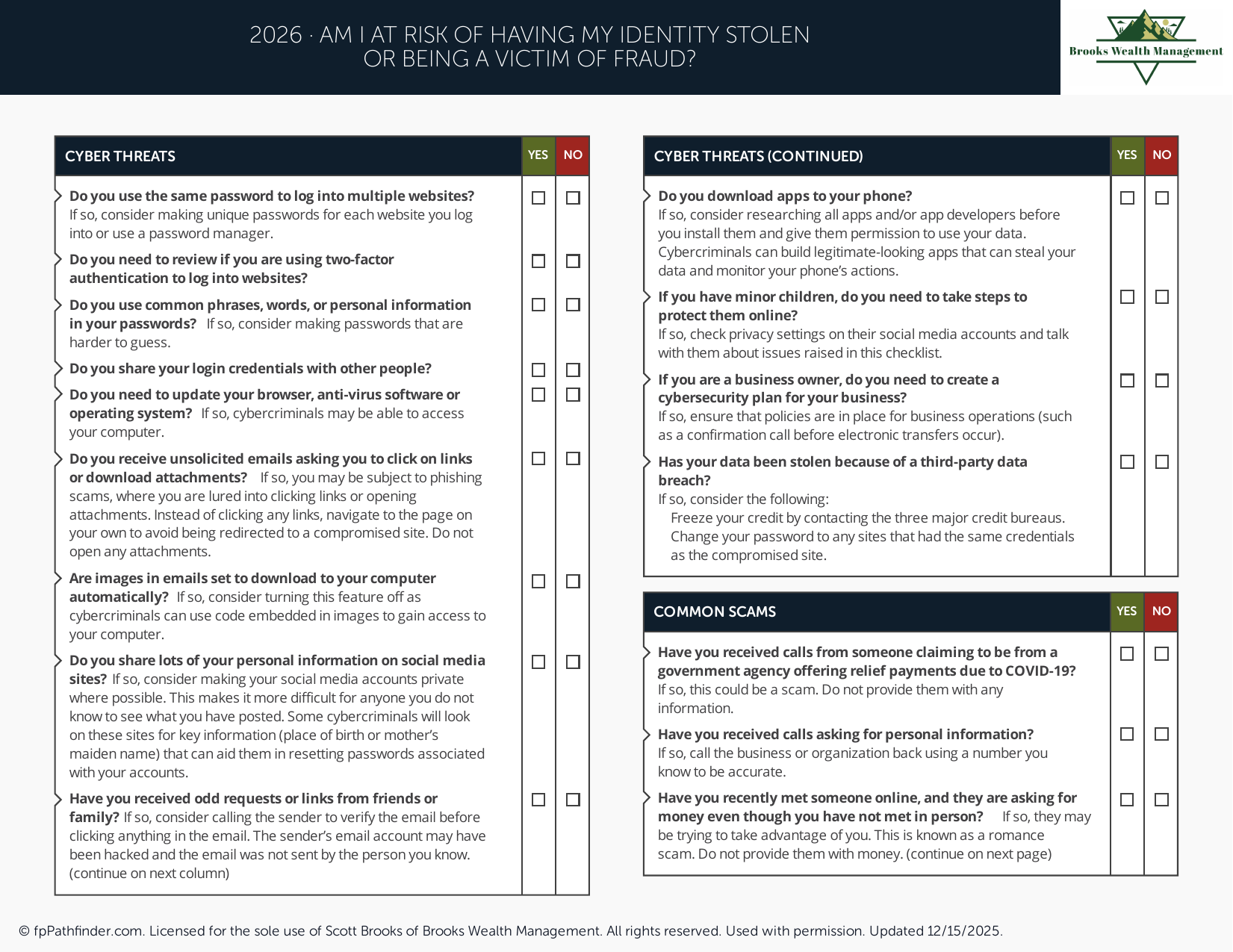
Am I at Risk of Identity Theft or Financial Fraud?
Identity theft and financial fraud can affect anyone, regardless of income, profession, or net worth. Criminals may use stolen personal information to open accounts, access financial assets, file fraudulent tax returns, redirect payments, or impersonate individuals online.
While no one can eliminate every risk, reviewing your credit, account security, document storage, and online habits can help reduce the likelihood of becoming a victim and may make suspicious activity easier to identify early.
Review Common Identity Theft and Fraud Risks
Identity theft occurs when someone uses another person's personal information without authorization. This may include a name, Social Security number, date of birth, address, account number, login credentials, or other sensitive information.
Financial fraud can take many forms, including credit card fraud, bank account fraud, tax refund fraud, wire fraud, investment scams, and account takeover attempts. Because fraud tactics change over time, periodic review of personal cybersecurity habits and financial safeguards may be appropriate.
Common risk factors include:
- Reusing passwords across multiple accounts
- Using weak or outdated passwords
- Responding to suspicious emails, texts, or phone calls
- Using public Wi-Fi without appropriate security precautions
- Failing to monitor financial accounts regularly
- Leaving credit reports unfrozen when not applying for credit
- Oversharing personal information online
- Discarding sensitive documents without shredding them
Even individuals with strong security habits can be affected by large-scale data breaches involving retailers, healthcare providers, financial institutions, employers, or government agencies.
Review Your Credit Reports and Credit Freezes
Credit monitoring may help identify suspicious activity, but it does not prevent new accounts from being opened. A credit freeze may provide additional protection by restricting access to a credit file.
Individuals often review whether to freeze credit files with the three major credit bureaus:
- Equifax
- Experian
- TransUnion
A credit freeze can usually be lifted temporarily when applying for new credit. Some individuals also review fraud alerts, credit monitoring services, and identity theft protection services depending on their personal situation.
Review Financial Account Security
Bank, brokerage, retirement, and credit card accounts may be targets for account takeover attempts. Reviewing account security settings can help reduce risk and make unauthorized activity easier to identify.
Common safeguards include:
- Using strong, unique passwords
- Enabling multi-factor authentication
- Setting up account alerts
- Reviewing account activity regularly
- Keeping contact information current
- Adding trusted contacts where appropriate
- Verifying wire instructions before transferring funds
Investment and retirement accounts may require additional attention because fraudulent transfers, account access changes, or unauthorized withdrawals can create significant financial harm.
Review Email, Phone, and Online Scam Risks
Many fraud attempts begin through email, text messages, phone calls, or fake websites. Criminals may impersonate banks, custodians, government agencies, technology companies, delivery services, or even people the victim knows.
Common scams include:
- Phishing emails
- Fake fraud-alert texts
- Impersonation calls
- Tax-related scams
- Romance scams
- Investment scams
- Business email compromise
- SIM swap attacks
Before clicking links, sharing information, or moving money, many individuals verify requests through a trusted phone number or secure website rather than relying on contact information provided in a message.
Review Physical Document and Mail Security
Identity theft is not limited to online activity. Sensitive paper documents, mail, tax forms, and account statements can also expose personal information if they are not handled carefully.
Individuals often review:
- How sensitive documents are stored
- Whether old documents are shredded before disposal
- Whether mail is collected promptly
- Whether tax forms and account statements are stored securely
- Who has access to important financial records
For additional guidance, review our resource on financial documents to keep.
Review What to Do if Identity Theft Occurs
If identity theft or financial fraud is suspected, timely action may help limit further damage.
Common steps include:
- Contacting affected financial institutions
- Changing compromised passwords
- Reviewing recent account activity
- Freezing credit reports
- Placing fraud alerts when appropriate
- Reporting identity theft through IdentityTheft.gov
- Filing a police report when necessary
- Keeping written records of communications and recovery steps
The appropriate response may depend on the type of fraud, the accounts involved, and whether personal identification information was exposed.
Review Identity Protection as Part of Financial Planning
Identity theft, cybercrime, and financial fraud can affect many areas of a financial plan. Reviewing account security, document storage, estate access, trusted contacts, and fraud prevention practices may be an important part of protecting financial assets.
For additional educational resources, visit our free resources. You may also find our guide on accounts to consider if you want to save more helpful.
About This Resource
This resource provides general educational information regarding identity theft, financial fraud, and personal financial security. It is not intended as legal, cybersecurity, tax, or financial advice. Individual circumstances vary, and appropriate safeguards may depend on personal risk factors, account structure, and applicable laws.
If you would like to discuss how financial safeguards fit into your broader financial plan, we invite you to schedule an introductory conversation.
Have Questions About Your Situation?
This resource is a starting point. A free consultation with Scott Brooks, CFP® gives you a personalized perspective.
Book a Free ConsultationBased in Westlake Village, CA · Ventura County · Serving clients across all 50 states
Brooks Wealth Management is a Registered Investment Adviser (RIA) in the State of California. Registration does not imply a certain level of skill or training. This resource is provided for educational and informational purposes only and does not constitute investment, tax, legal, cybersecurity, or financial advice. Scott Brooks, CFP® · CRD #7227609 · Firm CRD #332237 · 2555 Townsgate Rd STE 200, Westlake Village, CA 91361