
What Issues Should I Consider When Dealing with High Inflation?
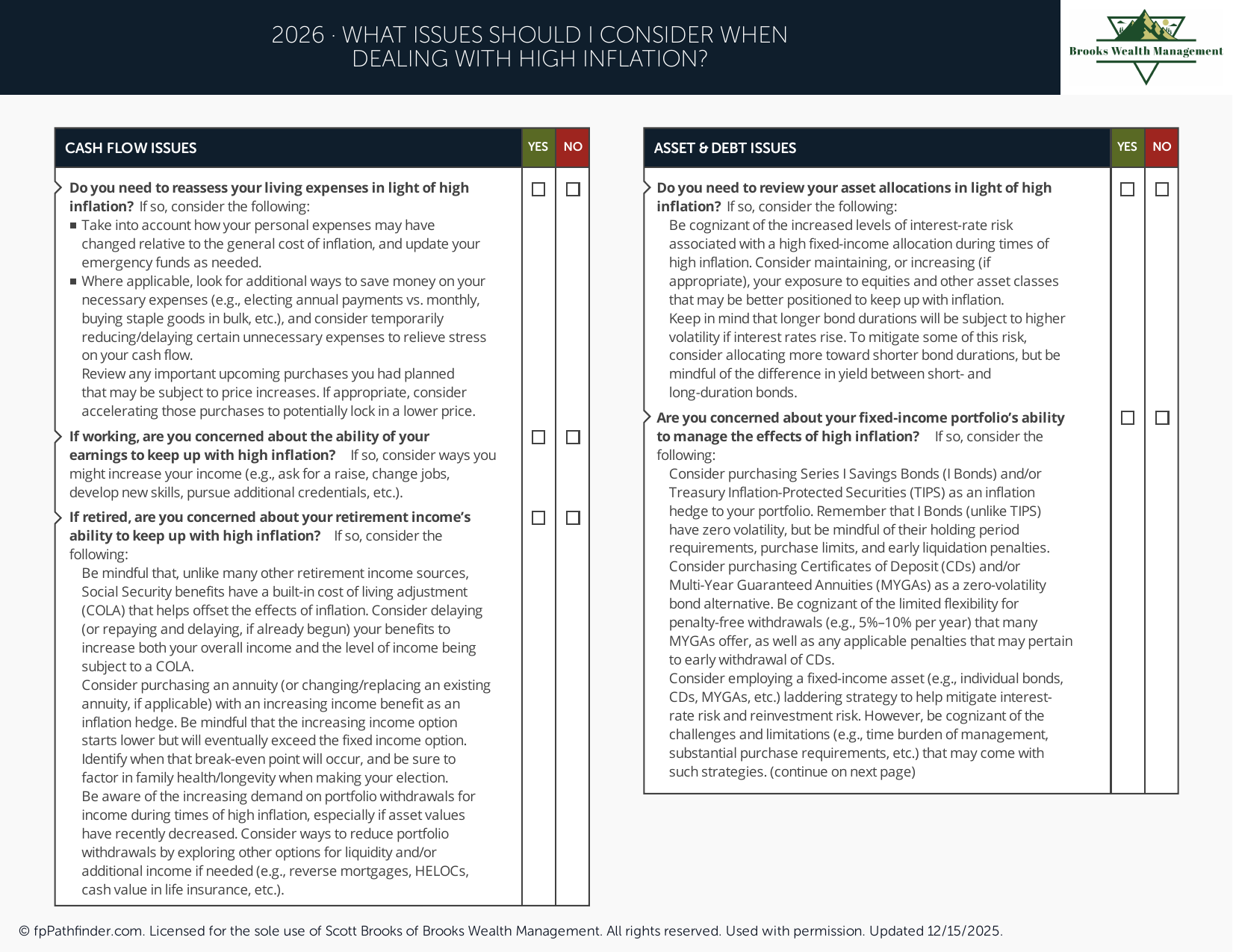
Checklist of portfolio and financial planning adjustments to consider during periods of high inflation.
About This Resource
Periods of high inflation can affect nearly every area of a financial plan. Rising prices may influence household spending, retirement projections, investment decisions, savings goals, borrowing costs, tax planning considerations, and overall purchasing power.
This checklist was created to help individuals answer the question, What Issues Should I Consider When Dealing with High Inflation? It provides a structured framework for reviewing common financial planning considerations during inflationary environments and identifying areas that may warrant additional attention.
Review Your Household Cash Flow
Inflation may increase the cost of everyday expenses such as housing, food, transportation, healthcare, insurance, and utilities. Reviewing cash flow can help determine whether spending patterns have changed and whether current savings goals remain realistic.
Individuals often review discretionary spending, recurring subscriptions, debt payments, and emergency fund levels when inflation begins to affect monthly budgets.
Review Emergency Savings
As living expenses rise, the amount needed to cover several months of expenses may also increase. Inflation can gradually reduce the purchasing power of cash reserves if savings levels are not periodically reviewed.
Common considerations include emergency fund adequacy, cash accessibility, and whether reserve levels still reflect current spending needs.
Review Investment Allocation
Inflation may affect different asset classes in different ways. Investors often review whether their portfolio remains aligned with long-term objectives, risk tolerance, and time horizon during periods of elevated inflation.
Reviewing diversification, portfolio concentration, fixed income exposure, equity allocations, and overall investment strategy may help ensure the portfolio continues to support long-term goals.
Review Retirement Income Projections
Inflation can have a significant impact on future spending needs, particularly for individuals approaching or already in retirement. Even moderate inflation rates can substantially increase the cost of living over long periods of time.
Individuals often review retirement spending assumptions, withdrawal strategies, Social Security projections, and long-term income needs when evaluating inflation risks.
Review Debt and Borrowing Costs
Periods of higher inflation are frequently accompanied by higher interest rates. This may affect mortgages, home equity lines of credit, business loans, credit cards, and other borrowing arrangements.
Reviewing debt structure, interest rates, refinancing opportunities, and repayment timelines may be appropriate when borrowing costs increase.
Review Tax Planning Opportunities
Inflation may indirectly affect tax planning through changes to income, investment returns, tax brackets, contribution limits, and other inflation-adjusted IRS thresholds.
Individuals often review retirement account contributions, capital gains exposure, charitable giving strategies, and projected taxable income as part of ongoing planning.
Review Insurance Coverage
Inflation can increase replacement costs for homes, vehicles, personal property, and business assets. Existing coverage levels may no longer reflect current replacement values.
Periodic reviews may help identify whether coverage amounts, deductibles, and policy provisions continue to align with current circumstances.
Review Business Financial Considerations
Business owners may experience inflation differently than employees. Rising labor costs, supply chain expenses, borrowing costs, inventory expenses, and operating overhead can affect profitability and cash flow.
Common considerations include pricing strategies, cash reserves, compensation planning, retirement plan contributions, and business succession planning.
Review Long-Term Financial Goals
Inflation may affect major financial goals such as retirement, college funding, home purchases, charitable giving, and legacy planning. Goals established years earlier may require updated assumptions as costs change over time.
Individuals often revisit timelines, savings targets, expected rates of return, and future spending assumptions when reviewing the impact of inflation.
Who May Find This Checklist Helpful?
This checklist may be particularly useful for:
- High-income professionals
- Business owners
- Pre-retirees
- Retirees managing withdrawals
- Individuals with significant investment portfolios
- Families evaluating long-term financial goals
- Anyone concerned about rising costs and purchasing power
Using This Checklist
This checklist is intended to serve as a starting point for evaluating how inflation may affect a financial plan. It is designed to highlight common issues individuals often review during inflationary periods and may help identify areas for further discussion and analysis.