
What Important Issues Should I Consider Regarding Changes Made by the SECURE Act 2.0?
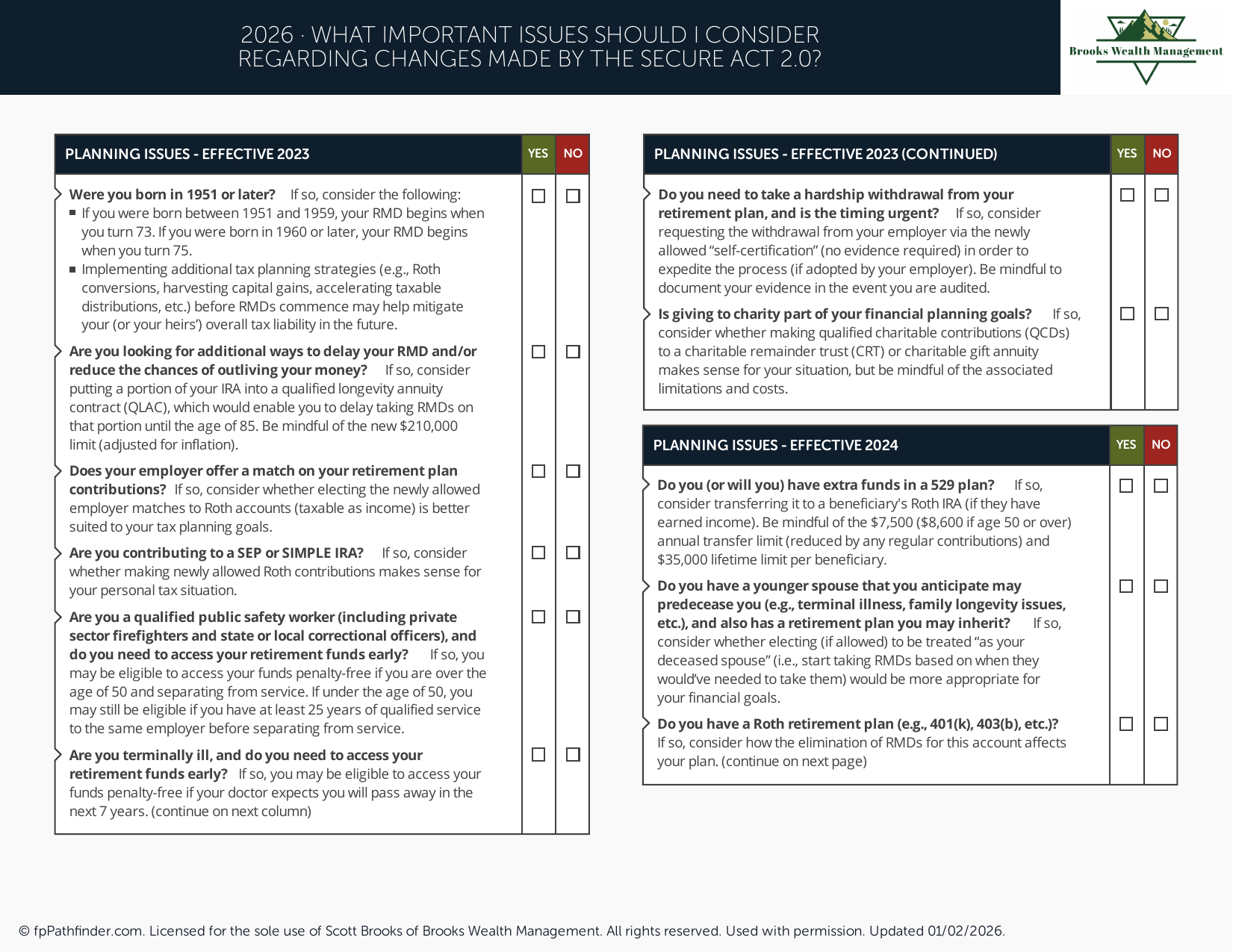
Checklist of retirement planning changes and opportunities created by the SECURE Act 2.0.
About This Resource
This resource provides general educational information regarding What Important Issues Should I Consider Regarding Changes Made by the SECURE Act 2.0?. The SECURE Act 2.0 introduced numerous changes affecting retirement planning, retirement account contributions, required minimum distributions (RMDs), employer-sponsored retirement plans, catch-up contributions, Roth account provisions, and other retirement-related planning opportunities.
Individuals often review SECURE Act 2.0 changes when evaluating their retirement savings strategy, preparing for retirement, reviewing workplace retirement plan benefits, or coordinating tax and retirement planning decisions. Because many of the provisions are phased in over multiple years, understanding which rules apply and when they take effect can be an important part of long-term financial planning.
This checklist is designed to help organize the key questions, planning considerations, and potential decision points associated with SECURE Act 2.0. Common areas of review include retirement contribution opportunities, required minimum distribution rules, employer matching contributions, Roth retirement account options, beneficiary planning considerations, and strategies that may affect retirement income planning.
Like many financial planning topics, the impact of SECURE Act 2.0 depends on individual circumstances. Factors such as age, employment status, retirement goals, account balances, income levels, tax considerations, and employer retirement plan provisions may all affect how these rules apply. As a result, many individuals use resources like this as a starting point for evaluating retirement planning decisions and identifying topics that may warrant further review.
This resource is intended to provide a structured framework for understanding the retirement planning issues associated with SECURE Act 2.0. It is not designed to provide recommendations, predict outcomes, or determine what actions may be appropriate for any particular individual. Rules may change over time, and planning decisions should be evaluated within the context of a broader financial plan.
If you would like to discuss how this topic fits into your broader financial plan, we invite you to schedule an introductory conversation.