
Am I Eligible for a Qualified Business Income (QBI) Deduction?
Flowchart to determine eligibility for the QBI deduction for pass-through business income.
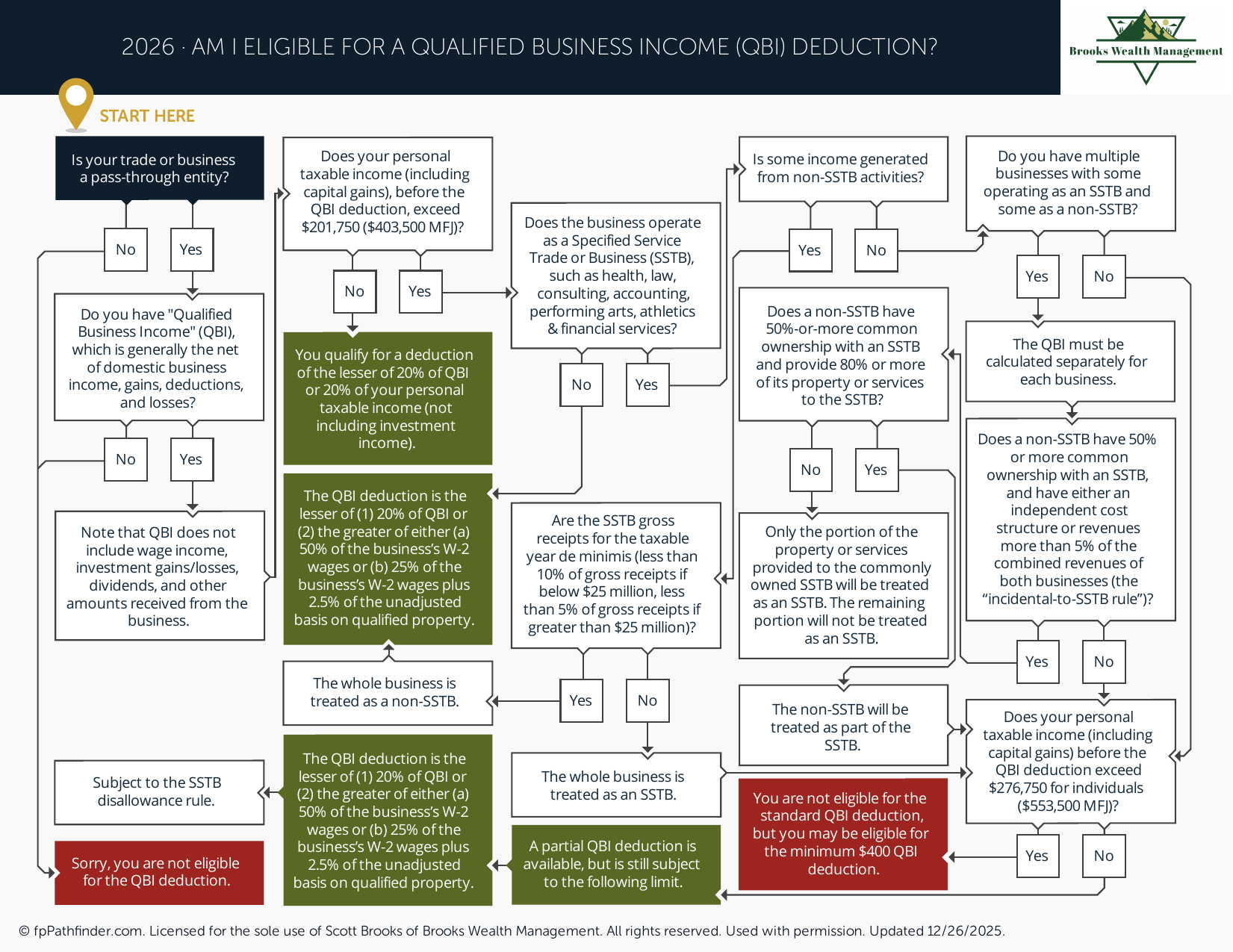
Do I Qualify for the Qualified Business Income (QBI) Deduction?
The Qualified Business Income (QBI) deduction, sometimes called the Section 199A deduction, may allow eligible business owners to deduct up to 20% of qualified business income on their federal income tax return. Whether you qualify depends on several factors, including your business structure, taxable income, and the nature of your business activities.
The deduction was created as part of the Tax Cuts and Jobs Act and generally applies to income earned through pass-through business entities rather than C corporations.
Who May Be Eligible for the QBI Deduction?
The QBI deduction is generally available to owners of certain pass-through businesses, including:
- Sole proprietorships
- Single-member LLCs
- Partnerships
- Multi-member LLCs taxed as partnerships
- S corporations
- Certain trusts and estates
Eligibility depends on individual circumstances and applicable IRS rules. Not all business income qualifies for the deduction.
What Income Qualifies?
Qualified Business Income generally includes net income generated from a qualified trade or business operating within the United States.
Certain types of income are generally excluded from QBI calculations, including:
- Capital gains and losses
- Dividend income
- Interest income not related to the business
- Reasonable compensation paid to S corporation owners
- Guaranteed payments paid to partners
Because the rules can be complex, business owners often work with tax professionals to determine what income qualifies.
What Are Specified Service Businesses?
The tax code includes special rules for certain service-based businesses known as Specified Service Trades or Businesses (SSTBs).
Examples may include businesses operating in fields such as:
- Health care
- Law
- Accounting
- Consulting
- Financial services
- Brokerage services
- Performing arts
- Athletics
Additional limitations may apply to SSTB owners depending on taxable income and other factors.
What Factors Can Affect the Deduction?
Several factors may affect the amount of a QBI deduction, including:
- Total taxable income
- Business structure
- W-2 wages paid by the business
- Qualified business property owned by the business
- The type of business activity conducted
Because these rules interact with one another, calculating the deduction can become increasingly complex as income rises.
Why the QBI Deduction Matters
For eligible business owners, the QBI deduction can reduce taxable income and potentially lower overall federal income taxes. However, eligibility and calculation rules vary based on individual circumstances and may change as tax laws evolve.
Business owners often review the deduction alongside broader tax planning considerations, retirement planning strategies, business structure decisions, and overall cash flow management.
For additional educational resources, visit our free resources page.
When Professional Guidance May Be Helpful
The QBI deduction involves detailed IRS rules, income limitations, and business-specific considerations. Individuals with pass-through business income may benefit from working with qualified tax and financial professionals to better understand how the rules apply to their situation.
Brooks Wealth Management works with business owners, professionals, and families on financial planning, retirement planning, investment management, and wealth management considerations.
About This Resource
This resource provides general educational information regarding the Qualified Business Income (QBI) deduction. It is not intended as tax, legal, or accounting advice. Tax laws are subject to change, and individual circumstances vary.
If you would like to discuss your financial situation, we invite you to schedule an introductory conversation.