
Brooks Wealth Brief
Why a Good Economy Doesn’t Always Feel Good
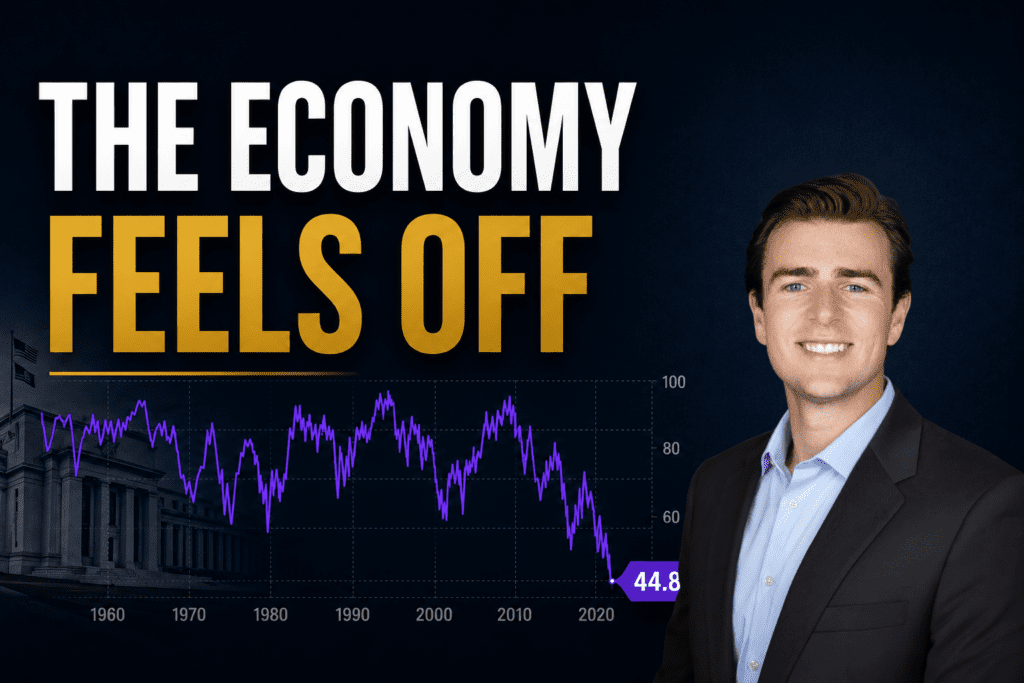
The market can be near all-time highs and inflation can be slowing, but many households still feel financially stretched. Here’s why the economy and your household balance sheet are not the same thing.
Brooks Wealth Management | Westlake Village, California
Quick Answer
A good economy does not always feel good because economic headlines and household finances are not the same thing. The stock market can rise while grocery bills, insurance premiums, mortgage payments, taxes, childcare, and other fixed costs still make everyday life feel expensive.
Many households are not necessarily struggling because income is too low. They may feel tight because more of their income is already committed before they get a chance to decide what to do with it. That is why your household economy needs its own plan, separate from whether the broader economy looks good or bad.
The market has been near all-time highs. Inflation is no longer at the worst point. The labor market has remained relatively resilient. And yet, a lot of households do not feel like life has become easier.
I do not think that means people are being dramatic. I think it means a good economy does not automatically create a healthy household balance sheet.
The economy and your household are connected, but they are not the same thing. A headline can look fine while your own financial life still feels tighter than it did a few years ago. That disconnect matters because most people do not experience the economy through a chart. They experience it through their mortgage, grocery bill, insurance bill, gas pump, childcare costs, tax bill, and credit card statement.
The Economy and Your Household Are Not the Same Thing
The stock market can be up and your monthly cash flow can still feel tight. Your 401(k) can look better than it did last year while your checking account still feels like it is getting hit from every direction.
A strong market, a decent labor market, and a household with rising fixed expenses can all exist at the same time. That is why I do not think it is helpful to say, “The economy is good, so why are people complaining?”
Most households do not live inside the economic data. They live inside their actual monthly obligations. If those obligations have increased faster than their sense of flexibility, the economy may look healthy from the outside while the household still feels financially pressured.
Why Inflation Still Feels Painful Even When Inflation Is Slowing
One of the biggest disconnects right now is that people hear inflation is improving, but their actual life does not feel any cheaper.
The reason is simple: inflation slowing down is not the same thing as prices going back down.
If something used to cost $100 and now costs $130, slower inflation does not necessarily bring it back to $100. It may simply mean it stops moving from $130 to $150 as quickly. That is better than the alternative, but it does not feel like your old cost of living came back.
Inflation did not just make certain items more expensive. It repriced the cost of maintaining the same lifestyle. Housing, food, insurance, utilities, travel, childcare, and everyday purchases can all reset higher. When that happens, households may feel like they are earning decent income but getting less breathing room from it.
The Difference Between Income and Financial Flexibility
A good economy can help, but it does not automatically tell you whether your household is financially healthy. What matters is how much of your income remains flexible after fixed commitments get paid.
This is where a lot of high-income professionals can feel confused. From the outside, a family making $300,000 or $400,000 may look like they should have no financial stress. In many ways, they may be doing very well.
But doing well and feeling financially flexible are not the same thing.
A high income can support bigger commitments: a larger mortgage, higher taxes, higher insurance costs, private school, childcare, car payments, travel, family obligations, and a lifestyle that became normal over time.
In many cases, the household is not broke in the traditional sense. It is committed. That is a better word for what many high-income households are feeling. Their income is already spoken for before they really get to decide what to do with the excess.
Why High-Income Households Can Still Feel Constrained
A lot of high-income households do not feel stuck because they made one terrible financial decision. They feel stuck because they made a long series of reasonable decisions that eventually started competing with one another.
The house made sense. The car made sense. Travel made sense. Helping family made sense. Saving for college made sense. Maxing out retirement accounts made sense. But when you put everything together, the financial life can feel very tight.
That is why the best question is not always, “Can I afford this?”
A better question is, “What does this decision commit me to?”
Affordability is not just whether the monthly payment clears. It is whether the decision still leaves you with the flexibility you want later. High income can be tricky because it allows you to say yes to many things, but those yeses can quietly reduce your options before you notice it.
Housing Quietly Sets the Pressure Level for Your Entire Financial Life
Housing is one of the clearest examples. A house is not just a mortgage payment.
A bigger house can mean higher property taxes, higher insurance, higher maintenance, more furniture, more projects, higher utilities, and less room for everything else. It may still be the right decision, but it is rarely just a principal and interest calculation.
The question is not only, “Can I afford the payment?”
The better question is, “What does this payment do to my liquidity, savings, career flexibility, and ability to make progress on other goals?”
For high-income households, housing can become the decision that quietly determines how much pressure the rest of the financial plan has to carry.
Net Worth and Breathing Room Are Not the Same Thing
The stock market can make your future look better while your present still feels tight.
If your stress is coming from cash flow, insurance, debt, childcare, taxes, or housing, a higher retirement account balance may not make your month-to-month life feel easier.
This is why net worth and breathing room are not the same thing. You can have a growing net worth and still feel under-liquid. You can have retirement accounts and still feel like you do not have much room month to month.
The goal is not just to have more assets. The goal is to have the right mix of assets, cash flow, liquidity, and obligations for the life you actually want to live.
Why Lifestyle Inflation Feels Different Than People Expect
Social media has made this harder. Expensive lifestyles have started looking normal. Houses, trips, cars, restaurants, renovations, clothes, and experiences can begin to feel like the baseline of success rather than luxury.
If you make good money, that can be dangerous because you may be able to support that version of life for a while. The issue is usually not that one purchase ruins a household. The issue is that the lifestyle becomes sticky.
Your financial future does not send you a bill every month. The mortgage does. The car does. Tuition does. Insurance does. Credit cards do.
Retirement flexibility, career flexibility, future options, and peace of mind usually do not demand attention with the same urgency. If there is no plan, the urgent expenses often win. Not because people are irresponsible, but because real life is loud and the future is quiet.
Your Household Economy Needs Its Own Plan
If money feels heavy right now, I would not start by arguing with the economic headlines. I would start by looking at your household balance sheet.
Not just what you own, but what your income is actually doing each month.
A simple framework is to ask three questions:
- What is already committed?
- What is actually building future flexibility?
- What is simply maintaining a lifestyle that may or may not be worth the tradeoff?
Many households are not missing one secret investment or one perfect tax strategy. They are missing a clear view of how much of their financial life is still flexible.
A good economy does not automatically create a healthy household balance sheet. Your household economy needs its own plan. That plan does not need to be overly complicated, but it does need to be honest.
Common Questions About the Economy and Household Finances
Why do people feel financially stressed even when the economy is doing well?
People often feel financially stressed because they experience the economy through their own household cash flow, not national headlines. If housing, insurance, food, taxes, childcare, and debt payments are consuming more of their income, the broader economy can look strong while their personal financial life still feels tight.
Why does lower inflation not make life feel cheaper?
Lower inflation usually means prices are rising more slowly. It does not necessarily mean prices are falling back to where they were before. If the cost of maintaining your lifestyle has reset higher, slower inflation may help, but it may not restore the financial breathing room you had several years ago.
What is the difference between the economy and a household balance sheet?
The economy refers to broad measures like growth, employment, inflation, consumer spending, and financial markets. A household balance sheet is more personal. It includes your income, savings, debt, investments, home equity, liquidity, and monthly obligations. The economy can be improving while a specific household still feels financially constrained.
Why do high-income families still feel financially constrained?
High-income families may still feel constrained because higher income often supports larger commitments. Larger homes, higher taxes, private school, childcare, insurance, travel, vehicles, and lifestyle expectations can absorb income quickly. The issue is often not income alone, but how much income remains flexible after commitments are paid.
What is financial flexibility?
Financial flexibility is the room you have to make choices without every dollar already being committed. It can come from cash reserves, manageable fixed expenses, diversified investments, low debt pressure, and a financial plan that leaves room for career changes, emergencies, opportunities, and future goals.
Key Takeaways
- A good economy does not automatically mean a household feels financially healthy.
- Inflation slowing down does not necessarily mean prices return to where they were.
- High income and financial flexibility are not the same thing.
- Housing, taxes, insurance, childcare, and lifestyle commitments can quietly absorb income.
- Your household economy needs its own plan, separate from economic headlines.
Related Brooks Wealth Management Resources
These educational resources may help you review the planning issues mentioned in this article.
How Much Can I Afford to Spend Each Month?
A worksheet for reviewing monthly spending, fixed expenses, and available cash flow.
View Resource →Can I Afford to Buy a Home?
A flowchart for thinking through the financial impact of a home purchase beyond the monthly payment.
View Resource →Am I Saving Enough?
A guide to reviewing whether your current savings rate supports your future goals.
View Resource →What Issues Should I Consider When Reviewing My Cash Flow?
A checklist for reviewing how income, expenses, savings, debt, and liquidity fit together.
View Resource →Planning Perspective from Scott
One thing I see often is that people look at the market, the economy, or their income and assume those numbers should tell them how financially healthy they are. But household financial health is more personal than that. It depends on what is coming in, what is already committed, what is flexible, and whether today’s decisions are supporting tomorrow’s options.
The goal is not to eliminate every expense or stop enjoying life. The goal is to make sure the lifestyle you are building still leaves room for savings, flexibility, liquidity, and the future you actually want.
A Good Economy Doesn’t Automatically Create a Healthy Household Balance Sheet
Economic headlines can be useful, but most people experience money through cash flow, housing costs, taxes, insurance, childcare, and the financial commitments that show up every month.
If your income has grown but financial flexibility feels harder to find, it may be worth stepping back and evaluating how your household balance sheet, investments, taxes, and long-term goals fit together.
Schedule an Introductory ConversationThis article is for educational and informational purposes only and should not be considered personalized financial, tax, legal, or investment advice. Economic and market conditions can change, and financial planning decisions depend on your personal circumstances. You should consult with a qualified financial, tax, or legal professional before making decisions based on your individual situation. Brooks Wealth Management LLC is a registered investment adviser. Registration does not imply a certain level of skill or training.